



 Chat with AI
Exam 7: Organohalides: Nucleophilic Substitutions and Eliminations

Exam 1: Structure and Bonding:acids and Bases40 Questions
Exam 2: Alkanes: The Nature of Organic Compounds47 Questions
Exam 3: Alkenes and Alkynes: the Nature of Organic Reactions37 Questions
Exam 4: Reactions of Alkenes and Alkynes44 Questions
Exam 5: Aromatic Compounds51 Questions
Exam 6: Sterechemistry at Tetrahedral Centers35 Questions
Exam 7: Organohalides: Nucleophilic Substitutions and Eliminations49 Questions
Exam 8: Alcohols, Phenols, Ethers, and Their Sulfur Analogs39 Questions
Exam 9: Aldehydes and Ketones: Nucleophilic Addition Reactions32 Questions
Exam 10: Carboxylic Acids and Derivatives: Nucleophilic Acyl Substitution Reactions66 Questions
Exam 11: Carbonyl Alpha-Substitution Reactions and Condensation Reactions37 Questions
Exam 12: Amines31 Questions
Exam 13: Structure Determination64 Questions
Exam 14: Biomolecules: Carbohydrates41 Questions
Exam 15: Biomolecules: Amino Acids, Peptides, and Proteins43 Questions
Exam 16: Biomolecules: Lipids and Nucleic Acids37 Questions
Exam 17: The Organic Chemistry of Metabolic Pathways35 Questions
Select questions type


Instructions: Consider the pair of reactions below to answer the following question(s). 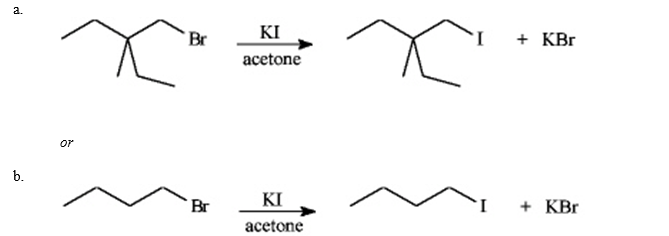 00 Refer to instructions. The alkyl bromide starting materials in these reactions are classified as:
Free
(Multiple Choice)
4.9/5  (82)
(82) Correct Answer: Verified
C
Consider the reactions below to answer the following questions. a.
or
b. Which reaction would be predicted to be faster? Explain
Free
(Essay)
4.8/5 (76)
(76) Correct Answer:Verified
VerifiedReaction b. is faster because -I is a better leaving group than -F.
Instructions: Circle the correct response in each set below.
Refer to instructions. The least reactive compound in an SN1 reaction. 
Free
(Essay)
4.8/5 (89)
(89) Correct Answer:Verified
Verified
Which is most reactive in an SN1 reaction? Explain your choice.
a.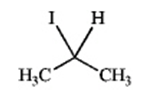 b.
c.
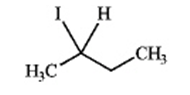 d.
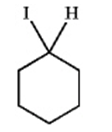 e.
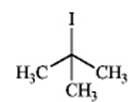
b.
c.
d.
e. (Essay)
4.9/5 (82)
(82) Instructions:
Draw the structure of the major organic products(s) for each of the following reactions. Indicate the stereochemistry for each reaction when appropriate. 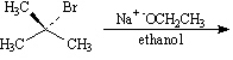
(Essay)
4.7/5 (86)
(86) For each substrate below, choose which reaction type is favored.xa0


Correct Answer:Verified
VerifiedPremises:
Responses:
(Matching)
4.8/5 (71)
(71) Instructions: Consider the reaction below to answer the following question(s). 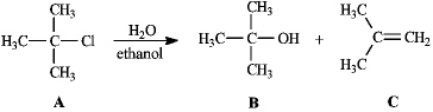 Refer to instructions. Compound C is the:
 (Multiple Choice)
4.9/5 (78)
(78) Instructions:
For each substrate below, choose which reaction type is favored. Place the letter of the reaction type in the blank above the substrate.
a.
b.
c.
d Refer to Instructions.
_____
(Short Answer)
4.9/5 (68)
(68) Which of the following statements about an SN1 reaction is true?
(Multiple Choice)
4.7/5 (77)
(77) Instructions: Provide a IUPAC name for each of the following alkyl halides.
Name: 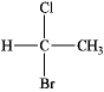
(Short Answer)
4.8/5 (74)
(74) Instructions:
Draw the structure of the major organic products(s) for each of the following reactions. Indicate the stereochemistry for each reaction when appropriate. 
(Essay)
4.8/5 (89)
(89) Instructions: Consider the reaction below to answer the following question(s). 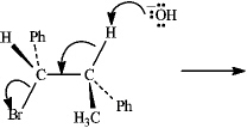 Refer to instructions. The mechanism of this reaction is:
 (Multiple Choice)
4.8/5 (87)
(87) Instructions: For each question, draw a structure corresponding to the given name.
Draw:
1,2-dichloro-1,1,2,2-tetrafluoroethane (Cryofluorane)
(Essay)
4.8/5 (87)
(87) Instructions:
Draw the structure of the major organic products(s) for each of the following reactions. Indicate the stereochemistry for each reaction when appropriate. 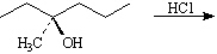
(Essay)
4.9/5 (75)
(75) Instructions:
Draw the structure of the major organic products(s) for each of the following reactions. Indicate the stereochemistry for each reaction when appropriate. 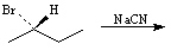
(Essay)
4.9/5 (81)
(81) Which mechanism is favored by the reaction of a tertiary alkyl chloride with ethanol?
(Multiple Choice)
4.9/5 (73)
(73) Consider the following compound: 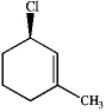 a) Whatis tha ItdAAC name of the congdund?
c. (R)-1-chloro-3-methyl-2-cycidihesine
b. (S)-1-charo-3-methyl-7-cyciaherane
c. (R)-3-choro-1-methylrydohexane
d. (S)-3-chlorol-methylcyclohexane
b) How caudd this componand be uged to gradure a corjugated digne?
c. subsrtitution
b. elimination
c. allylic free radiral farmation
d. either b or c
a) Whatis tha ItdAAC name of the congdund?
c. (R)-1-chloro-3-methyl-2-cycidihesine
b. (S)-1-charo-3-methyl-7-cyciaherane
c. (R)-3-choro-1-methylrydohexane
d. (S)-3-chlorol-methylcyclohexane
b) How caudd this componand be uged to gradure a corjugated digne?
c. subsrtitution
b. elimination
c. allylic free radiral farmation
d. either b or c (Essay)
4.9/5 (74)
(74) Instructions:
For each substrate below, choose which reaction type is favored. Place the letter of the reaction type in the blank above the substrate.
a.
b.
c.
d Refer to Instructions.
_____
(Short Answer)
4.8/5 (79)
(79) Instructions: For each question, draw a structure corresponding to the given name.
Draw:
(S)-2-bromobutane
(Essay)
4.8/5 (64)
(64) 
Filters
- Essay(0)
- Multiple Choice(0)
- Short Answer(0)
- True False(0)
- Matching(0)