



 Chat with AI
Exam 17: The Organic Chemistry of Metabolic Pathways

Exam 1: Structure and Bonding:acids and Bases40 Questions
Exam 2: Alkanes: The Nature of Organic Compounds47 Questions
Exam 3: Alkenes and Alkynes: the Nature of Organic Reactions37 Questions
Exam 4: Reactions of Alkenes and Alkynes44 Questions
Exam 5: Aromatic Compounds51 Questions
Exam 6: Sterechemistry at Tetrahedral Centers35 Questions
Exam 7: Organohalides: Nucleophilic Substitutions and Eliminations49 Questions
Exam 8: Alcohols, Phenols, Ethers, and Their Sulfur Analogs39 Questions
Exam 9: Aldehydes and Ketones: Nucleophilic Addition Reactions32 Questions
Exam 10: Carboxylic Acids and Derivatives: Nucleophilic Acyl Substitution Reactions66 Questions
Exam 11: Carbonyl Alpha-Substitution Reactions and Condensation Reactions37 Questions
Exam 12: Amines31 Questions
Exam 13: Structure Determination64 Questions
Exam 14: Biomolecules: Carbohydrates41 Questions
Exam 15: Biomolecules: Amino Acids, Peptides, and Proteins43 Questions
Exam 16: Biomolecules: Lipids and Nucleic Acids37 Questions
Exam 17: The Organic Chemistry of Metabolic Pathways35 Questions
Select questions type


What is the structure of the a-keto acid formed by transamination of the amino acid isoleucine? 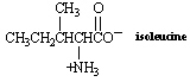
(Essay)
5.0/5  (88)
(88) Consider the deamination of serine to answer the following questions.
a) Draw the structure of the a-keta acid produced by the deamination of serine.
b) What is the fate of the amino group in serine whan thris conversion occurs in a marrmalin system?
(Essay)
4.8/5 (60)
(60) The reaction of fructose 1,6-bisphosphate to give glyceraldehyde-3-phosphate and dihydroxyacetone phosphate is an example of
(Multiple Choice)
4.9/5 (79)
(79) Consider the following reaction. 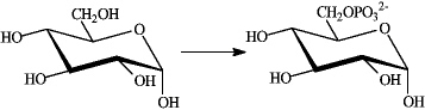 Which of the following describes this reaction?
 (Multiple Choice)
4.7/5 (77)
(77) Draw the structure of the ultimate organic glycolysis product of a-glucose. 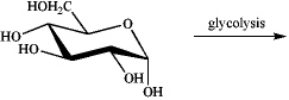
(Essay)
4.8/5 (70)
(70) How many molecules of acetyl CoA are produced in the catabolism of stearic acid?
(Short Answer)
4.8/5 (70)
(70) Consider the structure of amylopectin below to answer the following questions. 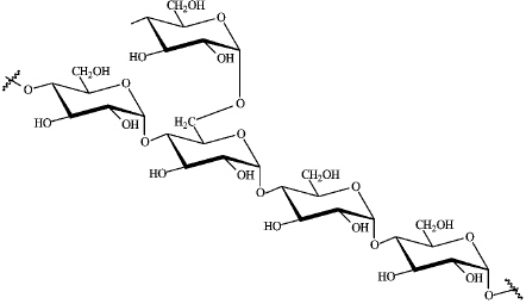
(Essay)
4.7/5 (72)
(72) Which group of small molecules best fit the boxes associated with the reaction shown? 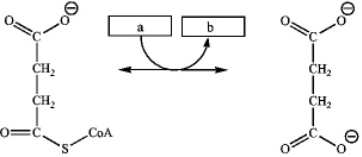 a b
a b (Multiple Choice)
4.8/5 (85)
(85) Many biological reactions are endergonic. Explain how it is possible that these reactions occur spontaneously.
(Essay)
4.9/5 (80)
(80) How many passages through the b-oxidation pathway are required to completely degrade the following fatty acid?
CH3(CH2)12CO2H
(Short Answer)
4.9/5 (80)
(80) Which group of small molecules best fit the boxes associated with the reaction shown? 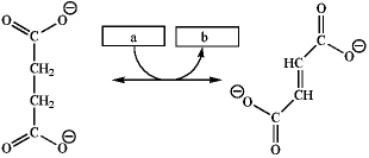 a b
a b (Multiple Choice)
4.7/5 (82)
(82) The key functional group in the PLP-dependent transamination of an a-amino acid is an activated
(Multiple Choice)
4.9/5 (75)
(75) Instructions: Consider the reaction below to answer the following question(s). 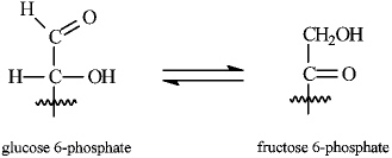 Refer to instructions. The isomerization of glucose 6-phosphate to fructose 6-phosphate is an example of:
 (Multiple Choice)
4.9/5 (84)
(84) 
Filters
- Essay(0)
- Multiple Choice(0)
- Short Answer(0)
- True False(0)
- Matching(0)