



 Chat with AI
Exam 4: Reactions of Alkenes and Alkynes

Exam 1: Structure and Bonding:acids and Bases40 Questions
Exam 2: Alkanes: The Nature of Organic Compounds47 Questions
Exam 3: Alkenes and Alkynes: the Nature of Organic Reactions37 Questions
Exam 4: Reactions of Alkenes and Alkynes44 Questions
Exam 5: Aromatic Compounds51 Questions
Exam 6: Sterechemistry at Tetrahedral Centers35 Questions
Exam 7: Organohalides: Nucleophilic Substitutions and Eliminations49 Questions
Exam 8: Alcohols, Phenols, Ethers, and Their Sulfur Analogs39 Questions
Exam 9: Aldehydes and Ketones: Nucleophilic Addition Reactions32 Questions
Exam 10: Carboxylic Acids and Derivatives: Nucleophilic Acyl Substitution Reactions66 Questions
Exam 11: Carbonyl Alpha-Substitution Reactions and Condensation Reactions37 Questions
Exam 12: Amines31 Questions
Exam 13: Structure Determination64 Questions
Exam 14: Biomolecules: Carbohydrates41 Questions
Exam 15: Biomolecules: Amino Acids, Peptides, and Proteins43 Questions
Exam 16: Biomolecules: Lipids and Nucleic Acids37 Questions
Exam 17: The Organic Chemistry of Metabolic Pathways35 Questions
Select questions type


MATCH each definition to the term it describes.xa0 Place the letter of the term in the blank to the left of the definition.
Correct Answer: Verified
Premises:
Responses:
(Matching)
4.8/5  (87)
(87) Draw all the isomeric products formed from the addition of HCl to the following compound.
(Essay)
4.8/5 (68)
(68) Instructions: Predict the products of each reaction below. Indicate regiochemistry and stereochemistry when relevant.
Predict and indicate. 
(Essay)
4.7/5 (81)
(81) Draw the structure of the polymer formed from the monomer given below, showing four repeating units. 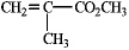
(Essay)
4.9/5 (79)
(79) The following reaction is carried out in cyclohexane with the application of heat. Write the complete equation for the reaction below. If more than one major organic product is expected, draw each one. 
(Essay)
4.9/5 (94)
(94) MATCH each definition to the term it describes. Place the letter of the term in the blank to the left of the definition.
-Refer to Instructions. _____Predicts that in addition of HX to alkenes, the H adds to the less substituted alkene carbon and the X adds to the more substituted alkene carbon.
(Multiple Choice)
4.9/5 (72)
(72) To answer the questions below, consider the following information:
In an abandoned laboratory has been found a flammable liquid, A, in a bottle bearing only the label "Compound A: C7H12. Government agents have offered you a considerable sum to determine the structure of this compound. After verifying the molecular formula by elemental analysis, you find that Compound A reacts with 1 mol equiv of hydrogen and, after treatment with acidic KMnO4, gives the dicarboxylic acid C (see below). Another bottle from the same laboratory is labeled "Compound B (isomer of A)." Compound B also reacts with 1 mol equiv of hydrogen, but yields cyclohexanone after treatment with acidic KMnO4. 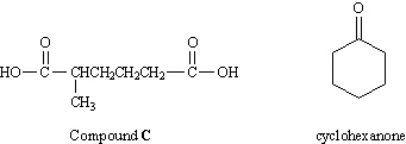 Refer to Instructions. Suggest structures for A and
B.
Refer to Instructions. Suggest structures for A and
B. (Essay)
4.8/5 (74)
(74) What type of reactive intermediate is involved in both of the following general reaction types? 1) reaction of an alkene with in the presence of water to give a bromohydrin
2) two-step hydroxylation of an alkene
(Multiple Choice)
4.8/5 (77)
(77) Instructions: Predict the structure of the alkene you would use to prepare the folloiwng compounds. There may be more than one answer in some cases.
Predict. 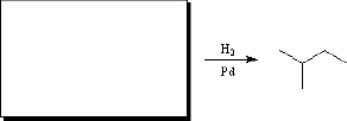
(Essay)
4.8/5 (92)
(92) Instructions: Predict the products of each reaction below. Indicate regiochemistry and stereochemistry when relevant.
Predict and indicate. 
(Essay)
4.9/5 (94)
(94) Instructions: Predict the structure of the alkene you would use to prepare the folloiwng compounds. There may be more than one answer in some cases.
Predict: 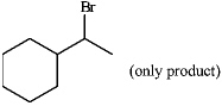
(Essay)
4.9/5 (85)
(85) Instructions: To answer the question(s) below, consider the following reaction:
When cyclohexene reacts with chlorine in tetrachloromethane, the following dihalide is formed. 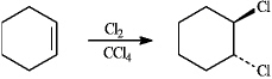 Refer to instructions. Since the two chlorine atoms add to opposite faces of the cyclohexene double bond, we say that the reaction occurs with:
 (Multiple Choice)
4.8/5 (77)
(77) What type of reactive intermediate is formed in the reaction of an alkene with HBr to give a bromoalkane?
(Multiple Choice)
4.9/5 (79)
(79) What type of reactive intermediate is formed in the reaction of an alkene with aqueous acid to give an alcohol?
(Multiple Choice)
4.8/5 (75)
(75) Instructions: Predict the structure of the alkene you would use to prepare the folloiwng compounds. There may be more than one answer in some cases.
Predict. 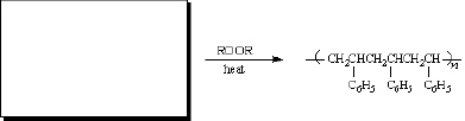
(Short Answer)
4.8/5 (81)
(81) Predict the major organic product(s) in the reaction below. If more than one major organic product is expected, draw each one. 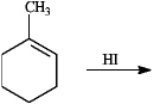
(Essay)
4.8/5 (77)
(77) Lyapolate Sodium, whose structure is shown below, is used as an anticoagulant. Identify the monomer unit(s) in lyapolate sodium. 
(Essay)
4.8/5 (79)
(79) What type of reaction mechanism accounts for the reaction of an alkene with HBr to give an alkyl bromide?
(Multiple Choice)
4.8/5 (83)
(83) Instructions: To answer the question(s) below, consider the following reaction:
When cyclohexene reacts with chlorine in tetrachloromethane, the following dihalide is formed. 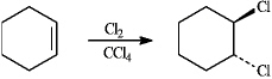 Refer to instructions. Provide the IUPAC name for the product of this reaction.
 (Short Answer)
4.8/5 (74)
(74) 
Filters
- Essay(0)
- Multiple Choice(0)
- Short Answer(0)
- True False(0)
- Matching(0)