



 Chat with AI
Exam 17: Metabolism: an Overview

Exam 1: The Facts of Life: Chemistry Is the Logic of Biological Phenomena36 Questions
Exam 2: Water: the Medium of Life43 Questions
Exam 3: Thermodynamics of Biological Systems41 Questions
Exam 4: Amino Acids and the Peptide Bond29 Questions
Exam 5: Proteins: Their Primary Structure and Biological Functions47 Questions
Exam 6: Proteins: Secondary, Tertiary, and Quaternary Structure58 Questions
Exam 7: Carbohydrates and the Glycoconjugates of Cell Surfaces58 Questions
Exam 8: Lipids35 Questions
Exam 9: Membranes and Membrane Transport44 Questions
Exam 10: Nucleotides and Nucleic Acids39 Questions
Exam 11: Structure of Nucleic Acids35 Questions
Exam 12: Recombinant Dna, Cloning, Chimeric Genes, and Synthetic Biology37 Questions
Exam 13: Enzymeskinetics and Specificity50 Questions
Exam 14: Mechanisms of Enzyme Action34 Questions
Exam 15: Enzyme Regulation40 Questions
Exam 16: Molecular Motors35 Questions
Exam 17: Metabolism: an Overview68 Questions
Exam 18: Glycolysis67 Questions
Exam 19: The Tricarboxylic Acid Cycle56 Questions
Exam 20: Electron Transport and Oxidative Phosphorylation62 Questions
Exam 21: Photosynthesis62 Questions
Exam 22: Gluconeogenesis, Glycogen Metabolism, and the Pentose Phosphate Pathway60 Questions
Exam 23: Fatty Acid Catabolism41 Questions
Exam 24: Lipid Biosynthesis70 Questions
Exam 25: Nitrogen Acquisition and Amino Acid Metabolism55 Questions
Exam 26: Synthesis and Degradation of Nucleotides41 Questions
Exam 27: Metabolic Integration and Organ Specialization47 Questions
Exam 28: Dna Metabolism: Replication, Recombination, and Repair68 Questions
Exam 29: Transcription and the Regulation of Gene Expression68 Questions
Exam 30: Protein Synthesis58 Questions
Exam 31: Completing the Protein Life Cycle: Folding, Processing, and Degradation36 Questions
Exam 32: The Reception and Transmission of Extracellular Information58 Questions
Select questions type


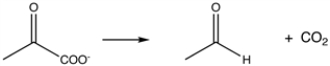

Solar energy is converted to the chemical energy of organic molecules by ____, and ____ recover this energy by metabolizing the organic substrates.
(Multiple Choice)
4.8/5  (88)
(88) One advantage of nuclear magnetic resonance (NMR) spectroscopy for the investigation of metabolism is that it utilizes:
(Multiple Choice)
4.9/5 (72)
(72) In the case of shared anabolic and catabolic pathways, the ____ serve as the points of regulation.
(Multiple Choice)
4.7/5 (84)
(84) All of the coenzymes listed participate in electron transfer EXCEPT:
(Multiple Choice)
4.7/5 (66)
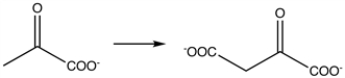
(66) 
Unsaturated fatty acids in membranes are particularly susceptible to ____ and vitamin E may provide protection because it is a potent ____.
(Multiple Choice)
4.9/5 (74)
(74) Retinol and the carotenoids follow the pathways of ____ digestion and absorption.
(Multiple Choice)
5.0/5 (81)
(81) When carbohydrate intake is low, ____ are formed from acetate units to provide metabolic fuel for the ____ and other tissue.
(Multiple Choice)
4.7/5 (77)
(77) Cholecalciferol is hydroxylated twice to form ____ that acts like a ____ to regulate ____ and ____ metabolism.
(Multiple Choice)
5.0/5 (82)
(82) When an individual has a ____ nitrogen balance, excess dietary protein is converted into ____.
(Multiple Choice)
4.7/5 (91)
(91) In prokaryotic cells, phospholipid synthesis and oxidative phosphorylation are carried out in:
(Multiple Choice)
4.9/5 (81)
(81) When dietary carbohydrate consumption exceeds the energy needs of the individual, excess carbohydrate is converted to ____ and ____ for energy storage.
(Multiple Choice)
4.8/5 (76)
(76) All are coenzymes with an adenine nucleotide portion EXCEPT:
(Multiple Choice)
4.9/5 (86)
(86) All are true about the relationship between catabolism and anabolism EXCEPT:
(Multiple Choice)
4.8/5 (78)
(78) 
Filters
- Essay(0)
- Multiple Choice(0)
- Short Answer(0)
- True False(0)
- Matching(0)