



 Chat with AI
Exam 24: Catalytic Carbon-Carbon Bond Formation

Exam 1: Covalent Bonding and Shapes of Molecules115 Questions
Exam 2: Alkanes and Cycloalkanes95 Questions
Exam 3: Stereoisomerism and Chirality93 Questions
Exam 4: Acids and Bases94 Questions
Exam 5: Alkenes: Bonding, Nomenclature, and Properties86 Questions
Exam 6: Reactions of Alkenes98 Questions
Exam 7: Alkynes100 Questions
Exam 8: Haloalkanes, Halogenation, and Radical Reactions76 Questions
Exam 9: Nucleophilic Substitution and Beta-Elimination111 Questions
Exam 10: Alcohols98 Questions
Exam 11: Ethers, Epoxides, and Sulfides93 Questions
Exam 12: Infrared Spectroscopy67 Questions
Exam 13: Nuclear Magnetic Resonance Spectroscopy102 Questions
Exam 14: Mass Spectrometry65 Questions
Exam 15: An Introduction to Organometallic Compounds66 Questions
Exam 16: Aldehydes and Ketones119 Questions
Exam 17: Carboxylic Acids71 Questions
Exam 18: Functional Derivatives of Carboxylic Acids112 Questions
Exam 19: Enolate Anions and Enamines93 Questions
Exam 20: Dienes, Conjugated Systems, and Pericyclic Reactions69 Questions
Exam 21: Benzene and the Concept of Aromaticity85 Questions
Exam 22: Reactions of Benzene and Its Derivatives107 Questions
Exam 23: Amines88 Questions
Exam 24: Catalytic Carbon-Carbon Bond Formation77 Questions
Exam 25: Carbohydrates60 Questions
Exam 26: Lipids54 Questions
Exam 27: Amino Acids and Proteins70 Questions
Exam 28: Nucleic Acids52 Questions
Exam 29: Organic Polymer Chemistry60 Questions
Select questions type


What are the two major organic products obtained from the following reaction? 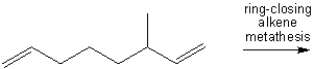
(Essay)
4.9/5  (85)
(85) What is the major organic product obtained from the following reaction? 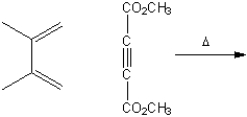
(Essay)
4.9/5 (66)
(66) Which of the following is the least reactive diene in Diels Alder reactions? 
(Multiple Choice)
4.9/5 (66)
(66) What is the major organic product of the following sequence of reactions? 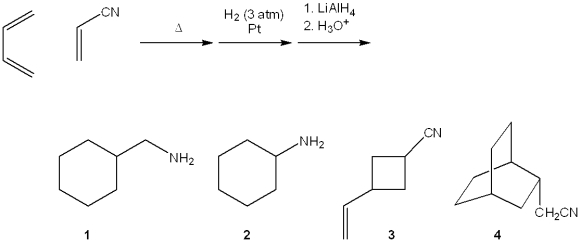
(Multiple Choice)
4.8/5 (89)
(89) Which term describes the following mechanistic step in the catalytic cycle of the Heck reaction? 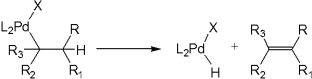
(Multiple Choice)
4.8/5 (80)
(80) What is the major organic product obtained from the following reaction? 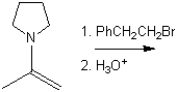
(Essay)
4.9/5 (82)
(82) What is the major organic product obtained from the following reaction? 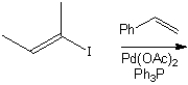
(Essay)
4.9/5 (88)
(88) Consider the following reactants.  The product of this reaction is shown below.
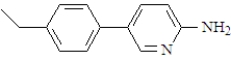
The product of this reaction is shown below. (True/False)
4.8/5 (83)
(83) In an alkene metathesis reaction where both alkenyl groups are in the same molecule, the product formed is a _______________.
(Short Answer)
4.9/5 (73)
(73) In the Heck reaction, all reactants are required in stoichiometric amounts except the Pd(0) species.
(True/False)
4.8/5 (83)
(83) What is the major organic product obtained from the following reaction? 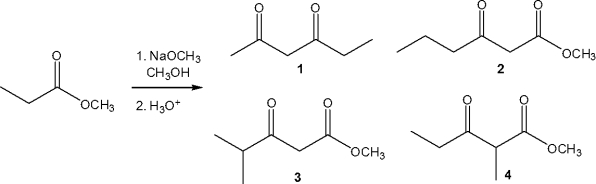
(Multiple Choice)
4.7/5 (87)
(87) Organopalladium compounds are particularly useful in forming biaryl compounds.
(True/False)
4.9/5 (93)
(93) Use the reaction types given below in answering the following questions relating to reaction conditions.
-______involves the use of alkynyl complexes.
(Multiple Choice)
4.7/5 (85)
(85) During oxidative addition and reductive elimination, the ionic charge of the metal changes.
(True/False)
4.8/5 (81)
(81) What is the major organic product obtained from the following reaction? 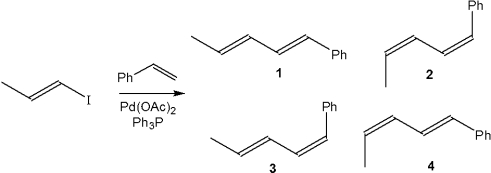
(Multiple Choice)
4.9/5 (75)
(75) In the general reaction for the Suzuki coupling, which of the following does not serve as the leaving group "X"? 
(Multiple Choice)
4.8/5 (72)
(72) The following product is a simplified penicillin analog. 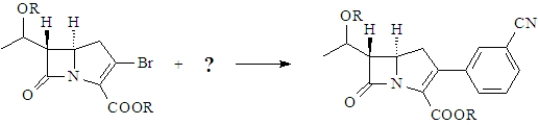 When the reaction is carried out in the presence of a palladium catalyst the structure of the missing reactant is shown below.
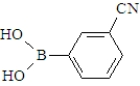
When the reaction is carried out in the presence of a palladium catalyst the structure of the missing reactant is shown below. (True/False)
4.8/5 (80)
(80) What is the major organic product obtained from the following reaction? 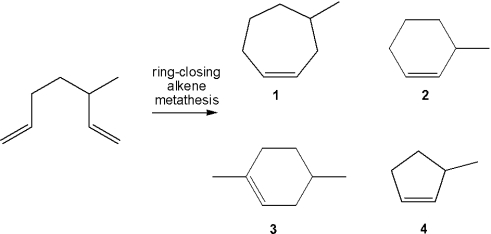
(Multiple Choice)
4.8/5 (82)
(82) What is the major organic product obtained from the following reaction? 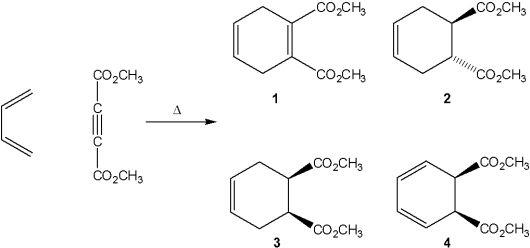
(Multiple Choice)
4.9/5 (79)
(79) What is the major organic product obtained from the following sequence of reactions? 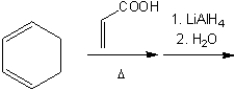
(Essay)
4.8/5 (80)
(80) 
Filters
- Essay(0)
- Multiple Choice(0)
- Short Answer(0)
- True False(0)
- Matching(0)