



 Chat with AI
Exam 16: Aldehydes and Ketones

Exam 1: Covalent Bonding and Shapes of Molecules115 Questions
Exam 2: Alkanes and Cycloalkanes95 Questions
Exam 3: Stereoisomerism and Chirality93 Questions
Exam 4: Acids and Bases94 Questions
Exam 5: Alkenes: Bonding, Nomenclature, and Properties86 Questions
Exam 6: Reactions of Alkenes98 Questions
Exam 7: Alkynes100 Questions
Exam 8: Haloalkanes, Halogenation, and Radical Reactions76 Questions
Exam 9: Nucleophilic Substitution and Beta-Elimination111 Questions
Exam 10: Alcohols98 Questions
Exam 11: Ethers, Epoxides, and Sulfides93 Questions
Exam 12: Infrared Spectroscopy67 Questions
Exam 13: Nuclear Magnetic Resonance Spectroscopy102 Questions
Exam 14: Mass Spectrometry65 Questions
Exam 15: An Introduction to Organometallic Compounds66 Questions
Exam 16: Aldehydes and Ketones119 Questions
Exam 17: Carboxylic Acids71 Questions
Exam 18: Functional Derivatives of Carboxylic Acids112 Questions
Exam 19: Enolate Anions and Enamines93 Questions
Exam 20: Dienes, Conjugated Systems, and Pericyclic Reactions69 Questions
Exam 21: Benzene and the Concept of Aromaticity85 Questions
Exam 22: Reactions of Benzene and Its Derivatives107 Questions
Exam 23: Amines88 Questions
Exam 24: Catalytic Carbon-Carbon Bond Formation77 Questions
Exam 25: Carbohydrates60 Questions
Exam 26: Lipids54 Questions
Exam 27: Amino Acids and Proteins70 Questions
Exam 28: Nucleic Acids52 Questions
Exam 29: Organic Polymer Chemistry60 Questions
Select questions type


Many nucleophilic addition reactions of aldehydes and ketones are catalyzed by acid or base. Bases catalyze hydration by converting the water to hydroxide ion, a much better nucleophile
(True/False)
4.8/5  (71)
(71) What is the major organic product obtained from the following reaction? 
(Multiple Choice)
4.7/5 (90)
(90) What is the major organic product obtained from the following reaction? 
(Multiple Choice)
4.9/5 (71)
(71) Which of the following has the highest Keq for enolization? 
(Multiple Choice)
4.9/5 (72)
(72) Consider each of the spectrum and answer the following questions using the appropriate number.
-The peak labeled _____ would allow the distinction of an aldehyde from a ketone based on this spectrum. 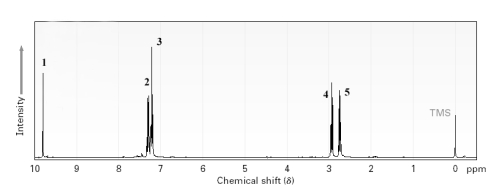
(Short Answer)
4.9/5 (92)
(92) What is the major organic product obtained from the following reaction? 
(Multiple Choice)
4.8/5 (86)
(86) What is the major organic product obtained from the following reaction? 
(Multiple Choice)
4.8/5 (73)
(73) What is the major organic product obtained from the following reaction? 
(Multiple Choice)
4.9/5 (96)
(96) What is the relationship between the following two structures? 
(Multiple Choice)
5.0/5 (87)
(87) Which of the following is not true about the Wittig reaction?
(Multiple Choice)
4.9/5 (85)
(85) Consider each of the spectrum and answer the following questions using the appropriate number.
-The peak labeled _____ would allow the distinction of an aldehyde from a ketone based on this spectrum. 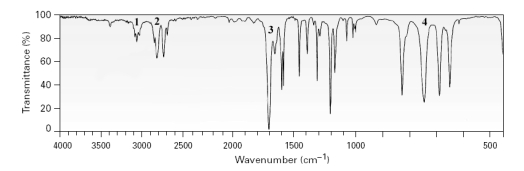
(Short Answer)
4.7/5 (80)
(80) What is the major organic product obtained from the following reaction? 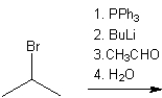
(Essay)
4.9/5 (79)
(79) The following compound can be produced by the reaction of cyclohexanecarbaldehyde and  .
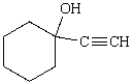
. (True/False)
4.7/5 (83)
(83) 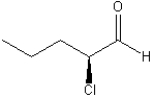
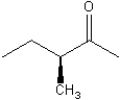
What is the major organic product obtained from the following reaction? 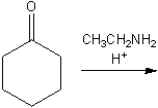
(Essay)
4.8/5 (75)
(75) What is the major organic product obtained from the following reaction? 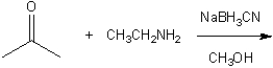
(Essay)
4.8/5 (72)
(72) Which combination(s) of alkyl bromide and carbonyl compound can be used to prepare the following product by addition of the Grignard reagent derived from the alkyl bromide to the carbonyl compound? 
(Multiple Choice)
5.0/5 (62)
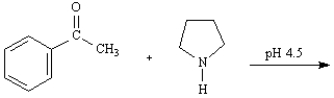
(62) 

Filters
- Essay(0)
- Multiple Choice(0)
- Short Answer(0)
- True False(0)
- Matching(0)