



 Chat with AI
Exam 24: Organic Chemistry

Exam 1: Chemistry: The Study of Change175 Questions
Exam 2: Atoms Molecules and Ions156 Questions
Exam 3: Mass Relationships in Chemical Reactions194 Questions
Exam 4: Reactions in Aqueous Solutions192 Questions
Exam 5: Gases130 Questions
Exam 6: Thermochemistry119 Questions
Exam 7: Quantum Theory and the Electronic Structure of Atoms135 Questions
Exam 8: Periodic Relationships Among the Elements144 Questions
Exam 9: Chemical Bonding I: Basic Concepts136 Questions
Exam 10: Chemical Bonding II: Molecular Geometry and Hybridization of Atomic146 Questions
Exam 11: Intermolecular Forces and Liquids and Solids149 Questions
Exam 12: Physical Properties of Solutions122 Questions
Exam 13: Chemical Kinetics131 Questions
Exam 14: Chemical Equilibrium119 Questions
Exam 15: Acids and Bases178 Questions
Exam 16: Acid-Base Equilibria and Solubility Equilibria145 Questions
Exam 17: Entropy Free Energy and Equilibrium128 Questions
Exam 18: Electrochemistry154 Questions
Exam 19: Nuclear Chemistry128 Questions
Exam 20: Chemistry in the Atmosphere50 Questions
Exam 21: Metallurgy and the Chemistry of Metals63 Questions
Exam 22: Nonmetallic Elements and Their Compounds52 Questions
Exam 23: Transition Metals Chemistry and Coordination Compounds92 Questions
Exam 24: Organic Chemistry66 Questions
Exam 25: Synthetic and Natural Organic Polymers46 Questions
Select questions type


The formulas for the alcohol and the carboxylic acid (respectively) from which the following ester may be synthesized are
CH3-(CH2)14-COOH and CH3-(CH2)9-OH. 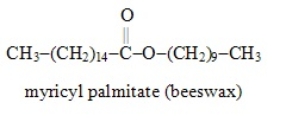
(True/False)
4.8/5  (71)
(71) Which one of the following functional groups is found in alcohols. 
(Multiple Choice)
4.7/5 (79)
(79) Which one of the following functional groups is found in carboxylic acids 
(Multiple Choice)
4.8/5 (74)
(74) The expected product from the addition of HCl to CH3-CH2-CH=CH2 is
(Multiple Choice)
4.9/5 (80)
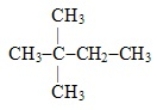
(80) Which of these is the systematic name for the compound represented below 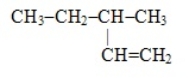
(Multiple Choice)
4.9/5 (72)
(72) The systematic name for the compound with the following structural formula is 4,5-dimethyl-2-hexene. 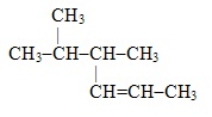
(True/False)
4.8/5 (79)
(79) The systematic name for the hydrocarbon with the following structural formula is 1-ethyl-2-methylbutane. 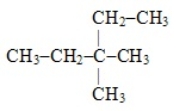
(True/False)
4.9/5 (84)
(84) Which is the product of the reaction of one mole of HCl with one mole of 1-butyne
(Multiple Choice)
4.8/5 (75)
(75) Which of these reactions leads to a change in the hybridization of one or more carbon atoms
(Multiple Choice)
4.9/5 (73)
(73) 
Water and ethylene are combined at high temperature and pressures in the presence of sulfuric acid to produce ethanol according to the following reaction: CH2=CH2(g) + H2O(g) CH3CH2OH(g)
What is the hybridization of the bolded carbon atoms in the reactants and products, respectively
(Multiple Choice)
4.8/5 (79)
(79) 
Filters
- Essay(0)
- Multiple Choice(0)
- Short Answer(0)
- True False(0)
- Matching(0)