



 Chat with AI
Exam 25: Synthetic and Natural Organic Polymers

Exam 1: Chemistry: The Study of Change175 Questions
Exam 2: Atoms Molecules and Ions156 Questions
Exam 3: Mass Relationships in Chemical Reactions194 Questions
Exam 4: Reactions in Aqueous Solutions192 Questions
Exam 5: Gases130 Questions
Exam 6: Thermochemistry119 Questions
Exam 7: Quantum Theory and the Electronic Structure of Atoms135 Questions
Exam 8: Periodic Relationships Among the Elements144 Questions
Exam 9: Chemical Bonding I: Basic Concepts136 Questions
Exam 10: Chemical Bonding II: Molecular Geometry and Hybridization of Atomic146 Questions
Exam 11: Intermolecular Forces and Liquids and Solids149 Questions
Exam 12: Physical Properties of Solutions122 Questions
Exam 13: Chemical Kinetics131 Questions
Exam 14: Chemical Equilibrium119 Questions
Exam 15: Acids and Bases178 Questions
Exam 16: Acid-Base Equilibria and Solubility Equilibria145 Questions
Exam 17: Entropy Free Energy and Equilibrium128 Questions
Exam 18: Electrochemistry154 Questions
Exam 19: Nuclear Chemistry128 Questions
Exam 20: Chemistry in the Atmosphere50 Questions
Exam 21: Metallurgy and the Chemistry of Metals63 Questions
Exam 22: Nonmetallic Elements and Their Compounds52 Questions
Exam 23: Transition Metals Chemistry and Coordination Compounds92 Questions
Exam 24: Organic Chemistry66 Questions
Exam 25: Synthetic and Natural Organic Polymers46 Questions
Select questions type


Which of these molecules is a product of the hydrolysis of DNA
(Multiple Choice)
4.9/5  (73)
(73) Which choice lists both the sugar and the nitrogen base that are a part of RNA but are not part of DNA
(Multiple Choice)
4.9/5 (80)
(80) 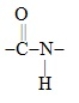 found in proteins is called a (an)
Cysteine and methionine are unique among the twenty essential amino acids in that they
(Multiple Choice)
4.9/5 (82)
(82) Amides are synthesized from two classes of organic compounds. Those two types of compounds are
(Multiple Choice)
4.9/5 (92)
(92) 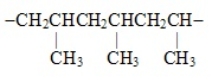 represents the polymer named
The monomer used to prepare polyvinyl chloride (PVC) is CHCl=CHCl.
(True/False)
4.8/5 (76)
(76) Hydrogen bonding, dispersion forces, ionic forces, and dipole-dipole forces all affect the structure of a protein.
(True/False)
4.9/5 (73)
(73) What type of polymer is represented by the following repeating segment 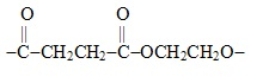
(Multiple Choice)
4.9/5 (84)
(84) Which of the following statements about the binding of oxygen to deoxyhemoglobin is correct
(Multiple Choice)
4.9/5 (75)
(75) Which one of these choices is the general structural formula of an amino acid
(Multiple Choice)
4.9/5 (73)
(73) The reaction of the diamine and di-carboxylic acid shown below produces nylon polymer. The correct structure for the repeating unit of the nylon polymer follows the arrow. 
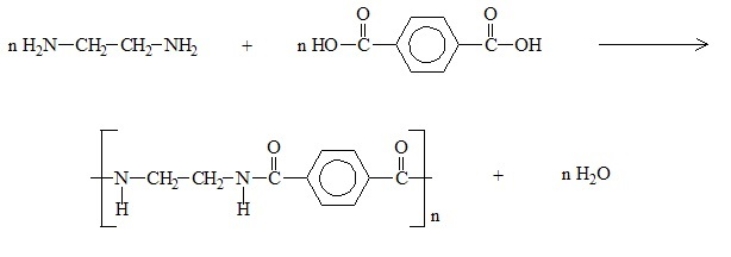
(True/False)
5.0/5 (87)
(87) Which of the following polymers has a syndiotactic structure
(Multiple Choice)
4.9/5 (72)
(72) 
Filters
- Essay(0)
- Multiple Choice(0)
- Short Answer(0)
- True False(0)
- Matching(0)