



 Chat with AI
Exam 18: Urinary System and Venipuncture

Exam 1: Preliminary Steps in Radiography33 Questions
Exam 2: Compensating Filters14 Questions
Exam 3: General Anatomy and Radiographic Positioning Terminology101 Questions
Exam 4: Upper Limb125 Questions
Exam 5: Shoulder Girdle92 Questions
Exam 6: Lower Limb143 Questions
Exam 7: Pelvis and Upper Femora53 Questions
Exam 8: Vertebral Column175 Questions
Exam 9: Bony Thorax58 Questions
Exam 10: Thoracic Viscera74 Questions
Exam 11: Long Bone Measurement10 Questions
Exam 12: Contrast Arthrography5 Questions
Exam 13: Trauma Radiography10 Questions
Exam 14: Mouth and Salivary Glands10 Questions
Exam 15: Anterior Part of Neck9 Questions
Exam 16: Abdomen30 Questions
Exam 17: Digestive System: Alimentary Canal130 Questions
Exam 18: Urinary System and Venipuncture96 Questions
Exam 19: Reproductive System11 Questions
Exam 20: Skull, Facial Bones, and Paranasal Sinuses196 Questions
Exam 21: Mammography35 Questions
Exam 22: Central Nervous System15 Questions
Exam 23: Vascular, Cardiac, and Interventional Radiography40 Questions
Exam 24: Pediatric Imaging20 Questions
Exam 25: Geriatric Radiography18 Questions
Exam 26: Mobile Radiography20 Questions
Exam 27: Surgical Radiography10 Questions
Exam 28: Sectional Anatomy for Radiographers30 Questions
Exam 29: Computed Tomography16 Questions
Exam 30: Magnetic Resonance Imaging21 Questions
Exam 31: Diagnostic Ultrasound14 Questions
Exam 32: Nuclear Medicine18 Questions
Exam 33: Bone Densitometry18 Questions
Exam 34: Radiation Oncology20 Questions
Select questions type


The most common cause of contrast medium leaking out of a vessel and infiltrating the surrounding tissues is:
(Multiple Choice)
5.0/5  (86)
(86) Which of the following would indicate that contrast medium has infiltrated the surrounding vessels?
1)Swelling
2)Burning
3)Discoloration
(Multiple Choice)
4.7/5 (73)
(73) The respiration phase for all exposures made during an IVU is:
(Multiple Choice)
4.9/5 (69)
(69) The radiologic technologist may initiate venipuncture and administer medications on the order of:
1)any physician.
2)a registered nurse (RN) supervisor.
3)a radiologic technologist supervisor.
(Multiple Choice)
5.0/5 (77)
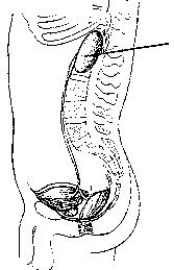
(77) 
Significant reactions to contrast media include:
1)nausea.
2)vomiting.
3)edema of the respiratory mucous membrane.
(Multiple Choice)
4.7/5 (65)
(65) Which of the following is true regarding positioning of the abdomen for a lateral projection of the urinary system?
(Multiple Choice)
4.9/5 (86)
(86) During venipuncture, how far above the site of the puncture is the tourniquet placed?
(Multiple Choice)
4.8/5 (71)
(71) What is the central-ray angulation for the PA axial urinary bladder?
(Multiple Choice)
4.8/5 (85)
(85) Functions of the kidney include:
1. removing waste products from the blood.
2. maintaining fluid and electrolyte balance.
3. secreting substances that affect blood pressure.
(Multiple Choice)
4.8/5 (75)
(75) Where is the IR centered for an AP axial projection of the urinary bladder (cystogram)?
(Multiple Choice)
4.7/5 (87)
(87) In some radiography procedures involving the urinary system, the contrast medium is introduced against the normal flow. This is termed:
(Multiple Choice)
4.8/5 (89)
(89) A moderate reaction to a medication or contrast medium would be:
(Multiple Choice)
4.9/5 (83)
(83) The site where the ureters enter the bladder is termed the _____ junction.
(Multiple Choice)
4.8/5 (83)
(83) The mucosal folds on the inside of the urinary bladder are called:
(Multiple Choice)
4.8/5 (89)
(89) The common reactions to contrast media include: 1.warmth.
2)flushing.
3)anaphylactic reaction.
(Multiple Choice)
4.8/5 (69)
(69) 
Filters
- Essay(0)
- Multiple Choice(0)
- Short Answer(0)
- True False(0)
- Matching(0)