



 Chat with AI
Exam 7: The Sun

Exam 1: Here and Now97 Questions
Exam 2: A Users Guide to the Sky116 Questions
Exam 3: Cycles of the Sun and Moon154 Questions
Exam 4: The Origin of Modern Astronomy144 Questions
Exam 5: Light and Telescopes156 Questions
Exam 6: Atoms and Spectra125 Questions
Exam 7: The Sun146 Questions
Exam 8: The Family of Stars190 Questions
Exam 9: The Formation and Structure of Stars136 Questions
Exam 10: The Deaths of Stars128 Questions
Exam 11: Neutron Stars and Black Holes99 Questions
Exam 12: The Milky Way Galaxy117 Questions
Exam 13: Galaxies: Normal and Active151 Questions
Exam 14: Modern Cosmology112 Questions
Exam 15: Origin of the Solar System and Extrasolar Planets104 Questions
Exam 16: Earth and Moon: Bases for Comparative Planetology98 Questions
Exam 17: Mercury, Venus, and Mars83 Questions
Exam 18: The Outer Solar System137 Questions
Exam 19: Meteorites, Asteroids, and Comets91 Questions
Exam 20: Astrobiology: Life on Other Worlds97 Questions
Select questions type


Energy is transported through the Sun by ______________ and _____________.
(Short Answer)
4.7/5  (77)
(77) ________ occur about 130 km above Earth's surface near the polar regions when energy in the solar wind guided by Earth's magnetic field excites gases in the upper atmosphere.
(Multiple Choice)
4.8/5 (80)
(80) Differential rotation occurs in the __________ Sun; we know this because the ____________ travels faster than the ___________ .
(Multiple Choice)
4.8/5 (82)
(82)  The above image is a __________ wavelength image of granulation in the ___________.
 (Multiple Choice)
4.8/5 (76)
(76) Helioseismology shows that deeper layers of gas in the Sun rotate at different speeds. When different parts of an object rotate at different rates it is called
(Multiple Choice)
4.9/5 (70)
(70) What is the explanation for the pattern of granulation seen on the visible surface of the Sun?
(Multiple Choice)
4.9/5 (66)
(66) When four hydrogen nuclei fuse to make helium, a small amount of matter is lost. What is the mass difference and energy generated? The mass of hydrogen and helium nuclei are 1.67 × 10⁻²⁷ kg and 6.646 × 10⁻²⁷ kg, respectively.
(Multiple Choice)
4.7/5 (79)
(79) A ________ is believed to occur when energy, stored in a twist in the solar magnetic field above a sunspot, is suddenly released.
(Multiple Choice)
4.9/5 (83)
(83) Helioseismology is the study of the differential rotation and magnetic field of the Sun.
(True/False)
4.9/5 (83)
(83) High temperatures are required to get H nuclei to fuse because they ________ one another because of their ________ electric charges.
(Multiple Choice)
4.8/5 (82)
(82) 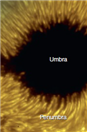 As shown in the above image, rising material is flowing from the penumbra and into the umbra where it sinks.
 (True/False)
4.8/5 (89)
(89) The Babcock model employs differential rotation of the solar surface and a magnetic dynamo to describe the formation of sunspots.
(True/False)
4.7/5 (72)
(72) The chromosphere of the Sun has a higher temperature than the photosphere.
(True/False)
4.9/5 (81)
(81) 
Filters
- Essay(0)
- Multiple Choice(0)
- Short Answer(0)
- True False(0)
- Matching(0)