



 Chat with AI
Exam 6: Atoms and Spectra

Exam 1: Here and Now97 Questions
Exam 2: A Users Guide to the Sky116 Questions
Exam 3: Cycles of the Sun and Moon154 Questions
Exam 4: The Origin of Modern Astronomy144 Questions
Exam 5: Light and Telescopes156 Questions
Exam 6: Atoms and Spectra125 Questions
Exam 7: The Sun146 Questions
Exam 8: The Family of Stars190 Questions
Exam 9: The Formation and Structure of Stars136 Questions
Exam 10: The Deaths of Stars128 Questions
Exam 11: Neutron Stars and Black Holes99 Questions
Exam 12: The Milky Way Galaxy117 Questions
Exam 13: Galaxies: Normal and Active151 Questions
Exam 14: Modern Cosmology112 Questions
Exam 15: Origin of the Solar System and Extrasolar Planets104 Questions
Exam 16: Earth and Moon: Bases for Comparative Planetology98 Questions
Exam 17: Mercury, Venus, and Mars83 Questions
Exam 18: The Outer Solar System137 Questions
Exam 19: Meteorites, Asteroids, and Comets91 Questions
Exam 20: Astrobiology: Life on Other Worlds97 Questions
Select questions type


Atoms that have the same number of protons but a different number of neutrons are called
(Multiple Choice)
4.9/5  (84)
(84) To know the element name on the periodic table, you need to know the number of neutrons in the nucleus.
(True/False)
4.8/5 (76)
(76) The longer the wavelength, the bluer and brighter the star appears.
(True/False)
4.8/5 (68)
(68) When an electron transitions from a higher orbital level to a lower orbital level, a photon is ______.
(Multiple Choice)
4.9/5 (71)
(71) The Sun has a surface temperature of approximately 5800 K. At what wavelength does the maximum energy radiated by the Sun occur?
(Multiple Choice)
4.8/5 (79)
(79) Which of the following cannot be determined from the spectrum of a star?
(Multiple Choice)
4.7/5 (90)
(90) Which one of the hydrogen atoms below is EMITTING light? The electron jumps from the
(Multiple Choice)
4.9/5 (76)
(76) The temperature of an object from which no heat energy can be extracted is
(Multiple Choice)
4.8/5 (86)
(86) How much energy is radiated each second by one square meter of a star whose temperature is 10,000 K? Note: σ in the Stefan-Boltzmann law is equal to 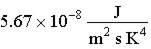 .
. (Multiple Choice)
4.9/5 (85)
(85) Blue stars emit most of their energy at shorter wavelengths than red stars.
(True/False)
4.8/5 (76)
(76) ____ has a negative charge and a mass about 2000 times smaller than a proton.
(Multiple Choice)
4.9/5 (62)
(62) Bluer stars are brighter than redder stars of the same size. Assume both are typical stars.
(True/False)
4.7/5 (89)
(89) If temperature refers to the intensity of agitation then absolute zero is no agitation.
(True/False)
4.9/5 (63)
(63) The Doppler effect states that the motion of any object can
(Multiple Choice)
4.9/5 (81)
(81) Part of astrophysics is understanding the history of celestial objects.
(True/False)
4.9/5 (74)
(74) If you move an electron in an atom from a low energy level to a higher energy level within the atom, we say that the atom is
(Multiple Choice)
4.9/5 (80)
(80) 
Filters
- Essay(0)
- Multiple Choice(0)
- Short Answer(0)
- True False(0)
- Matching(0)