



 Chat with AI
Exam 22: Revolution and Counterrevolution 1815-1848

Exam 1: The Ancient Near East: The First Civilizations85 Questions
Exam 2: The Hebrews: a New View of God and the Individual90 Questions
Exam 3: The Greek City-State Democratic Politics78 Questions
Exam 4: Greek Thought From Myth to Reason77 Questions
Exam 5: The Hellenistic Age Cultural Diffusion76 Questions
Exam 6: The Roman Republic City-State to World Empire75 Questions
Exam 7: The Roman Empire a World-State90 Questions
Exam 8: Early Christianity a World Religion79 Questions
Exam 9: The Heirs of Rome Byzantium Islam and Latin Christendom95 Questions
Exam 10: The High Middle Ages Vitality and Enewal83 Questions
Exam 11: The Flowering of Medieval Culture the Christian Synthesis78 Questions
Exam 12: The Late Middle Ages Crisis and Dissolution76 Questions
Exam 13: The Renaissance Transition to the Modern Age88 Questions
Exam 14: The Reformation the Shattering of Christian Unity84 Questions
Exam 15: European Expansion Economic and Social Transformations88 Questions
Exam 16: The Rise of Sovereignty Transition to the Modern State84 Questions
Exam 17: The Scientific Revolution the Universe Seen As a Mechanism81 Questions
Exam 18: The Age of Enlightenment Reason and Reform89 Questions
Exam 19: The French Revolution the Affirmation of Liberty and Equality118 Questions
Exam 20: The Industrial Revolution the Great Transformation77 Questions
Exam 21: Thought and Culture in the Early Nineteenth Century105 Questions
Exam 22: Revolution and Counterrevolution 1815-184879 Questions
Exam 23: Thought and Culture in the Mid-Nineteenth Century Realism and Social Criticism81 Questions
Exam 24: The Surge of Nationalism From Liberal to Extreme Nationalism77 Questions
Exam 25: The Industrial West Responses to Modernization91 Questions
Exam 26: Imperialism Western Global Dominance92 Questions
Exam 27: Modern Consciousness New Views of Nature Human Nature and the Arts80 Questions
Exam 28: World War I the West in Despair87 Questions
Exam 29: An Era of Totalitarianism112 Questions
Exam 30: Thought and Culture in an Era of World Wars and Totalitarianism75 Questions
Exam 31: World War II Western Civilization in the Balance85 Questions
Exam 32: Europe After World War II Recovery and Realignment 1945-198987 Questions
Exam 33: The Troubled Present85 Questions
Select questions type


Long-term consequences of the 1848 revolutions include all the following EXCEPT
(Multiple Choice)
5.0/5  (80)
(80) Instructions: Please write a thorough, well-organized essay to answer each question. Identify and explain both the liberal and the nationalist aims which were present during the revolutions of 1848 in Italy.
(Essay)
4.8/5 (78)
(78) The French government whose ouster in 1848 sparked revolutions throughout Europe was run by
(Multiple Choice)
4.7/5 (75)
(75) All of the following is true of Viennese revolutionaries in 1848 EXCEPT
(Multiple Choice)
4.8/5 (75)
(75) During the Bourbon restoration, King Louis XVIII did all the following EXCEPT
(Multiple Choice)
4.7/5 (74)
(74) Instructions: Please define the following key terms. Show Who? What? Where? When? Why Important?
ultras
(Short Answer)
4.9/5 (81)
(81) Instructions: Please write a thorough, well-organized essay to answer each question. What goals and principles shaped the Congress of Vienna, and how did it define Europe during the first half of the nineteenth century?
(Essay)
4.8/5 (83)
(83) Instructions: Please define the following key terms. Show Who? What? Where? When? Why Important?
Five Glorious Days
(Essay)
5.0/5 (77)
(77) Instructions: Please write a thorough, well-organized essay to answer each question. Comment on the dissatisfaction of the working class of Europe in 1848. Were the problems confined to specific areas?
(Essay)
4.9/5 (78)
(78) In the debate at the Frankfurt Assembly (National Assembly)in 1848, Wilhelm Jordan described Poles as a people
(Multiple Choice)
4.8/5 (84)
(84) Instructions: Please define the following key terms. Show Who? What? Where? When? Why Important?
Old Order
(Essay)
4.9/5 (81)
(81) Instructions: Please define the following key terms. Show Who? What? Where? When? Why Important?
dissolution complex
(Essay)
4.9/5 (85)
(85) Instructions: Please write a thorough, well-organized essay to answer each question. What were the legacies of the revolutions of 1848? Who gained, and who lost, and why?
(Essay)
4.9/5 (85)
(85) Although not solving the root problems of the working class, the new republican government in France
(Multiple Choice)
5.0/5 (80)
(80) Instructions: Please use this outline map of Europe to answer the question(s). 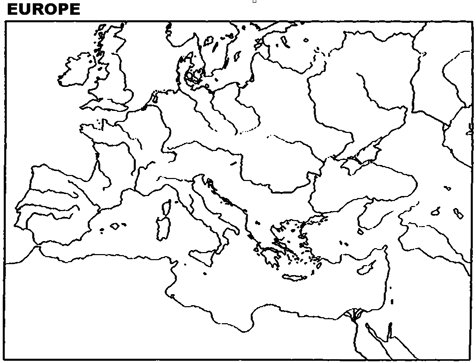 Locate and label the following sites of revolutionary developments of 1848: Paris, Budapest, Vienna, Prague, Berlin, Posen, Frankfurt, Milan, Venice, Rome, and Dresden.
 (Not Answered)
This question doesn't have any answer yet
Instructions: Please write a thorough, well-organized essay to answer each question. Why was Britain exempt from truly violent revolutionary turmoil in 1848?
(Essay)
4.7/5 (81)
(81) Instructions: Please define the following key terms. Show Who? What? Where? When? Why Important?
Concert of Europe
(Essay)
4.9/5 (84)
(84) Which veteran of the Congress of Vienna was still trying to contain the forces of liberalism and nationalism at the beginning of the revolutions of 1848?
(Multiple Choice)
5.0/5 (77)
(77) At mid-century, where did revolutionary discontent erupt even before the Parisians rebelled in the February Revolution?
(Multiple Choice)
4.8/5 (74)
(74) 
Filters
- Essay(0)
- Multiple Choice(0)
- Short Answer(0)
- True False(0)
- Matching(0)