



 Chat with AI
Exam 8: Alcohols, Phenols, Ethers, and Their Sulfur Analogs

Exam 1: Structure and Bonding:acids and Bases41 Questions
Exam 2: Alkanes: the Nature of Organic Compounds44 Questions
Exam 3: Alkenes and Alkynes: the Nature of Organic Reactions40 Questions
Exam 4: Reactions of Alkenes and Alkynes44 Questions
Exam 5: Aromatic Compounds52 Questions
Exam 6: Sterechemistry at Tetrahedral Centers39 Questions
Exam 7: Organohalides: Nucleophilic Substitutions and Eliminations40 Questions
Exam 8: Alcohols, Phenols, Ethers, and Their Sulfur Analogs36 Questions
Exam 9: Aldehydes and Ketones: Nucleophilic Addition Reactions32 Questions
Exam 10: Carboxylic Acids and Derivatives: Nucleophilic Acyl Substitution Reactions63 Questions
Exam 11: Carbonyl Alpha-Substitution Reactions and Condensation Reactions38 Questions
Exam 12: Amines32 Questions
Exam 13: Structure Determination65 Questions
Exam 14: Biomolecules: Carbohydrates48 Questions
Exam 15: Biomolecules: Amino Acids, Peptides, and Proteins50 Questions
Exam 16: Biomolecules: Lipids and Nucleic Acids50 Questions
Exam 17: The Organic Chemistry of Metabolic Pathways40 Questions
Select questions type


Instructions: To answer the following question(s), consider the reaction below. 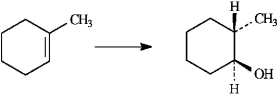 -Refer to instructions. The alcohol product is classified as a:
 (Multiple Choice)
4.9/5  (78)
(78) Instructions: Provide correct IUPAC names for each of the structures below.
-Name: 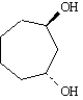
(Short Answer)
4.7/5 (74)
(74) Instructions: Consider the reaction below to answer the following question.  -Refer to instructions. Mechanistically, the Williamson ether synthesis outlined above is:
 (Multiple Choice)
4.9/5 (64)
(64) Choose the best reagent(s) for carrying out the following conversions from the list provided below. Place the letter of the best choice in the blank. Reagents may be used more than once.
-Refer to instructions: ______ 
(Multiple Choice)
4.9/5 (94)
(94) Choose the best reagent(s) for carrying out the following conversions from the list provided below. Place the letter of the best choice in the blank. Reagents may be used more than once.
-Refer to instructions. _____ 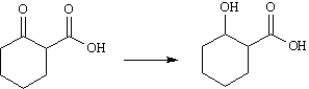
(Multiple Choice)
4.8/5 (64)
(64) Instructions: To answer the following question(s), consider the reaction below.
-Refer to instructions. Provide the IUPAC name for the product alcohol.
-Refer to instructions. Provide the IUPAC name for the product alcohol. (Short Answer)
4.9/5 (78)
(78) Instructions: Refer to the data below to answer the following question(s).
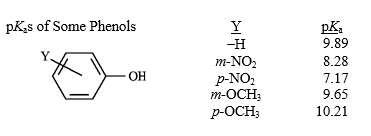 -Refer to instructions.
a)The weakest acid in the table is _____.
b)Which of the acids in the table has the weakest conjugate base?
-Refer to instructions.
a)The weakest acid in the table is _____.
b)Which of the acids in the table has the weakest conjugate base? (Short Answer)
5.0/5 (80)
(80) Choose the best reagent(s) for carrying out the following conversions from the list provided below. Place the letter of the best choice in the blank. Reagents may be used more than once.
-Refer to instructions. _____ 
(Multiple Choice)
5.0/5 (69)
(69) Instructions: Provide correct IUPAC names for each of the structures below.
-Name: 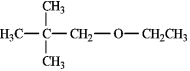
(Essay)
4.8/5 (79)
(79) 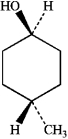
Instructions:
Give the major organic product(s) of the following reactions or sequences of reactions. Show all relevant stereochemistry.
-Write the product(s): 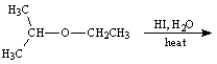
(Essay)
4.8/5 (67)
(67) What is the best way to make the following ether by a Williamson ether synthesis? 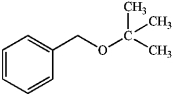
(Essay)
4.8/5 (66)
(66) Instructions: Draw structures corresponding to each of the following IUPAC names.
-Draw:
3-methylbutane-1-thiol
(Essay)
4.9/5 (93)
(93) Instructions:
Give the major organic product(s) of the following reactions or sequences of reactions. Show all relevant stereochemistry.
-Write the product(s): 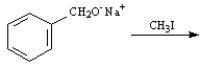
(Essay)
4.9/5 (82)
(82) Instructions: Consider the Grignard reaction below to answer the following question(s). 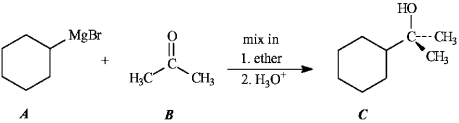 -Refer to instructions. If a secondary alcohol were desired as a product of the reaction, B should be replaced with
 (Multiple Choice)
4.9/5 (82)
(82) Which of the following would not react with either Na2Cr2O7 or periodinane? 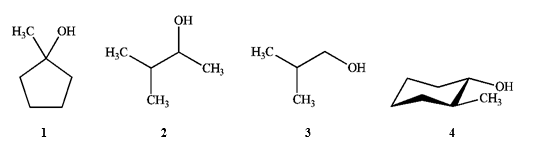
(Multiple Choice)
4.8/5 (82)
(82) 
Filters
- Essay(0)
- Multiple Choice(0)
- Short Answer(0)
- True False(0)
- Matching(0)