



 Chat with AI
Exam 1: The Human Organism

Exam 1: The Human Organism140 Questions
Exam 2: The Chemical Basis of Life207 Questions
Exam 3: Cell Biology230 Questions
Exam 4: Tissues208 Questions
Exam 5: Integumentary System175 Questions
Exam 6: Skeletal System: Bones and Bone Tissue178 Questions
Exam 7: Skeletal System: Gross Anatomy179 Questions
Exam 8: Joint and Movement149 Questions
Exam 9: Muscular System: Histology and Physiology231 Questions
Exam 10: Muscular System: Gross Anatomy168 Questions
Exam 11: Functional Organization of Nervous Tissue192 Questions
Exam 12: Spinal Cord and Spinal Nerves141 Questions
Exam 13: Brain and Cranial Nerves176 Questions
Exam 14: Integration of Nervous System Functions149 Questions
Exam 15: The Special Senses220 Questions
Exam 16: Autonomic Nervous System120 Questions
Exam 17: Functional Organization of the Endocrine System90 Questions
Exam 18: Endocrine Glands183 Questions
Exam 19: Cardiovascular System: Blood151 Questions
Exam 20: Cardiovascular System: the Heart167 Questions
Exam 21: Cardiovascular System: Blood Vessels and Circulation226 Questions
Exam 22: Lymphatic System and Immunity193 Questions
Exam 23: Respiratory System182 Questions
Exam 24: Digestive System249 Questions
Exam 25: Nutrition, Metabolism, and Temperature Regulation190 Questions
Exam 26: Urinary System170 Questions
Exam 27: Water, Electrolyte, and Acid-Base Balance109 Questions
Exam 28: Reproductive System169 Questions
Exam 29: Development, Growth, Aging, and Genetics197 Questions
Select questions type


Which structure is located inferior and lateral to the heart?
(Multiple Choice)
5.0/5  (77)
(77) While Stacy is in the process of passing over the bar during a pole vault, her hips are considered to be
(Multiple Choice)
4.8/5 (79)
(79) The anatomical arm refers to the part of the upper limb from the
(Multiple Choice)
4.8/5 (91)
(91) In reference to the body temperature in living organisms, the set point can be defined as the
(Multiple Choice)
4.8/5 (87)
(87)  -Directional terms are important in the study of anatomy. What does "C" represent?
 (Multiple Choice)
4.7/5 (81)
(81)  -Here is a figure showing major body cavities and other structures. What does "A" represent?
 (Multiple Choice)
4.7/5 (76)
(76)  -This is a sagittal section through the abdominopelvic cavity. What cavity does "D" represent?
 (Multiple Choice)
4.9/5 (86)
(86) The change in size of the bone marrow (where blood cells are produced) as an infant matures is an example of ________, whereas the transformation of blood stem cells into white blood cells is an example of ________.
(Multiple Choice)
4.9/5 (83)
(83) This figure illustrates changes in blood pressure when ________ feedback mechanisms are in control. 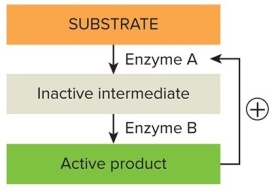
(Multiple Choice)
4.9/5 (82)
(82) Aldosterone is a hormone that increase the level of Na+ in the blood. Considering negative-feedback regulation of blood Na+ levels, which of the following events would most likely be an effect of aldosterone on the body in blood Na+ levels decreased?
(Multiple Choice)
4.8/5 (77)
(77) Blood glucose concentration rises after a meal and stimulates the pancreas to release the hormone insulin. Insulin travels in the blood and stimulates the uptake of glucose by body cells from the bloodstream, thus reducing blood glucose concentration. This is an example of ________.
(Multiple Choice)
4.8/5 (95)
(95) The study of the external form of the body and its relationship to deeper structures is ________.
(Multiple Choice)
4.7/5 (72)
(72) Which technique creates a three-dimensional dynamic image of blood vessels?
(Multiple Choice)
4.9/5 (81)
(81)
-Directional terms are important in the study of anatomy. What does "E" represent?
-Directional terms are important in the study of anatomy. What does "E" represent? (Multiple Choice)
4.9/5 (78)
(78) A cut through the long axis of an organ is a/an ________ section.
(Multiple Choice)
4.9/5 (85)
(85) 
Filters
- Essay(0)
- Multiple Choice(0)
- Short Answer(0)
- True False(0)
- Matching(0)