



 Chat with AI
Exam 1: Introduction and Review

Exam 1: Introduction and Review127 Questions
Exam 2: Structure and Properties of Organic Molecules129 Questions
Exam 3: Structure and Stereochemistry of Alkanes129 Questions
Exam 4: The Study of Chemical Reactions128 Questions
Exam 5: Stereochemistry128 Questions
Exam 6: Alkyl Halides: Nucleophilic Substitution and Elimination132 Questions
Exam 7: Structure and Synthesis of Alkenes128 Questions
Exam 8: Reactions of Alkenes132 Questions
Exam 9: Alkynes124 Questions
Exam 10: Structure and Synthesis of Alcohols132 Questions
Exam 11: Reactions of Alcohols124 Questions
Exam 12: Infrared Spectroscopy and Mass Spectrometry120 Questions
Exam 13: Nuclear Magnetic Resonance Spectroscopy130 Questions
Exam 14: Ethers, Epoxides, and Thioethers127 Questions
Exam 15: Conjugated Systems, Orbital Symmetry, and Ultraviolet Spectroscopy130 Questions
Exam 16: Aromatic Compounds128 Questions
Exam 17: Reactions of Aromatic Compounds129 Questions
Exam 18: Ketones and Aldehydes132 Questions
Exam 19: Amines129 Questions
Exam 20: Carboxylic Acids125 Questions
Exam 21: Carboxylic Acid Derivatives128 Questions
Exam 22: Condensations and Alpha Substitutions of Carboxyl Compounds125 Questions
Exam 23: Carbohydrates and Nucleic Acids125 Questions
Exam 24: Amino Acids, Peptides, and Proteins127 Questions
Exam 25: Lipids127 Questions
Exam 26: Synthetic Polymers128 Questions
Select questions type


A carbon-hydrogen bond in ethane (CH3CH3) is best described a ________.
(Multiple Choice)
4.9/5  (90)
(90) The atomic number of boron is 5. The correct electronic configuration of boron is:
(Multiple Choice)
4.7/5 (85)
(85) 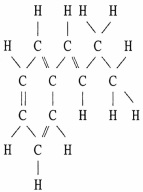
Write a Lewis structure for a compound with the molecular formula H2N2.
(Essay)
4.9/5 (86)
(86) Orbitals which are equal in energy are referred to as ________.
(Multiple Choice)
4.8/5 (79)
(79) Which element in the second row of the periodic table has six valence electrons and a valence of two?
(Short Answer)
4.7/5 (67)
(67) Which sequence ranks the indicated protons in order of increasing acidity? 
(Multiple Choice)
4.7/5 (74)
(74) How many distinct p orbitals exist in the second electron shell, where n = 2?
(Multiple Choice)
5.0/5 (73)
(73) Rank the following compounds in order of increasing basicity: CH3O-, H2N-, H2O, and NH3.
(Essay)
4.8/5 (76)
(76) Which of the following terms comes closest to describing an electrophile?
(Multiple Choice)
4.8/5 (83)
(83) Atoms with the same number of protons but different numbers of neutrons are called ________.
(Short Answer)
4.8/5 (88)
(88) In the reaction below, label each reactant as a nucleophile or an electrophile.
CH3COO- + O2S(OCH3)2 → CH3COOCH3 + CH3SO4-
(Essay)
4.9/5 (84)
(84) The formal charge on nitrogen in the compound below is ________. 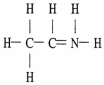
(Multiple Choice)
4.8/5 (80)
(80) In the reaction below, label each reactant as a nucleophile or an electrophile. 
(Essay)
4.8/5 (74)
(74) Provide the line-angle formula (skeletal structure) for (CH3)2CHCH2CHO.
(Essay)
5.0/5 (79)
(79) 
Filters
- Essay(0)
- Multiple Choice(0)
- Short Answer(0)
- True False(0)
- Matching(0)