



 Chat with AI
Exam 12: The Design of the Tax System

Exam 1: Ten Principles of Economics439 Questions
Exam 2: Thinking Like an Economist617 Questions
Exam 3: Interdependence and the Gains From Trade527 Questions
Exam 4: The Market Forces of Supply and Demand697 Questions
Exam 5: Elasticity and Its Application594 Questions
Exam 6: Supply, Demand, and Government Policies645 Questions
Exam 7: Consumers, Producers, and the Efficiency of Markets549 Questions
Exam 8: Application: the Costs of Taxation513 Questions
Exam 9: Application: International Trade492 Questions
Exam 10: Externalities524 Questions
Exam 11: Public Goods and Common Resources433 Questions
Exam 12: The Design of the Tax System549 Questions
Exam 13: The Costs of Production420 Questions
Exam 14: Firms in Competitive Markets543 Questions
Exam 15: Monopoly637 Questions
Exam 16: Monopolistic Competition580 Questions
Exam 17: Oligopoly488 Questions
Exam 18: The Markets for the Factors of Production564 Questions
Exam 19: Earnings and Discrimination490 Questions
Exam 20: Income Inequality and Poverty455 Questions
Exam 21: The Theory of Consumer Choice431 Questions
Exam 22: Frontiers of Microeconomics440 Questions
Exam 23: Measuring a Nations Income520 Questions
Exam 24: Measuring the Cost of Living529 Questions
Exam 25: Production and Growth505 Questions
Exam 26: Saving, Investment, and the Financial System564 Questions
Exam 27: The Basic Tools of Finance500 Questions
Exam 28: Unemployment678 Questions
Exam 29: The Monetary System515 Questions
Exam 30: Money Growth and Inflation481 Questions
Exam 31: Open-Economy Macroeconomics: Basic Concepts522 Questions
Exam 32: A Macroeconomic Theory of the Open Economy475 Questions
Exam 33: Aggregate Demand and Aggregate Supply562 Questions
Exam 34: The Influence of Monetary and Fiscal Policy on Aggregate Demand508 Questions
Exam 35: The Short-Run Trade-Off Between Inflation and Unemployment491 Questions
Exam 36: Six Debates Over Macroeconomic Policy372 Questions
Select questions type


Most economists believe that a corporate income tax affects the stockholders of a corporation but not its employees or customers.
(True/False)
4.9/5  (79)
(79) Table 12-9
United States Income Tax Rates for a Single Individual, 2012 and 2013.  -Refer to Table 12-9. Jake is a single person whose taxable income is $20,000 a year. What is his average tax rate in 2013?
 (Multiple Choice)
4.9/5 (77)
(77) Table 12-2 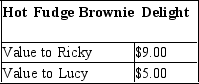 -Refer to Table 12-2. Suppose that the government imposes a $2 tax on delights, causing the price to increase from $4.00 to $6.00. Deadweight loss arises because
 (Multiple Choice)
4.8/5 (82)
(82) Suppose a country imposes a lump-sum income tax of $5,000 on each individual in the country. What is the marginal income tax rate for an individual who earns $40,000 during the year?
(Multiple Choice)
4.9/5 (83)
(83) For state and local governments, in 2011, sales taxes and property taxes made up approximately
(Multiple Choice)
4.7/5 (70)
(70) Of the following countries, which country's government collects the largest amount of tax revenue as a percentage of that country's total income?
(Multiple Choice)
5.0/5 (83)
(83) Scenario 12-4
A taxpayer faces the following tax rates on her income: 20 percent of the first $40,000 of her income; 30 percent of all her income above $40,000.
-Refer to Scenario 12-4. The taxpayer faces a marginal tax rate of
(Multiple Choice)
4.7/5 (73)
(73) A budget surplus occurs when government receipts fall short of government spending.
(True/False)
4.9/5 (88)
(88) The largest budgetary expense for the federal government in 2011 was
(Multiple Choice)
4.8/5 (73)
(73) You are trying to design a tax system that will simultaneously achieve both of the following goals: 1) a person with no income would pay no taxes, and 2) a high-income person would pay a higher fraction of income in taxes than a low-income person. Which of the following statements is correct?
(Multiple Choice)
4.7/5 (65)
(65) When government receipts exceed total government spending during a fiscal year, the difference is
(Multiple Choice)
4.8/5 (67)
(67) In 2011, which category represented the largest source of receipts for the U.S. federal government?
(Multiple Choice)
4.9/5 (78)
(78) Suppose that Christine values a baseball hat at $20, and Mark values one at $18. The pretax price of a baseball hat is $14. The government imposes a $5 tax on baseball hats, which raises the price to $19. What is the deadweight loss from the tax?
(Essay)
4.9/5 (78)
(78) Under a regressive tax system, the marginal tax rate for high income taxpayers is
(Multiple Choice)
4.8/5 (65)
(65) Table 12-4  -Refer to Table 12-4. What is the marginal tax rate for a person who makes $35,000?
 (Multiple Choice)
4.9/5 (69)
(69) Scenario 12-5
Senator Filch argues that a tax must be paid by people who benefit from government services. Senator Fudge argues that a tax must be paid in accordance with a person's ability to bear the tax burden. Senator Malfoy argues that people with a greater ability to pay a tax should pay a larger amount. Senator Moody argues that taxpayers with similar abilities to pay should contribute the same amount.
-Refer to Scenario 12-5. Which Senator is advocating taxes based on the benefits principle?
(Multiple Choice)
4.8/5 (83)
(83) State and local governments receive the largest portion of their tax revenues from
(Multiple Choice)
4.9/5 (87)
(87) 
Filters
- Essay(0)
- Multiple Choice(0)
- Short Answer(0)
- True False(0)
- Matching(0)