



 Chat with AI
Exam 5: Perception

Exam 1: Research Methods104 Questions
Exam 2: Evolutionary and Genetic Influences on Behavior142 Questions
Exam 3: The Brain and the Nervous System260 Questions
Exam 4: Sensation247 Questions
Exam 5: Perception180 Questions
Exam 6: Consciousness161 Questions
Exam 7: Learning192 Questions
Exam 8: Memory202 Questions
Exam 9: Thinking200 Questions
Exam 10: Language206 Questions
Exam 11: Intelligence201 Questions
Exam 12: Motivation and Emotion202 Questions
Exam 13: Social Psychology157 Questions
Exam 14: Development204 Questions
Exam 15: Personality150 Questions
Exam 16: Psychopathology142 Questions
Exam 17: Treatment of Mental Disorders127 Questions
Select questions type


Why, as we look from left to right, do objects in front of us not seem to move from right to left?
(Multiple Choice)
4.8/5  (75)
(75) What mechanism seems to be mainly responsible for our ability to detect primitive features?
(Multiple Choice)
4.9/5 (86)
(86) Some artists create paintings wherein the figure and the background relations are deliberately reversible and ambiguous. Such ambiguity illustrates which important general point about human perception?
(Multiple Choice)
4.9/5 (72)
(72) One thing that seems clear is that vision is made possible by an intricate network of subsystems, each specialized for a particular kind of visual task and each working together. But with all these subsystems at work, how does one manage to create the impression of a cohesive and organized world? How does the brain reunify pieces of visual information that start out discrete? The difficulty in answering these questions is called __________.
(Multiple Choice)
4.8/5 (85)
(85) Which area(s) of the cortex is (are) directly involved in processing visual information?
(Multiple Choice)
4.9/5 (86)
(86) Francis has visual agnosia. He is looking at his cat, Fluffy. What will be most difficult for Francis?
(Multiple Choice)
4.9/5 (71)
(71) Which of the following is an example of figure-ground perception?
(Multiple Choice)
4.9/5 (79)
(79) Leo looks at an old photo of his family. At first, his feature detectors are triggered by horizontal and vertical lines; these detectors then trigger the next level of detectors and so on until he is able to perceive that the photo is of his family. This would be an example of __________.
(Multiple Choice)
4.9/5 (85)
(85) Bert has just baked a large sheet of perfectly round, delicious cookies. When Bert leaves the room briefly, Cookie Monster takes a half-moon-shaped bite out of one of the cookies and replaces it into the array of cookies. Bert returns to the room and looks at the cookies, but misses the fact that Cookie Monster has taken a bite out of one of them. What gestalt grouping factor of perceptual organization may explain why Bert fails to see the bite taken out of the cookie?
(Multiple Choice)
4.8/5 (73)
(73) When what you see is determined largely by your beliefs and expectations of what you should see, then your perception is said to be __________.
(Multiple Choice)
4.9/5 (72)
(72) A series of projections of still pictures seems to move. This is the underlying principle for motion pictures. Of what is this an example?
(Multiple Choice)
5.0/5 (91)
(91) Look at the following figure. It is usually perceived as a diamond set inside a rectangle. Which gestalt grouping factor of perceptual organization best applies to this percept? 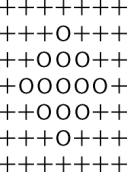
(Multiple Choice)
4.7/5 (80)
(80) Which of the following is a monocular depth cue that is absent in pictorial representation but present in real life?
(Multiple Choice)
4.8/5 (94)
(94) A patient suffers from damage to the pathway between her occipital cortex and her temporal cortex. What task will she most likely have difficulty with?
(Multiple Choice)
4.8/5 (89)
(89) A patient suffers from damage to the pathway between his occipital cortex and his parietal cortex. What task will he most likely have difficulty with?
(Multiple Choice)
5.0/5 (70)
(70) When we see a ball rolling on a pool table, we conclude that it is the ball that moves, not the table. Therefore, we not only need to detect motion, but also __________.
(Multiple Choice)
4.9/5 (88)
(88) Which gestalt grouping factor of perceptual organization are we using when we look at a pattern of dots and group certain dots together based on their color?
(Multiple Choice)
4.9/5 (87)
(87) 
Filters
- Essay(0)
- Multiple Choice(0)
- Short Answer(0)
- True False(0)
- Matching(0)