



 Chat with AI
Exam 22: Managing Incentives

Exam 1: The Big Ideas253 Questions
Exam 2: The Power of Trade and Comparative239 Questions
Exam 3: Supply and Demand249 Questions
Exam 4: Equilibrium256 Questions
Exam 5: Elasticity and Its Applications271 Questions
Exam 6: Taxes and Subsidies225 Questions
Exam 7: The Price System275 Questions
Exam 8: Price Ceilings and Floors327 Questions
Exam 9: International Trade195 Questions
Exam 10: Externalities- When the Price Is Not Right273 Questions
Exam 11: Costs and Profit Maximization Under Competition217 Questions
Exam 12: Competition and the Invisible Hand144 Questions
Exam 13: Monopoly233 Questions
Exam 14: Price Discrimination262 Questions
Exam 15: Oligopoly and Game Theory218 Questions
Exam 16: Competing for Monopoly160 Questions
Exam 17: Monopolistic Competition and Advertising113 Questions
Exam 18: Labor Markets262 Questions
Exam 19: Public Goods and the Tragedy of the Commons244 Questions
Exam 20: Political Economy and Public Choice306 Questions
Exam 21: Economics, Ethics, and Public Policy241 Questions
Exam 22: Managing Incentives263 Questions
Exam 23: Stock Markets and Personal Finance271 Questions
Exam 24: Price Discrimination151 Questions
Exam 25: Consumer Choice145 Questions
Select questions type


Most executives are compensated on the concepts of tournament theory.
(True/False)
4.9/5  (96)
(96) A weak incentive scheme that incentivizes the wrong thing can be worse than a similar strong incentive scheme.
(True/False)
4.8/5 (77)
(77) Planning where, when, and how choices are made is sometimes called:
(Multiple Choice)
4.8/5 (76)
(76) Use the following to answer questions:
Figure: Piece Rates 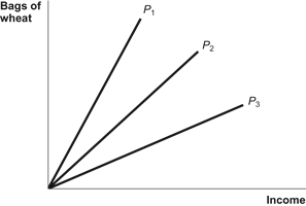 -(Figure: Piece Rates) Refer to the figure. A piece rate is offered for every 10 bags of wheat that workers fill. Which of the three piece rates plotted in the figure above has the lowest dollar value to the firm?
 (Multiple Choice)
4.9/5 (86)
(86) An excellent teacher who covers material of average difficulty and grades on an absolute scale introduces:
(Multiple Choice)
4.9/5 (88)
(88) Tournaments can tie rewards more closely to actions that an agent controls thereby:
(Multiple Choice)
4.9/5 (78)
(78) Monetary rewards are most effective when they are supported by:
I. intrinsic motivation.
II. social status.
III. tournaments.
(Multiple Choice)
4.9/5 (78)
(78) A "nudge" is a way that governments and other organizations can use small changes in the choice architecture to change or improve decisions.
(True/False)
4.8/5 (76)
(76) Planning where, when, and how choices are made is sometimes called choice architecture.
(True/False)
4.9/5 (72)
(72) Tournaments may create ______ if the abilities of the players are ______.
(Multiple Choice)
4.8/5 (86)
(86) ______ is a compensation scheme in which payment is based on relative performance.
(Multiple Choice)
4.7/5 (78)
(78) Regardless of the number of cars sold, a small car dealership pays $6,000 to its top-selling salesperson, $5,000 to the second highest, $4,000 to the third highest, and so on. The dealership is using a:
(Multiple Choice)
4.8/5 (90)
(90) Which famous economist discovered widespread cheating by teachers?
(Multiple Choice)
4.8/5 (75)
(75) Corporate culture is the system of pay incentives that is used in an organization.
(True/False)
4.9/5 (87)
(87) Which is the best example of the problem of strong employee incentives with poor monitoring with respect to improving student performance by standardized testing?
(Multiple Choice)
4.8/5 (65)
(65) Explain what is meant by the term incentives, and why it is important to get incentives right.
(Essay)
4.8/5 (91)
(91) 
Filters
- Essay(0)
- Multiple Choice(0)
- Short Answer(0)
- True False(0)
- Matching(0)