



 Chat with AI
Exam 1: A Review of General Chemistry: Electrons, Bonds, and Molecular Properties

Exam 1: A Review of General Chemistry: Electrons, Bonds, and Molecular Properties191 Questions
Exam 2: Molecular Representations168 Questions
Exam 3: Acids and Bases127 Questions
Exam 4: Alkanes and Cycloalkanes116 Questions
Exam 5: Stereoisomerism141 Questions
Exam 6: Chemical Reactivity and Mechanisms96 Questions
Exam 7: Alkyl Halides: Nucleophilic Substitution and Elimination Reactions224 Questions
Exam 8: Addition Reactions of Alkenes153 Questions
Exam 9: Alkynes177 Questions
Exam 10: Radical Reactions102 Questions
Exam 11: Synthesis106 Questions
Exam 12: Alcohols and Phenols147 Questions
Exam 13: Ethers and Epoxides; Thiols and Sulfides139 Questions
Exam 14: Infrared Spectroscopy and Mass Spectrometry135 Questions
Exam 15: Nuclear Magnetic Resonance Spectroscopy140 Questions
Exam 16: Conjugated Pi Systems and Pericyclic Reactions140 Questions
Exam 17: Aromatic Compounds118 Questions
Exam 18: Aromatic Substitution Reactions122 Questions
Exam 19: Aldehydes and Ketones169 Questions
Exam 20: Carboxylic Acids and Their Derivatives144 Questions
Exam 21: Alpha Carbon Chemistry: Enols and Enolates147 Questions
Exam 22: Amines112 Questions
Exam 23: Introduction to Organometallic Compounds118 Questions
Exam 24: Carbohydrates144 Questions
Exam 25: Amino Acids, Peptides, and Proteins133 Questions
Exam 26: Lipids123 Questions
Exam 27: Synthetic Polymers119 Questions
Select questions type


The bonding pattern of oxygen with a formal charge of -1 could be described as _____.
(Multiple Choice)
4.8/5  (89)
(89) What is the formal charge on oxygen in the following structure? 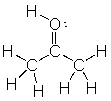
(Multiple Choice)
4.7/5 (79)
(79) What are the hybridization state, molecular geometry and approximate bond angle for the methyl anion, CH3-?
(Multiple Choice)
4.9/5 (68)
(68) What is the formal charge on oxygen in the following structure? 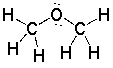
(Multiple Choice)
4.9/5 (93)
(93) What are the hybridization state, molecular geometry and approximate bond angle for the methyl cation, CH3+?
(Multiple Choice)
4.8/5 (75)
(75) Rank the following compounds in order of decreasing dipole moment. 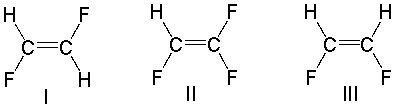
(Multiple Choice)
4.8/5 (74)
(74) Draw three constitutional isomers that have molecular formula C4H8BrCl
(Essay)
4.8/5 (77)
(77) From the following, identify the item which does not contain organic compounds.
(Multiple Choice)
4.9/5 (78)
(78) What is the formal charge on oxygen in the following structure? 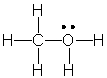
(Multiple Choice)
4.8/5 (77)
(77) What is the correct order of increasing electronegativity for Rb, F and O?
(Multiple Choice)
4.7/5 (81)
(81) BF3 has a no dipole moment. Draw the Lewis structure for BF3, showing all nonbonding electrons. Indicate the polarity of every atom in the structure using δ+ and δ- notation. Explain why the molecule has no net dipole.
(Essay)
4.9/5 (67)
(67) The difference between valence bond theory and molecular orbital (MO) theory is _____.
(Multiple Choice)
4.8/5 (75)
(75) Which of the following is the most electronegative element?
(Multiple Choice)
4.9/5 (85)
(85) What is the molecular geometry at the central atom in Cl2CO?
(Multiple Choice)
4.9/5 (75)
(75) The bond between carbon and hydrogen is best described as ___________.
(Multiple Choice)
4.8/5 (92)
(92) Amino acids are the building blocks of proteins. Which statement best describes the physical properties of the following amino acid? 
(Multiple Choice)
4.8/5 (83)
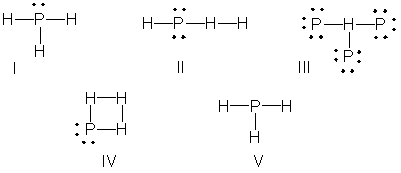
(83) 

Filters
- Essay(0)
- Multiple Choice(0)
- Short Answer(0)
- True False(0)
- Matching(0)