



 Chat with AI
Exam 1: A Review of General Chemistry: Electrons, Bonds, and Molecular Properties

Exam 1: A Review of General Chemistry: Electrons, Bonds, and Molecular Properties191 Questions
Exam 2: Molecular Representations168 Questions
Exam 3: Acids and Bases127 Questions
Exam 4: Alkanes and Cycloalkanes116 Questions
Exam 5: Stereoisomerism141 Questions
Exam 6: Chemical Reactivity and Mechanisms96 Questions
Exam 7: Alkyl Halides: Nucleophilic Substitution and Elimination Reactions224 Questions
Exam 8: Addition Reactions of Alkenes153 Questions
Exam 9: Alkynes177 Questions
Exam 10: Radical Reactions102 Questions
Exam 11: Synthesis106 Questions
Exam 12: Alcohols and Phenols147 Questions
Exam 13: Ethers and Epoxides; Thiols and Sulfides139 Questions
Exam 14: Infrared Spectroscopy and Mass Spectrometry135 Questions
Exam 15: Nuclear Magnetic Resonance Spectroscopy140 Questions
Exam 16: Conjugated Pi Systems and Pericyclic Reactions140 Questions
Exam 17: Aromatic Compounds118 Questions
Exam 18: Aromatic Substitution Reactions122 Questions
Exam 19: Aldehydes and Ketones169 Questions
Exam 20: Carboxylic Acids and Their Derivatives144 Questions
Exam 21: Alpha Carbon Chemistry: Enols and Enolates147 Questions
Exam 22: Amines112 Questions
Exam 23: Introduction to Organometallic Compounds118 Questions
Exam 24: Carbohydrates144 Questions
Exam 25: Amino Acids, Peptides, and Proteins133 Questions
Exam 26: Lipids123 Questions
Exam 27: Synthetic Polymers119 Questions
Select questions type


Which of the following compounds has a dipole moment? Indicate the direction of the dipole moment. 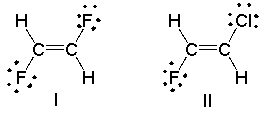
(Essay)
4.9/5  (86)
(86) According to molecular orbital theory, the destructive interference of two atomic orbitals results in a(n) _______.
(Short Answer)
4.9/5 (78)
(78) Which of the following is the correct representation of the dipole for a P-Cl bond? 
(Multiple Choice)
4.9/5 (83)
(83) Which of the following compounds does not have dipole moment?
(Multiple Choice)
4.9/5 (81)
(81) Which of the following structures have a 1+ formal charge on the sulfur atom? 
(Multiple Choice)
4.8/5 (79)
(79) Which of the following compounds has two lone pairs on the central atom?
(Multiple Choice)
4.8/5 (71)
(71) Draw the Lewis structure for HCOOH and predict the hybridization state, molecular geometry and approximate bond angle around the central atom.
(Essay)
4.9/5 (86)
(86) Interaction of the following two atomic orbitals results in what kind of molecular orbital, in the orientation shown? 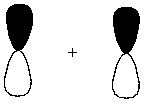
(Short Answer)
4.9/5 (74)
(74) In quantum mechanics a node (nodal surface or plane) is ________ .
(Multiple Choice)
4.8/5 (75)
(75) What is the hybridization state of the boron atom in the following compound? 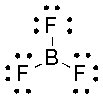
(Multiple Choice)
4.9/5 (77)
(77) The molecular geometry of carbon tetrachloride, CCl4, is _________ .
(Multiple Choice)
4.8/5 (80)
(80) What is the correct Lewis structure for hydrocyanic acid, HCN, including the formal charges, if any? 
(Multiple Choice)
4.9/5 (81)
(81) Identify the compound with the longest carbon - nitrogen bond.
(Multiple Choice)
4.9/5 (93)
(93) What is the molecular geometry at the central atom in CH2Br2?
(Multiple Choice)
4.8/5 (81)
(81) 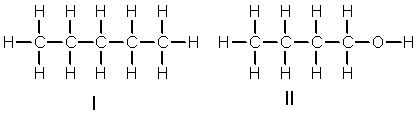
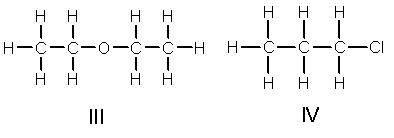
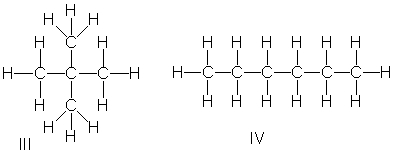
Rank the following compounds in decreasing order of boiling point. 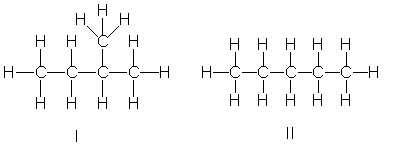
(Multiple Choice)
4.9/5 (71)
(71) The C-C sigma bond in ethyne (H-C C-H) results from the overlap of which orbitals?
(Multiple Choice)
4.8/5 (91)
(91) 
Filters
- Essay(0)
- Multiple Choice(0)
- Short Answer(0)
- True False(0)
- Matching(0)