



 Chat with AI
Exam 12: Alcohols and Phenols

Exam 1: A Review of General Chemistry: Electrons, Bonds, and Molecular Properties191 Questions
Exam 2: Molecular Representations168 Questions
Exam 3: Acids and Bases127 Questions
Exam 4: Alkanes and Cycloalkanes116 Questions
Exam 5: Stereoisomerism141 Questions
Exam 6: Chemical Reactivity and Mechanisms96 Questions
Exam 7: Alkyl Halides: Nucleophilic Substitution and Elimination Reactions224 Questions
Exam 8: Addition Reactions of Alkenes153 Questions
Exam 9: Alkynes177 Questions
Exam 10: Radical Reactions102 Questions
Exam 11: Synthesis106 Questions
Exam 12: Alcohols and Phenols147 Questions
Exam 13: Ethers and Epoxides; Thiols and Sulfides139 Questions
Exam 14: Infrared Spectroscopy and Mass Spectrometry135 Questions
Exam 15: Nuclear Magnetic Resonance Spectroscopy140 Questions
Exam 16: Conjugated Pi Systems and Pericyclic Reactions140 Questions
Exam 17: Aromatic Compounds118 Questions
Exam 18: Aromatic Substitution Reactions122 Questions
Exam 19: Aldehydes and Ketones169 Questions
Exam 20: Carboxylic Acids and Their Derivatives144 Questions
Exam 21: Alpha Carbon Chemistry: Enols and Enolates147 Questions
Exam 22: Amines112 Questions
Exam 23: Introduction to Organometallic Compounds118 Questions
Exam 24: Carbohydrates144 Questions
Exam 25: Amino Acids, Peptides, and Proteins133 Questions
Exam 26: Lipids123 Questions
Exam 27: Synthetic Polymers119 Questions
Select questions type


What is the IUPAC name for t-butyl alcohol?

Free
(Multiple Choice)
4.8/5  (93)
(93) Correct Answer: Verified
C
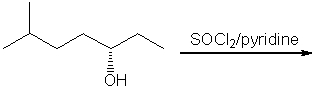
Predict the major product for the following reaction. 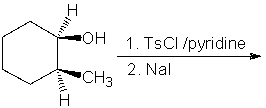

Free
(Multiple Choice)
4.9/5 (73)
(73) Correct Answer:Verified
VerifiedC
What is the correct structure for 1-chloro-3-ethyl-2-pentanol? 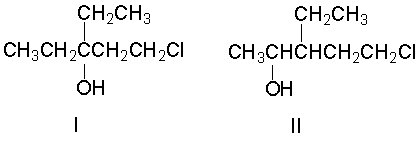
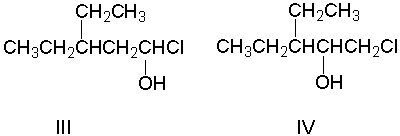
Free
(Multiple Choice)
4.8/5 (77)
(77) Correct Answer:Verified
VerifiedD

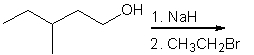
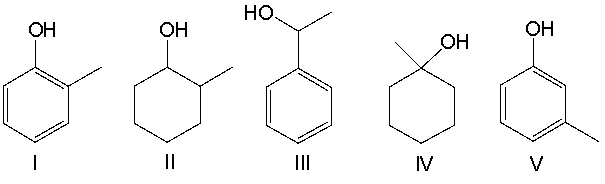
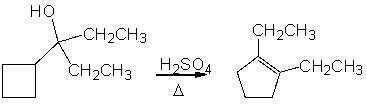
What is the correct structure for 2-bromo-5-isopropylphenol? 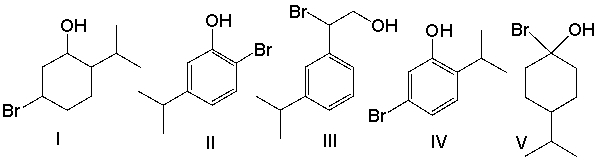
(Multiple Choice)
4.9/5 (68)
(68) Explain why cyclohexanol has a pKa of 18 and phenol has a pKa of 10. Use structural drawings to explain your reasoning.
(Essay)
4.8/5 (54)
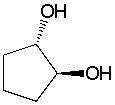
(54) For the following conversion, identify if the starting material has been oxidized, reduced or neither. Explain your answer. 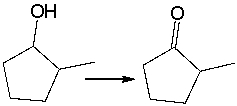
(Essay)
4.9/5 (69)
(69) 
A compound with a molecular formula C6H14O displays the following 1H NMR and 13C NMR spectra. Propose a structure for this compound. 


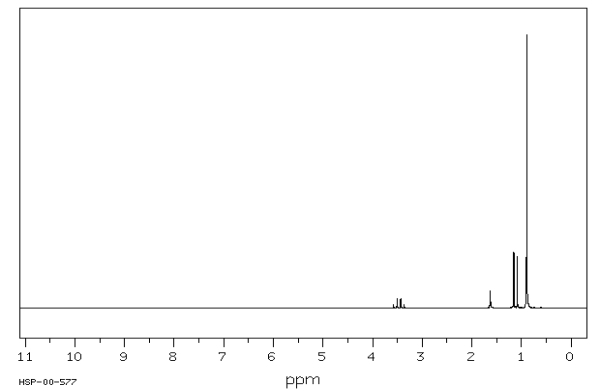

(Essay)
4.9/5 (81)
(81) 
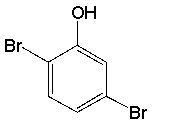
Predict the product and provide a stepwise curved arrow mechanism for the following reaction. 
(Essay)
4.8/5 (78)
(78) Which of the following could be used to synthesize 1-bromopentane? I CH3CH2CH2CH=CH2 + HBr
II CH3CH2CH2CH2CH2OH + PBr3
III CH3CH2CH2CH2CH2OH + NaBr
IV CH3CH2CH2CH2CH2OH + Br2
V CH3CH2CH2CH=CH2 + Br2
(Multiple Choice)
4.7/5 (57)
(57) 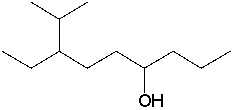

For the following conversion, identify if the starting material has been oxidized, reduced or neither. Explain your answer. 
(Essay)
4.7/5 (84)
(84) Which of the following compounds is consistent with the following proton decoupled 13C NMR spectrum? 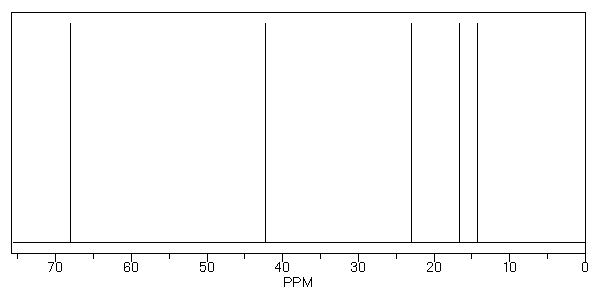

(Multiple Choice)
4.9/5 (64)
(64) 
Filters
- Essay(0)
- Multiple Choice(0)
- Short Answer(0)
- True False(0)
- Matching(0)