



 Chat with AI
Exam 1: A Review of General Chemistry: Electrons, Bonds, and Molecular Properties

Exam 1: A Review of General Chemistry: Electrons, Bonds, and Molecular Properties191 Questions
Exam 2: Molecular Representations168 Questions
Exam 3: Acids and Bases127 Questions
Exam 4: Alkanes and Cycloalkanes116 Questions
Exam 5: Stereoisomerism141 Questions
Exam 6: Chemical Reactivity and Mechanisms96 Questions
Exam 7: Alkyl Halides: Nucleophilic Substitution and Elimination Reactions224 Questions
Exam 8: Addition Reactions of Alkenes153 Questions
Exam 9: Alkynes177 Questions
Exam 10: Radical Reactions102 Questions
Exam 11: Synthesis106 Questions
Exam 12: Alcohols and Phenols147 Questions
Exam 13: Ethers and Epoxides; Thiols and Sulfides139 Questions
Exam 14: Infrared Spectroscopy and Mass Spectrometry135 Questions
Exam 15: Nuclear Magnetic Resonance Spectroscopy140 Questions
Exam 16: Conjugated Pi Systems and Pericyclic Reactions140 Questions
Exam 17: Aromatic Compounds118 Questions
Exam 18: Aromatic Substitution Reactions122 Questions
Exam 19: Aldehydes and Ketones169 Questions
Exam 20: Carboxylic Acids and Their Derivatives144 Questions
Exam 21: Alpha Carbon Chemistry: Enols and Enolates147 Questions
Exam 22: Amines112 Questions
Exam 23: Introduction to Organometallic Compounds118 Questions
Exam 24: Carbohydrates144 Questions
Exam 25: Amino Acids, Peptides, and Proteins133 Questions
Exam 26: Lipids123 Questions
Exam 27: Synthetic Polymers119 Questions
Select questions type


Which of the following compounds have the lowest boiling point?

Free
(Multiple Choice)
5.0/5  (80)
(80) Correct Answer: Verified
C
What is the hybridization state and approximate bond angle around the carbon atom in HCN?
Free
(Multiple Choice)
4.8/5 (80)
(80) Correct Answer:Verified
VerifiedB
Describe what happens to create a sp3 hybridized orbital.
A. two s electrons are promoted to a p orbital
B. three p electrons are promoted to a s orbital
C. two p electrons are promoted to a s orbital
D. an s electron is promoted to a p orbital
E. a p electron is promoted to a s orbital
Free
(Short Answer)
5.0/5 (80)
(80) Correct Answer:Verified
Verifiedsigma bonding molecular orbital
The following ground state electron configuration violates ____. 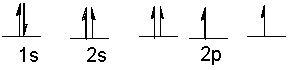
(Multiple Choice)
4.9/5 (66)
(66) Which of the following best describes the orbitals involved in the formation of the C=O bond in acetone, shown below? 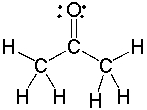
(Multiple Choice)
4.8/5 (70)
(70) Which of the following compounds has a dipole moment? Indicate the direction of the dipole moment. 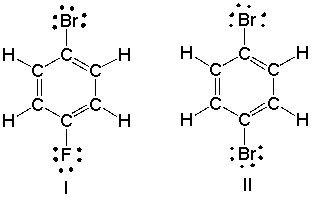
(Essay)
4.9/5 (81)
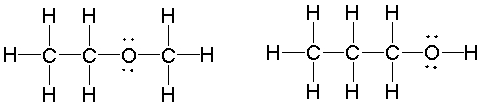
(81) 
Which of the following is the least electronegative element?
(Multiple Choice)
4.9/5 (85)
(85) 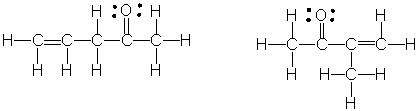
Which of the following compounds has a net dipole moment of zero? 
(Multiple Choice)
4.8/5 (85)
(85) Which of the following compounds have the highest boiling point? 

(Multiple Choice)
4.9/5 (77)
(77) For the following compound identify the polar covalent bonds and indicate the partial charges by using + and -. 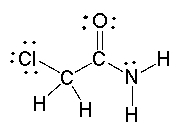
(Essay)
4.7/5 (72)
(72) What are the hybridization state, molecular geometry and approximate bond angle at each nitrogen atom in the following compound? 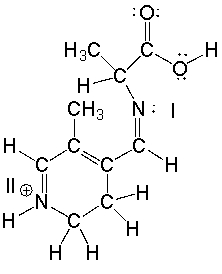
(Essay)
4.9/5 (91)
(91) Which of the following principle states "When orbitals of equal energy are available, every orbital gets one electron before any gets two electrons"?
(Multiple Choice)
4.7/5 (79)
(79) What is the hybridization state of the oxygen atom in the following compound? 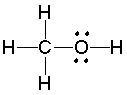
(Multiple Choice)
4.7/5 (77)
(77) Following is the structure for Propranolol, and antihypertensive drug. What are the hybridization state, molecular geometry and approximate bond angle at the indicated nitrogen and oxygen atom in Propranolol? 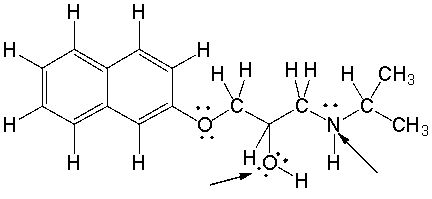
(Essay)
4.9/5 (75)
(75) Sugars, an example of which is shown below, tend to be very soluble in water. Explain why. 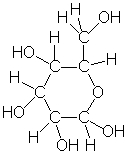
(Essay)
4.9/5 (81)
(81) For the following compound, identify each bond as polar covalent, nonpolar covalent or ionic and place a + on the most electropositive carbon. 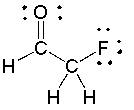
(Essay)
4.9/5 (82)
(82) 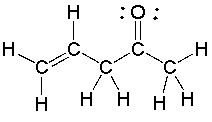
Which of the following principle states that "Each orbital can accommodate a maximum of two electrons with opposite spin"?
(Multiple Choice)
4.7/5 (78)
(78) 
Filters
- Essay(0)
- Multiple Choice(0)
- Short Answer(0)
- True False(0)
- Matching(0)