



 Chat with AI
Exam 1: A Review of General Chemistry: Electrons, Bonds, and Molecular Properties

Exam 1: A Review of General Chemistry: Electrons, Bonds, and Molecular Properties191 Questions
Exam 2: Molecular Representations168 Questions
Exam 3: Acids and Bases127 Questions
Exam 4: Alkanes and Cycloalkanes116 Questions
Exam 5: Stereoisomerism141 Questions
Exam 6: Chemical Reactivity and Mechanisms96 Questions
Exam 7: Alkyl Halides: Nucleophilic Substitution and Elimination Reactions224 Questions
Exam 8: Addition Reactions of Alkenes153 Questions
Exam 9: Alkynes177 Questions
Exam 10: Radical Reactions102 Questions
Exam 11: Synthesis106 Questions
Exam 12: Alcohols and Phenols147 Questions
Exam 13: Ethers and Epoxides; Thiols and Sulfides139 Questions
Exam 14: Infrared Spectroscopy and Mass Spectrometry135 Questions
Exam 15: Nuclear Magnetic Resonance Spectroscopy140 Questions
Exam 16: Conjugated Pi Systems and Pericyclic Reactions140 Questions
Exam 17: Aromatic Compounds118 Questions
Exam 18: Aromatic Substitution Reactions122 Questions
Exam 19: Aldehydes and Ketones169 Questions
Exam 20: Carboxylic Acids and Their Derivatives144 Questions
Exam 21: Alpha Carbon Chemistry: Enols and Enolates147 Questions
Exam 22: Amines112 Questions
Exam 23: Introduction to Organometallic Compounds118 Questions
Exam 24: Carbohydrates144 Questions
Exam 25: Amino Acids, Peptides, and Proteins133 Questions
Exam 26: Lipids123 Questions
Exam 27: Synthetic Polymers119 Questions
Select questions type


How many sigma bonds are present in the following compound? 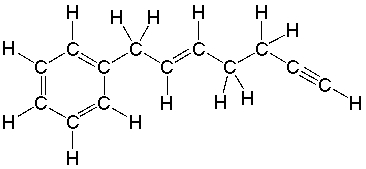
(Multiple Choice)
4.9/5  (79)
(79) What is the hybridization state of the nitrogen atom in the following compound? 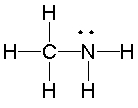
(Multiple Choice)
4.8/5 (75)
(75) The following ground state electron configuration violates ____. 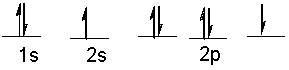
(Multiple Choice)
4.7/5 (71)
(71) What is the correct Lewis structure for SCN- including the formal charges, if any? 
(Multiple Choice)
5.0/5 (92)
(92) Which of the following structures have carbon with sp2 hybridization state? 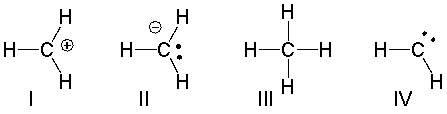
(Multiple Choice)
4.8/5 (78)
(78) Which of the following compounds have the lowest boiling point? 

(Multiple Choice)
4.8/5 (73)
(73) Which of the following compounds have trigonal planar molecular geometry? 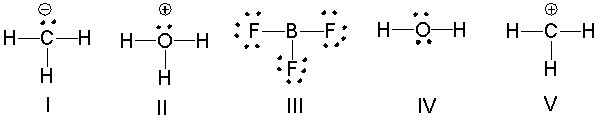
(Multiple Choice)
4.9/5 (74)
(74) Which intermolecular force is primarily responsible for base pairing, and stability, of the double helix in DNA?
(Multiple Choice)
4.8/5 (82)
(82) What is the hybridization state of the indicated atoms in the following compound? 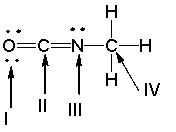
(Multiple Choice)
4.9/5 (74)
(74) Which of the following covalent bonds has the largest dipole moment?
(Multiple Choice)
4.7/5 (81)
(81) Which of the following statement is incorrect, when the 1s atomic orbitals of two hydrogen atoms results in constructive interference?
(Multiple Choice)
4.8/5 (89)
(89) Interaction of the following two atomic orbitals results in what kind of molecular orbital, in the orientation shown? 
(Short Answer)
4.8/5 (72)
(72) For NaSCH3, identify each bond as polar covalent, nonpolar covalent or ionic.
(Essay)
4.8/5 (79)
(79) What is the letter designation for the following atomic orbital? 
(Multiple Choice)
4.9/5 (87)
(87) What is the approximate bond angle around the indicated carbon atom? 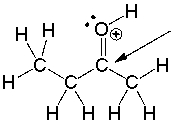
(Multiple Choice)
4.9/5 (77)
(77) The electronegativity of elements on the periodic table tends to increase_______.
(Multiple Choice)
4.8/5 (81)
(81) What are the formal charges on boron and oxygen in the following structure? 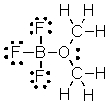
(Multiple Choice)
4.8/5 (82)
(82) Which of the following structures have a 1- formal charge on the sulfur atom? 
(Multiple Choice)
4.8/5 (79)
(79) According to molecular orbital theory the highest energy molecular orbital that is occupied with an electron is referred to as _____.
(Multiple Choice)
4.8/5 (84)
(84) What is the hybridization state of the carbon (I) atom in the following compound? 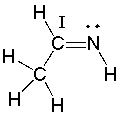
(Multiple Choice)
4.8/5 (82)
(82) 
Filters
- Essay(0)
- Multiple Choice(0)
- Short Answer(0)
- True False(0)
- Matching(0)