



 Chat with AI
Exam 1: A Review of General Chemistry: Electrons, Bonds, and Molecular Properties

Exam 1: A Review of General Chemistry: Electrons, Bonds, and Molecular Properties191 Questions
Exam 2: Molecular Representations168 Questions
Exam 3: Acids and Bases127 Questions
Exam 4: Alkanes and Cycloalkanes116 Questions
Exam 5: Stereoisomerism141 Questions
Exam 6: Chemical Reactivity and Mechanisms96 Questions
Exam 7: Alkyl Halides: Nucleophilic Substitution and Elimination Reactions224 Questions
Exam 8: Addition Reactions of Alkenes153 Questions
Exam 9: Alkynes177 Questions
Exam 10: Radical Reactions102 Questions
Exam 11: Synthesis106 Questions
Exam 12: Alcohols and Phenols147 Questions
Exam 13: Ethers and Epoxides; Thiols and Sulfides139 Questions
Exam 14: Infrared Spectroscopy and Mass Spectrometry135 Questions
Exam 15: Nuclear Magnetic Resonance Spectroscopy140 Questions
Exam 16: Conjugated Pi Systems and Pericyclic Reactions140 Questions
Exam 17: Aromatic Compounds118 Questions
Exam 18: Aromatic Substitution Reactions122 Questions
Exam 19: Aldehydes and Ketones169 Questions
Exam 20: Carboxylic Acids and Their Derivatives144 Questions
Exam 21: Alpha Carbon Chemistry: Enols and Enolates147 Questions
Exam 22: Amines112 Questions
Exam 23: Introduction to Organometallic Compounds118 Questions
Exam 24: Carbohydrates144 Questions
Exam 25: Amino Acids, Peptides, and Proteins133 Questions
Exam 26: Lipids123 Questions
Exam 27: Synthetic Polymers119 Questions
Select questions type


The bonds indicated by the arrow in the following compound results from the overlap of which orbitals? 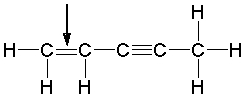
(Multiple Choice)
4.9/5  (81)
(81) What is the strongest intermolecular force present in the following compound? 
(Multiple Choice)
4.9/5 (83)
(83) Which of the following compounds is most soluble in butane, CH3CH2CH2CH3? 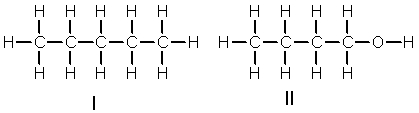
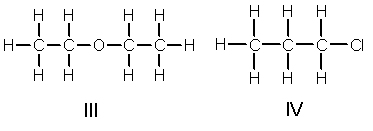
(Multiple Choice)
4.9/5 (83)
(83) Tryptophan is an essential amino acid important in the synthesis of the neurotransmitter serotonin in the body. What are the hybridization state, molecular geometry and approximate bond angle at the indicated carbon and nitrogen atoms? 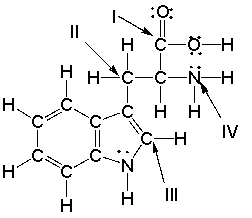
(Essay)
4.8/5 (75)
(75) What is the hybridization state and approximate bond angle around sulfur in the following compound? 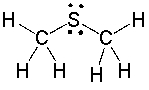
(Multiple Choice)
4.9/5 (93)
(93) Which of the bonding type has circular symmetry with respect to the bond axis?
(Multiple Choice)
4.9/5 (80)
(80) Draw the Lewis structure for ozone, O3, including formal charges, if any?
(Essay)
5.0/5 (79)
(79) Which of the following is the correct depiction of induction for a C-F bond? 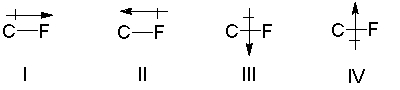
(Multiple Choice)
4.7/5 (75)
(75) Compare the bond length and strength for the following compounds. 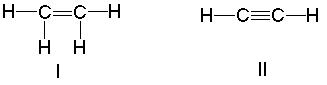
(Multiple Choice)
4.7/5 (74)
(74) For soap to remove and dissolve oil in water, what molecular features are needed?
(Multiple Choice)
5.0/5 (67)
(67) What is the approximate bond angle around the nitrogen atom? 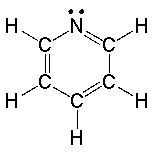
(Multiple Choice)
4.8/5 (73)
(73) 
What are the formal charges on boron and fluorine in the following structure? 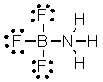
(Multiple Choice)
4.8/5 (80)
(80) The C-H bond in the methyl cation, CH3+, results from the overlap of which orbitals?
(Multiple Choice)
5.0/5 (83)
(83) Which of the following compounds have trigonal pyramidal molecular geometry? 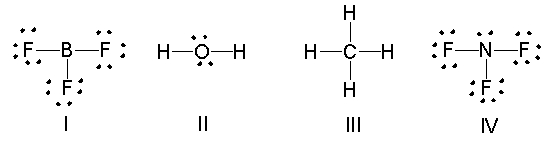
(Multiple Choice)
4.7/5 (70)
(70) The lone pairs of electrons of the nitrogen atom are located in which orbitals? 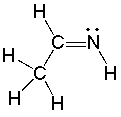
(Multiple Choice)
4.8/5 (89)
(89) Which of the following compounds have trigonal planar molecular geometry? 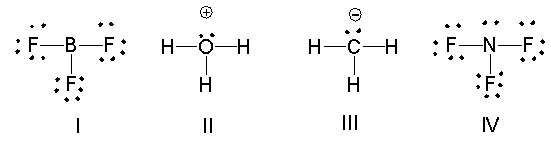
(Multiple Choice)
4.8/5 (67)
(67) 
Filters
- Essay(0)
- Multiple Choice(0)
- Short Answer(0)
- True False(0)
- Matching(0)