



 Chat with AI
Exam 15: Monopoly and Antitrust Policy

Exam 1: Economics: Foundations and Models444 Questions
Exam 2: Trade-Offs, Comparative Advantage, and the Market System498 Questions
Exam 3: Where Prices Come From: the Interaction of Demand and Supply475 Questions
Exam 4: Economic Efficiency, Government Price Setting, and Taxes419 Questions
Exam 5: Externalities, Environmental Policy, and Public Goods266 Questions
Exam 6: Elasticity: the Responsiveness of Demand and Supply295 Questions
Exam 7: The Economics of Health Care334 Questions
Exam 8: Firms, the Stock Market, and Corporate Governance278 Questions
Exam 9: Comparative Advantage and the Gains From International Trade379 Questions
Exam 10: Consumer Choice and Behavioral Economics302 Questions
Exam 11: Technology, Production, and Costs330 Questions
Exam 12: Firms in Perfectly Competitive Markets298 Questions
Exam 13: Monopolistic Competition: the Competitive Model in a More Realistic Setting276 Questions
Exam 14: Oligopoly: Firms in Less Competitive Markets262 Questions
Exam 15: Monopoly and Antitrust Policy271 Questions
Exam 16: Pricing Strategy263 Questions
Exam 17: The Markets for Labor and Other Factors of Production286 Questions
Exam 18: Public Choice, Taxes, and the Distribution of Income258 Questions
Exam 19: GDP: Measuring Total Production and Income266 Questions
Exam 20: Unemployment and Inflation292 Questions
Exam 21: Economic Growth, the Financial System, and Business Cycles257 Questions
Exam 22: Long-Run Economic Growth: Sources and Policies268 Questions
Exam 23: Aggregate Expenditure and Output in the Short Run306 Questions
Exam 24: Aggregate Demand and Aggregate Supply Analysis284 Questions
Exam 25: Money, Banks, and the Federal Reserve System280 Questions
Exam 26: Monetary Policy277 Questions
Exam 27: Fiscal Policy303 Questions
Exam 28: Inflation, Unemployment, and Federal Reserve Policy257 Questions
Exam 29: Macroeconomics in an Open Economy278 Questions
Exam 30: The International Financial System262 Questions
Select questions type


Figure 15-10  -Refer to Figure 15-10. Compared to a perfectly competitive market, consumer surplus is lower in a monopoly by an amount equal to the
 (Multiple Choice)
4.8/5  (82)
(82) A virtuous cycle refers to the development of new products that follows when a monopoly earns economic profits.
(True/False)
4.9/5 (80)
(80) Figure 15-2 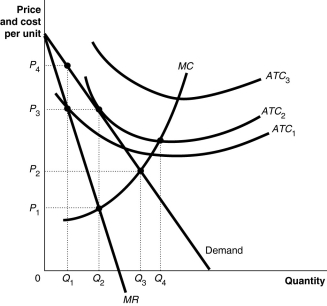 Figure 15-2 above shows the demand and cost curves facing a monopolist.
-Refer to Figure 15-2. If the firm's average total cost curve is ATC2, the firm will
Figure 15-2 above shows the demand and cost curves facing a monopolist.
-Refer to Figure 15-2. If the firm's average total cost curve is ATC2, the firm will (Multiple Choice)
4.9/5 (94)
(94) Figure 15-12 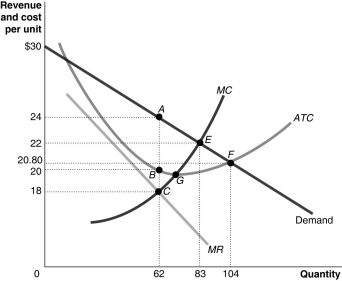 Figure 15-12 shows the cost and demand curves for a monopolist.
-Refer to Figure 15-12. If the firm maximizes its profits, the deadweight loss to society due to this monopoly is equal to the area
Figure 15-12 shows the cost and demand curves for a monopolist.
-Refer to Figure 15-12. If the firm maximizes its profits, the deadweight loss to society due to this monopoly is equal to the area (Multiple Choice)
4.8/5 (90)
(90) The reason that the Fisherman's Friend restaurant in Stonington, Maine had a monopoly on selling seafood dinners in that town is most likely due to
(Multiple Choice)
4.9/5 (80)
(80) The De Beers Company, one of the longest-lived monopolies, is facing increasing competition. One source of competition comes from people who might resell their previously owned diamonds. Why is De Beers worried that people might resell their previously owned diamonds?
(Multiple Choice)
4.7/5 (76)
(76) Baxter International, a manufacturer of hospital supplies, acquired American Hospital Supply, a distributor of hospital supplies. This is an example of
(Multiple Choice)
4.9/5 (68)
(68) A local electricity-generating company has a monopoly that is protected by an entry barrier that takes the form of
(Multiple Choice)
4.9/5 (78)
(78) Identify four reasons for high entry barriers. Briefly explain each reason.
(Essay)
4.8/5 (82)
(82) Local or state offices of the Department of Justice usually set prices for natural monopolies in their jurisdictions.
(True/False)
4.9/5 (83)
(83) The U.S. government would never approve a proposed merger between two firms that could significantly increase the newly merged firm's market power even if the efficiency gains from the newly merged firm could make consumers better off.
(True/False)
4.7/5 (75)
(75) Economists played a key role in the development of merger guidelines by the Department of Justice and the Federal Trade Commission in 1982. These guidelines have three main parts. What are these parts?
(Multiple Choice)
4.9/5 (70)
(70) Ordinarily, governments attempt to promote competition in markets. Why do governments use patents to block entry into some markets when this prohibits competition?
(Multiple Choice)
4.8/5 (74)
(74) For a natural monopoly, the marginal cost of producing an additional unit of its product is relatively small.
(True/False)
4.9/5 (82)
(82) Figure 15-14  -When a proposed merger between two companies is reviewed by the government, the relevant market is defined by
 (Multiple Choice)
4.9/5 (67)
(67) 
Filters
- Essay(0)
- Multiple Choice(0)
- Short Answer(0)
- True False(0)
- Matching(0)