



 Chat with AI
Exam 15: Monopoly and Antitrust Policy

Exam 1: Economics: Foundations and Models444 Questions
Exam 2: Trade-Offs, Comparative Advantage, and the Market System498 Questions
Exam 3: Where Prices Come From: the Interaction of Demand and Supply475 Questions
Exam 4: Economic Efficiency, Government Price Setting, and Taxes419 Questions
Exam 5: Externalities, Environmental Policy, and Public Goods266 Questions
Exam 6: Elasticity: the Responsiveness of Demand and Supply295 Questions
Exam 7: The Economics of Health Care334 Questions
Exam 8: Firms, the Stock Market, and Corporate Governance278 Questions
Exam 9: Comparative Advantage and the Gains From International Trade379 Questions
Exam 10: Consumer Choice and Behavioral Economics302 Questions
Exam 11: Technology, Production, and Costs330 Questions
Exam 12: Firms in Perfectly Competitive Markets298 Questions
Exam 13: Monopolistic Competition: the Competitive Model in a More Realistic Setting276 Questions
Exam 14: Oligopoly: Firms in Less Competitive Markets262 Questions
Exam 15: Monopoly and Antitrust Policy271 Questions
Exam 16: Pricing Strategy263 Questions
Exam 17: The Markets for Labor and Other Factors of Production286 Questions
Exam 18: Public Choice, Taxes, and the Distribution of Income258 Questions
Exam 19: GDP: Measuring Total Production and Income266 Questions
Exam 20: Unemployment and Inflation292 Questions
Exam 21: Economic Growth, the Financial System, and Business Cycles257 Questions
Exam 22: Long-Run Economic Growth: Sources and Policies268 Questions
Exam 23: Aggregate Expenditure and Output in the Short Run306 Questions
Exam 24: Aggregate Demand and Aggregate Supply Analysis284 Questions
Exam 25: Money, Banks, and the Federal Reserve System280 Questions
Exam 26: Monetary Policy277 Questions
Exam 27: Fiscal Policy303 Questions
Exam 28: Inflation, Unemployment, and Federal Reserve Policy257 Questions
Exam 29: Macroeconomics in an Open Economy278 Questions
Exam 30: The International Financial System262 Questions
Select questions type


Table 15-2
 The government of a small developing country has granted exclusive rights to Linden Enterprises for the production of plastic syringes. Table 15-2 shows the cost and demand data for this government protected monopolist.
-Refer to Table 15-2. What is the profit-maximizing quantity and price for the monopolist?
The government of a small developing country has granted exclusive rights to Linden Enterprises for the production of plastic syringes. Table 15-2 shows the cost and demand data for this government protected monopolist.
-Refer to Table 15-2. What is the profit-maximizing quantity and price for the monopolist? (Multiple Choice)
4.9/5  (83)
(83) A monopoly firm is the only seller of a good or service that
(Multiple Choice)
4.8/5 (76)
(76) In the United States, barriers to entry in professional team sports (for example, football and baseball) result from
(Multiple Choice)
5.0/5 (88)
(88) How does a network externality serve as a barrier to entry? Is this barrier surmountable? Explain.
(Essay)
4.8/5 (80)
(80) Figure 15-15 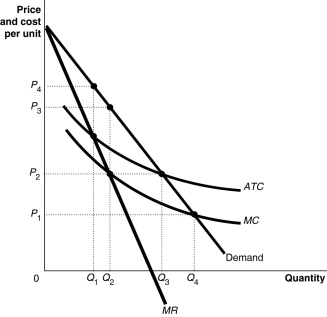 Figure 15-15 shows the cost and demand curves for the Erickson Power Company.
-Refer to Figure 15-15. Erickson Power is a natural monopoly because
Figure 15-15 shows the cost and demand curves for the Erickson Power Company.
-Refer to Figure 15-15. Erickson Power is a natural monopoly because (Multiple Choice)
5.0/5 (87)
(87) "Being the only seller in the market, the monopolist can choose any price and quantity it desires." Evaluate this statement: is it true or false? Explain your answer.
(Essay)
4.9/5 (85)
(85) One reason patent protection is vitally important to pharmaceutical firms is
(Multiple Choice)
4.9/5 (87)
(87) The International Nickel Company of Canada is often cited as an example of monopoly, but International Nickel eventually lost its monopoly. What event was responsible for this?
(Multiple Choice)
4.8/5 (71)
(71) Network externalities refer to the situation where the usefulness of a product increases with the number of consumers who use it.
(True/False)
4.9/5 (91)
(91) For which of the following firms is patent protection of vital importance?
(Multiple Choice)
4.8/5 (86)
(86) What is the relationship between marginal revenue and average revenue for a monopolist and is it the same for a perfect competitor?
(Essay)
4.8/5 (74)
(74) A monopoly is a firm that is the only seller of a good or service that does not have a close substitute.
(True/False)
4.9/5 (76)
(76) When the government makes a firm the exclusive legal provider of a good or service, it grants the firm
(Multiple Choice)
4.9/5 (72)
(72) A natural monopoly is characterized by large fixed costs relative to variable costs.
(True/False)
4.8/5 (81)
(81) Figure 15-3  Figure 15-3 above shows the demand and cost curves facing a monopolist.
-Refer to Figure 15-3. Suppose the monopolist represented in the diagram above produces positive output. What is the profit-maximizing/loss-minimizing output level?
Figure 15-3 above shows the demand and cost curves facing a monopolist.
-Refer to Figure 15-3. Suppose the monopolist represented in the diagram above produces positive output. What is the profit-maximizing/loss-minimizing output level? (Multiple Choice)
4.9/5 (94)
(94) Experience with patents in the pharmaceutical industry shows that when patents on drugs expire,
(Multiple Choice)
4.8/5 (84)
(84) A merger between firms at different stages of production of a good
(Multiple Choice)
5.0/5 (71)
(71) The ability of a firm to charge a price greater than marginal cost is called
(Multiple Choice)
5.0/5 (89)
(89) 
Filters
- Essay(0)
- Multiple Choice(0)
- Short Answer(0)
- True False(0)
- Matching(0)