



 Chat with AI
Exam 15: Monopoly and Antitrust Policy

Exam 1: Economics: Foundations and Models444 Questions
Exam 2: Trade-Offs, Comparative Advantage, and the Market System498 Questions
Exam 3: Where Prices Come From: the Interaction of Demand and Supply475 Questions
Exam 4: Economic Efficiency, Government Price Setting, and Taxes419 Questions
Exam 5: Externalities, Environmental Policy, and Public Goods266 Questions
Exam 6: Elasticity: the Responsiveness of Demand and Supply295 Questions
Exam 7: The Economics of Health Care334 Questions
Exam 8: Firms, the Stock Market, and Corporate Governance278 Questions
Exam 9: Comparative Advantage and the Gains From International Trade379 Questions
Exam 10: Consumer Choice and Behavioral Economics302 Questions
Exam 11: Technology, Production, and Costs330 Questions
Exam 12: Firms in Perfectly Competitive Markets298 Questions
Exam 13: Monopolistic Competition: the Competitive Model in a More Realistic Setting276 Questions
Exam 14: Oligopoly: Firms in Less Competitive Markets262 Questions
Exam 15: Monopoly and Antitrust Policy271 Questions
Exam 16: Pricing Strategy263 Questions
Exam 17: The Markets for Labor and Other Factors of Production286 Questions
Exam 18: Public Choice, Taxes, and the Distribution of Income258 Questions
Exam 19: GDP: Measuring Total Production and Income266 Questions
Exam 20: Unemployment and Inflation292 Questions
Exam 21: Economic Growth, the Financial System, and Business Cycles257 Questions
Exam 22: Long-Run Economic Growth: Sources and Policies268 Questions
Exam 23: Aggregate Expenditure and Output in the Short Run306 Questions
Exam 24: Aggregate Demand and Aggregate Supply Analysis284 Questions
Exam 25: Money, Banks, and the Federal Reserve System280 Questions
Exam 26: Monetary Policy277 Questions
Exam 27: Fiscal Policy303 Questions
Exam 28: Inflation, Unemployment, and Federal Reserve Policy257 Questions
Exam 29: Macroeconomics in an Open Economy278 Questions
Exam 30: The International Financial System262 Questions
Select questions type


Figure 15-14  -Refer to Figure 15-14. From the monopoly graph above, identify the following:
a. The profit maximizing price
b. The profit maximizing quantity
c. The area representing deadweight loss
d. The area representing the transfer of consumer surplus to the monopoly
-Refer to Figure 15-14. From the monopoly graph above, identify the following:
a. The profit maximizing price
b. The profit maximizing quantity
c. The area representing deadweight loss
d. The area representing the transfer of consumer surplus to the monopoly (Essay)
4.9/5  (84)
(84) A product's price approaches its marginal cost as market concentration increases.
(True/False)
4.8/5 (82)
(82) Explain why market power leads to a deadweight loss. Is the total deadweight loss from market power in the United States large or small?
(Essay)
4.8/5 (82)
(82) Unlike a perfect competitor, a monopolist faces the market demand curve.
(True/False)
4.9/5 (65)
(65) Figure 15-9 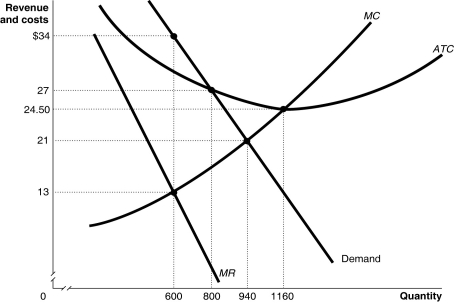 Figure 15-9 shows the demand and cost curves for a monopolist.
-Refer to Figure 15-9. What is the economically efficient output level?
Figure 15-9 shows the demand and cost curves for a monopolist.
-Refer to Figure 15-9. What is the economically efficient output level? (Multiple Choice)
4.8/5 (70)
(70) Which one of the following is not a possible barrier to entry high enough to keep competing firms out of a monopoly industry?
(Multiple Choice)
5.0/5 (79)
(79) What happens to a monopoly's revenue when it sells more units of its product?
(Essay)
4.8/5 (71)
(71) A public franchise gives the exclusive right to produce a product for 20 years from the date the product is invented.
(True/False)
4.9/5 (87)
(87) Figure 15-1 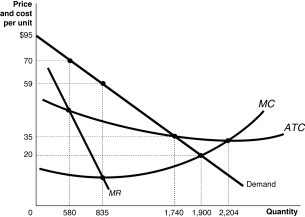 -Refer to Figure 15-1. Which of the following statements about the firm depicted in the diagram is true?
 (Multiple Choice)
4.9/5 (78)
(78) Which of the following statements applies to a monopolist but not to a perfectly competitive firm at their profit maximizing outputs?
(Multiple Choice)
4.9/5 (87)
(87) Figure 15-3  Figure 15-3 above shows the demand and cost curves facing a monopolist.
-Refer to Figure 15-3. Suppose the monopolist represented in the diagram above produces positive output. What is the price charged at the profit-maximizing/loss-minimizing output level?
Figure 15-3 above shows the demand and cost curves facing a monopolist.
-Refer to Figure 15-3. Suppose the monopolist represented in the diagram above produces positive output. What is the price charged at the profit-maximizing/loss-minimizing output level? (Multiple Choice)
4.9/5 (75)
(75) Figure 15-12 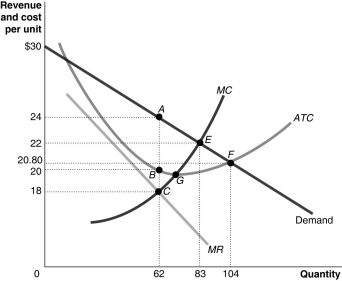 Figure 15-12 shows the cost and demand curves for a monopolist.
-Refer to Figure 15-12. What is the amount of consumer surplus if, instead of monopoly, the industry was organized as a perfectly competitive industry?
Figure 15-12 shows the cost and demand curves for a monopolist.
-Refer to Figure 15-12. What is the amount of consumer surplus if, instead of monopoly, the industry was organized as a perfectly competitive industry? (Multiple Choice)
4.9/5 (81)
(81) If a monopolist's marginal revenue is $35 per unit and its marginal cost is $25, then
(Multiple Choice)
5.0/5 (83)
(83) Table 15-4
 Shakti Inc. has been granted a patent for its Arnica toothache balm. Table 15-4 shows the demand and the total cost schedule for the firm.
-Refer to Table 15-4. What is the amount of Shakti's profit?
Shakti Inc. has been granted a patent for its Arnica toothache balm. Table 15-4 shows the demand and the total cost schedule for the firm.
-Refer to Table 15-4. What is the amount of Shakti's profit? (Multiple Choice)
4.8/5 (67)
(67) Why are laws aimed at regulating monopolies called "antitrust" laws?
(Multiple Choice)
4.8/5 (87)
(87) Figure 15-15 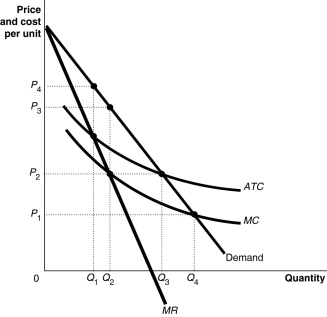 Figure 15-15 shows the cost and demand curves for the Erickson Power Company.
-Refer to Figure 15-15. Why won't regulators require that Erickson Power produce the economically efficient output level?
Figure 15-15 shows the cost and demand curves for the Erickson Power Company.
-Refer to Figure 15-15. Why won't regulators require that Erickson Power produce the economically efficient output level? (Multiple Choice)
4.8/5 (84)
(84) Figure 15-6  Figure 15-6 shows the cost and demand curves for a monopolist.
-Refer to Figure 15-6. The monopolist's total cost is
Figure 15-6 shows the cost and demand curves for a monopolist.
-Refer to Figure 15-6. The monopolist's total cost is (Multiple Choice)
4.8/5 (78)
(78) 
Filters
- Essay(0)
- Multiple Choice(0)
- Short Answer(0)
- True False(0)
- Matching(0)