



 Chat with AI
Exam 23: Catalysis

Exam 1: Remembering General Chemistry: Electronic Structure and Bonding81 Questions
Exam 2: Acids and Bases: Central to Understanding Organic Chemistry37 Questions
Exam 3: An Introduction to Organic Compounds123 Questions
Exam 4: Isomers: the Arrangement of Atoms in Space111 Questions
Exam 5: Alkenes Thermodynamics and Kinetics76 Questions
Exam 6: Reactions of Alkenes93 Questions
Exam 7: Reactions of Alkynes Introduction to Multistep Synthesis119 Questions
Exam 8: Electron Delocalization, Resonance, and Aromaticity More About Molecular Orbital Theory166 Questions
Exam 9: Substitution Reactions of Alkyl Halides118 Questions
Exam 10: Elimination Reactions of Alkyl Halides Competition Between Substitution and Elimination94 Questions
Exam 11: Reactions of Alcohols, Ethers, Epoxides, and Sulfur-Containing Compounds100 Questions
Exam 12: Organometallic Compounds57 Questions
Exam 13: Reactions of Alkanes, Radicals130 Questions
Exam 14: Mass Spectrometry, Infrared Spectroscopy, and Uvvis Spectroscopy127 Questions
Exam 15: Nmr Spectroscopy110 Questions
Exam 16: Reactions of Carboxylic Acids and Carboxylic Acid Derivatives128 Questions
Exam 17: Reactions of Aldehydes and Ketones116 Questions
Exam 18: Reactions at the Alpha Carbon of Carbonyl Compounds113 Questions
Exam 19: Reactions of Benzene and Substituted Benzenes155 Questions
Exam 20: More About Amines Heterocylic Compounds115 Questions
Exam 21: Carbohydrates100 Questions
Exam 22: Amino Acids, Peptides, and Proteins105 Questions
Exam 23: Catalysis85 Questions
Exam 24: The Organic Mechanisms of the Coenzymes92 Questions
Exam 25: The Chemistry of Metabolism94 Questions
Exam 26: Nucleosides, Nucleotides, and Nucleic Acids85 Questions
Exam 27: Synthetic Polymers106 Questions
Exam 28: Pericyclic Reactions92 Questions
Select questions type


Which of the following statements is/are true about catalysts?
(Multiple Choice)
4.9/5  (80)
(80) "Being in the right place... can be the most powerful factor of all in determining how fast a reaction goes." In terms of reaction rate theory, this statement refers to the ________ for a reaction.
(Multiple Choice)
4.8/5 (81)
(81) 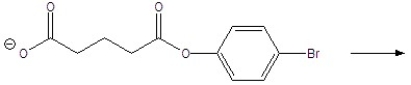
Give the final step for the mechanism for glucose-6-phosphate isomerase.
(Multiple Choice)
4.7/5 (91)
(91) 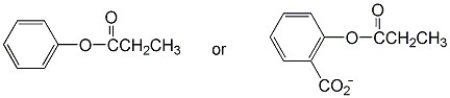
Which of the following sets of amino acids is found in all serine proteases?
(Multiple Choice)
5.0/5 (81)
(81) Hydrolysis of esters occurs more rapidly in the presence of catalytic imidazole. Explain this phenomenon and provide the structure of the acyl imidazole intermediate which is formed in the catalyzed process.
(Essay)
4.7/5 (80)
(80) In glycolysis which enzyme catalyzes the cleavage of fructose-1,6-bisphosphate into 2 three-carbon compounds?
(Multiple Choice)
4.8/5 (77)
(77) Which of the following is an intermediate in the mechanism of hydrolysis of the ester shown below? 
(Multiple Choice)
4.8/5 (77)
(77) In the hydrolysis of methyl trifluoroacetate, give two purposes of the zinc catalyst.
A)increases the rate of the first step by providing a metal-bound hydroxide ion
B)increases the rate of the second step by decreasing the basicity of the leaving group
C)increases the rate of the second step by increasing the basicity of the leaving group
D)increases the rate of the first step by providing a metal-bound water molecule
E)increases the rate of the last step by replacing alkoxide with hydroxide
(Short Answer)
4.9/5 (90)
(90) An acid catalyst functions by donating ________ to a substrate.
(Multiple Choice)
4.9/5 (89)
(89) Describe the reaction coordinate diagram for a general-acid-catalyzed reaction.
(Multiple Choice)
4.7/5 (86)
(86) Which of the following residues are found at the active site of lysozyme?
(Multiple Choice)
4.7/5 (91)
(91) Which of the following is the best definition of a catalyst?
(Multiple Choice)
4.8/5 (90)
(90) Which of the following residues acts as a general-base catalyst in the cleavage of the C3-C4 bond in the mechanism of the aldolase-catalyzed reaction?
(Multiple Choice)
4.8/5 (75)
(75) 
Filters
- Essay(0)
- Multiple Choice(0)
- Short Answer(0)
- True False(0)
- Matching(0)