



 Chat with AI
Exam 14: Mass Spectrometry, Infrared Spectroscopy, and Uvvis Spectroscopy

Exam 1: Remembering General Chemistry: Electronic Structure and Bonding81 Questions
Exam 2: Acids and Bases: Central to Understanding Organic Chemistry37 Questions
Exam 3: An Introduction to Organic Compounds123 Questions
Exam 4: Isomers: the Arrangement of Atoms in Space111 Questions
Exam 5: Alkenes Thermodynamics and Kinetics76 Questions
Exam 6: Reactions of Alkenes93 Questions
Exam 7: Reactions of Alkynes Introduction to Multistep Synthesis119 Questions
Exam 8: Electron Delocalization, Resonance, and Aromaticity More About Molecular Orbital Theory166 Questions
Exam 9: Substitution Reactions of Alkyl Halides118 Questions
Exam 10: Elimination Reactions of Alkyl Halides Competition Between Substitution and Elimination94 Questions
Exam 11: Reactions of Alcohols, Ethers, Epoxides, and Sulfur-Containing Compounds100 Questions
Exam 12: Organometallic Compounds57 Questions
Exam 13: Reactions of Alkanes, Radicals130 Questions
Exam 14: Mass Spectrometry, Infrared Spectroscopy, and Uvvis Spectroscopy127 Questions
Exam 15: Nmr Spectroscopy110 Questions
Exam 16: Reactions of Carboxylic Acids and Carboxylic Acid Derivatives128 Questions
Exam 17: Reactions of Aldehydes and Ketones116 Questions
Exam 18: Reactions at the Alpha Carbon of Carbonyl Compounds113 Questions
Exam 19: Reactions of Benzene and Substituted Benzenes155 Questions
Exam 20: More About Amines Heterocylic Compounds115 Questions
Exam 21: Carbohydrates100 Questions
Exam 22: Amino Acids, Peptides, and Proteins105 Questions
Exam 23: Catalysis85 Questions
Exam 24: The Organic Mechanisms of the Coenzymes92 Questions
Exam 25: The Chemistry of Metabolism94 Questions
Exam 26: Nucleosides, Nucleotides, and Nucleic Acids85 Questions
Exam 27: Synthetic Polymers106 Questions
Exam 28: Pericyclic Reactions92 Questions
Select questions type


Provide the structure of the species which results when the molecular ion of 4-heptanone undergoes fragmentation via a McLafferty rearrangement.
(Essay)
4.8/5  (77)
(77) Which of the following m/z values is least intense in the mass spectrum of 1-chloropropane?
(Multiple Choice)
4.8/5 (92)
(92) How could IR spectroscopy be used to distinguish between the following pair of compounds?
(CH3)3N and CH3NHCH2CH3
(Short Answer)
4.8/5 (78)
(78) Which of the following m/z values is the base peak for benzyl alcohol? 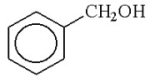
(Multiple Choice)
4.9/5 (89)
(89) Which of the following wavenumbers corresponds to the bond shown below? C  C
C (Multiple Choice)
4.8/5 (76)
(76) Which of the following are considered to be bending (in-plane)vibrations?
(Multiple Choice)
4.8/5 (70)
(70) Which of the infrared regions is considered to be the fingerprint region?
(Multiple Choice)
4.9/5 (77)
(77) Show the m/z values of the molecular ion and 5 likely fragments for the compound ethyl ether,
CH3CH2OCH2CH3
(Short Answer)
4.7/5 (77)
(77) Which of the following species has a characteristic absorption at 1250 cm-1 in its IR spectrum?
(Multiple Choice)
4.8/5 (76)
(76) Arrange the following regions of the electromagnetic spectrum in order of decreasing wavelength: microwaves, visible light, ultraviolet light, infrared radiation, X-rays.
(Essay)
4.8/5 (73)
(73) While cleaning the organic stockroom, a student found a bottle of ethanol labeled "Denatured with Benzene." He decided to determine the concentration of benzene in the ethanol by acquiring the UV spectrum of the liquid in a 2.0 cm cell. The spectrum exhibited an absorption band at 260 nm which was attributable to benzene, and the absorbance of this band was 0.69. In a reference source, the student found that the molar absorptivity of this benzene band in ethanol was 230 M-1cm-1. Show how the student calculated the concentration of the benzene in the ethanol.
(Essay)
4.8/5 (95)
(95) Give the m/z ratio that corresponds to the molecular ion in the mass spectrum of 2-bromobutane.
(Short Answer)
4.9/5 (61)
(61) In the infrared spectrum, a compound of formula C4H8O gave an absorption band at 1720 cm-1, but no bands at 2720 - 2830 and 3400 cm-1. What is the compound?
(Multiple Choice)
5.0/5 (88)
(88) When a solution of an organic compound absorbs light whose wavelength is 700 nm, the solution appears ________.
(Multiple Choice)
4.9/5 (79)
(79) Which of the following is not a major peak in the MS of isopentane?
(Multiple Choice)
4.9/5 (81)
(81) Which of the following normally occurs in a molecule when a photon of infrared light is absorbed?
(Multiple Choice)
5.0/5 (73)
(73) Describe the similarities and differences in the infrared spectra of methyl propanoate and butanoic acid.
(Essay)
4.7/5 (88)
(88) 
Filters
- Essay(0)
- Multiple Choice(0)
- Short Answer(0)
- True False(0)
- Matching(0)