



 Chat with AI
Exam 13: Reactions of Alkanes, Radicals

Exam 1: Remembering General Chemistry: Electronic Structure and Bonding81 Questions
Exam 2: Acids and Bases: Central to Understanding Organic Chemistry37 Questions
Exam 3: An Introduction to Organic Compounds123 Questions
Exam 4: Isomers: the Arrangement of Atoms in Space111 Questions
Exam 5: Alkenes Thermodynamics and Kinetics76 Questions
Exam 6: Reactions of Alkenes93 Questions
Exam 7: Reactions of Alkynes Introduction to Multistep Synthesis119 Questions
Exam 8: Electron Delocalization, Resonance, and Aromaticity More About Molecular Orbital Theory166 Questions
Exam 9: Substitution Reactions of Alkyl Halides118 Questions
Exam 10: Elimination Reactions of Alkyl Halides Competition Between Substitution and Elimination94 Questions
Exam 11: Reactions of Alcohols, Ethers, Epoxides, and Sulfur-Containing Compounds100 Questions
Exam 12: Organometallic Compounds57 Questions
Exam 13: Reactions of Alkanes, Radicals130 Questions
Exam 14: Mass Spectrometry, Infrared Spectroscopy, and Uvvis Spectroscopy127 Questions
Exam 15: Nmr Spectroscopy110 Questions
Exam 16: Reactions of Carboxylic Acids and Carboxylic Acid Derivatives128 Questions
Exam 17: Reactions of Aldehydes and Ketones116 Questions
Exam 18: Reactions at the Alpha Carbon of Carbonyl Compounds113 Questions
Exam 19: Reactions of Benzene and Substituted Benzenes155 Questions
Exam 20: More About Amines Heterocylic Compounds115 Questions
Exam 21: Carbohydrates100 Questions
Exam 22: Amino Acids, Peptides, and Proteins105 Questions
Exam 23: Catalysis85 Questions
Exam 24: The Organic Mechanisms of the Coenzymes92 Questions
Exam 25: The Chemistry of Metabolism94 Questions
Exam 26: Nucleosides, Nucleotides, and Nucleic Acids85 Questions
Exam 27: Synthetic Polymers106 Questions
Exam 28: Pericyclic Reactions92 Questions
Select questions type




Would chlorination or bromination of 2,5-dimethylhexane produce a greater yield of 1-halo-2,5-dimethylhexane?
(Short Answer)
4.9/5  (87)
(87) What sequence of reagents can be used to convert 3,3-dimethylpentane into 3,3-dimethyl-2-pentanone?
(Essay)
4.8/5 (78)
(78) Consider the reaction: CH3CH2 ∙ + Br2 → CH3CH2Br + Br ∙. Given that this reaction has an activation energy of +6 kcal/mol and a ΔH° of -22 kcal/mol, sketch a reaction-energy profile for this reaction. Label the axes and show Ea and ΔH° on your drawing.
(Essay)
4.9/5 (79)
(79) Calculate the percentage of 2-chloro-2-methyl butane in the following reaction. 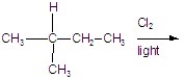
(Multiple Choice)
4.9/5 (87)
(87) Which of the following is not an intermediate or product in the reaction of 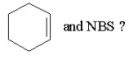
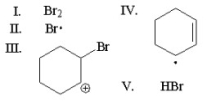
(Multiple Choice)
4.9/5 (81)
(81) How many distinct dichlorination products can result when isobutane is subjected to free radical chlorination?
(Multiple Choice)
4.9/5 (75)
(75) How many distinct monochlorinated products, including stereoisomers, can result when the alkane below is heated in the presence of Cl2? 
(Multiple Choice)
4.9/5 (71)
(71) Given the bond dissociation energies below (in kcal/mol), estimate the ΔH° for the propagation step  CH3CH2CH2-H 98 (CH3)2CH-H 95
Cl-Cl 58
H-Cl 103
CH3CH2CH2-Cl 81
(CH3)2CH-Cl 80
CH3CH2CH2-H 98 (CH3)2CH-H 95
Cl-Cl 58
H-Cl 103
CH3CH2CH2-Cl 81
(CH3)2CH-Cl 80 (Multiple Choice)
4.8/5 (77)
(77) The following molecule contains how many 1°, 2°, and 3° hydrogens? 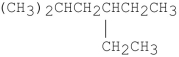
(Short Answer)
4.9/5 (100)
(100) Which of the following is a step in the mechanism of the reaction shown? 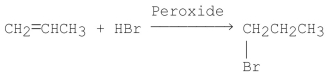
(Multiple Choice)
4.8/5 (91)
(91) 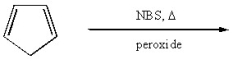
How many monochlorinated products would be obtained from 2-methylbutane? Show the structures and give their IUPAC names.
(Essay)
4.9/5 (85)
(85) What reagent can best be used to convert cyclopentene to 3-bromocyclopentene in a single step?
(Multiple Choice)
4.8/5 (89)
(89) Calculate the percentage of 2-chloro-3,4-dimethylheptane formed in the following reaction. 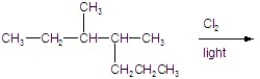
(Multiple Choice)
4.7/5 (79)
(79) Given the bond dissociation energies below (in kcal/mol), calculate the overall ΔH° for the following reaction:
(CH3)3CH + Br2 → (CH3)3CBr + HBr
(CH3)3C-H 91
(CH3)3C-Br 65
Br-Br 46
H-Br 88
CH3-Br 70
(Short Answer)
4.9/5 (75)
(75) Provide the reagents necessary for carrying out the transformation of 2-methylheptane to 2-methyl-2-heptene.
(Short Answer)
4.8/5 (94)
(94) How many distinct alkyl chlorides can be obtained from monochlorination of 2,3-dimethylpentane?
(Multiple Choice)
4.8/5 (81)
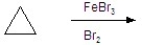
(81) 

Filters
- Essay(0)
- Multiple Choice(0)
- Short Answer(0)
- True False(0)
- Matching(0)