



 Chat with AI
Exam 21: Nuclear Chemistry

Exam 1: Introduction153 Questions
Exam 2: Atoms, Molecules, and Ions141 Questions
Exam 3: Stoichiometry168 Questions
Exam 4: Reactions in Aqueous Solution156 Questions
Exam 5: Gases109 Questions
Exam 6: Energy Relationships in Chemical Reactions105 Questions
Exam 7: The Electronic Structure of Atoms115 Questions
Exam 8: The Periodic Table119 Questions
Exam 9: Chemical Bonding I: the Covalent Bond118 Questions
Exam 10: Chemical Bonding Ii: Molecular Geometry and Hybridization of Atomic Orbitals120 Questions
Exam 11: Introduction to Organic Chemistry57 Questions
Exam 12: Intermolecular Forces and Liquids and Solids138 Questions
Exam 13: Physical Properties of Solutions109 Questions
Exam 14: Chemical Kinetics114 Questions
Exam 15: Chemical Equilibrium99 Questions
Exam 16: Acids and Bases163 Questions
Exam 17: Acid-Base Equilibria and Solubility Equilibria92 Questions
Exam 18: Thermodynamics112 Questions
Exam 19: Redox Reactions and Electrochemistry138 Questions
Exam 20: The Chemistry of Coordination Compounds76 Questions
Exam 21: Nuclear Chemistry112 Questions
Exam 22: Organic Polymerssynthetic and Natural42 Questions
Select questions type


What fraction of radioactive atoms remains in a sample after six half-lives?
(Multiple Choice)
4.8/5  (85)
(85) Radioactive nitrogen-13 has a half-life of 10 minutes. After 40 minutes, how much of this isotope would remain in a sample that originally contained 96 mg?
(Short Answer)
4.7/5 (73)
(73) The half-life of 14C is 5,730 yr. Assuming some charcoal from a campfire 29,000 years old was found, what fraction of the original C-14 would remain today?
(Multiple Choice)
4.8/5 (91)
(91) The only stable isotope of aluminum is aluminum-27. What type of radioactive decay should be expected from  ?
? (Multiple Choice)
4.8/5 (92)
(92) When atoms of aluminum-27 are bombarded with alpha particles, a neutron and an element are produced. The particular isotope formed is 
(Multiple Choice)
4.8/5 (73)
(73) Petroleum is a fossil fuel containing many different carbon compounds. If the carbon atoms in petroleum have been in the ground for 100 million years, what fraction of the initial 14C atoms is still there? (t1/2 = 5,370 yr)
(Multiple Choice)
4.8/5 (85)
(85) 
 .
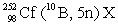
A sample of a radioisotope shows an activity of 999 disintegrations per minute due to beta decay. If after 1.10 years the activity is 952 disintegrations per minute, what is the half-life of this radioisotope?
(Multiple Choice)
4.8/5 (65)
(65) 
Filters
- Essay(0)
- Multiple Choice(0)
- Short Answer(0)
- True False(0)
- Matching(0)