



 Chat with AI
Exam 23: Monopoly

Exam 1: Budget Constraint58 Questions
Exam 1: A: Budget Constraint30 Questions
Exam 2: Preferences49 Questions
Exam 2: A: Preferences30 Questions
Exam 3: Utility57 Questions
Exam 3: A: Utility29 Questions
Exam 4: Choice63 Questions
Exam 4: A: Choice31 Questions
Exam 5: Demand79 Questions
Exam 5: A: Demand22 Questions
Exam 6: Revealed Preference58 Questions
Exam 6: A: Revealed Preference26 Questions
Exam 7: Slutsky Equation51 Questions
Exam 7: A: Slutsky Equation30 Questions
Exam 8: Buying and Selling75 Questions
Exam 8: A: Buying and Selling30 Questions
Exam 9: Intertemporal Choice61 Questions
Exam 9: A: Intertemporal Choice30 Questions
Exam 10: Asset Markets46 Questions
Exam 10: A: Asset Markets30 Questions
Exam 11: Uncertainty39 Questions
Exam 11: A: Uncertainty25 Questions
Exam 12: Risky Assets16 Questions
Exam 12: A: Risky Assets10 Questions
Exam 13: Consumers Surplus42 Questions
Exam 13: A: Consumers Surplus30 Questions
Exam 14: Market Demand101 Questions
Exam 14: A: Market Demand25 Questions
Exam 15: Equilibrium48 Questions
Exam 15: A: Equilibrium20 Questions
Exam 16: Auctions36 Questions
Exam 16: A: Auctions25 Questions
Exam 17: Technology52 Questions
Exam 17: A: Technology30 Questions
Exam 18: Profit Maximization52 Questions
Exam 18: A: Profit Maximization21 Questions
Exam 19: Cost Minimization77 Questions
Exam 19: A: Cost Minimization26 Questions
Exam 20: Cost Curves51 Questions
Exam 20: A: Cost Curves20 Questions
Exam 21: Firm Supply41 Questions
Exam 21: A: Firm Supply15 Questions
Exam 22: Industry Supply49 Questions
Exam 22: A: Industry Supply33 Questions
Exam 23: Monopoly76 Questions
Exam 23: A: Monopoly30 Questions
Exam 24: Monopoly Behavior34 Questions
Exam 24: A: Monopoly Behavior20 Questions
Exam 25: Factor Markets24 Questions
Exam 25: A: Factor Markets20 Questions
Exam 26: Oligopoly56 Questions
Exam 26: A: Oligopoly30 Questions
Exam 27: Game Theory34 Questions
Exam 27: A: Game Theory25 Questions
Exam 28: Game Applications28 Questions
Exam 28: A: Game Applications25 Questions
Exam 29: Behavioral Economics34 Questions
Exam 30: Exchange68 Questions
Exam 30: A: Exchange30 Questions
Exam 31: Production35 Questions
Exam 31: A: Production25 Questions
Exam 32: Welfare27 Questions
Exam 32: A: Welfare25 Questions
Exam 33: Externalities42 Questions
Exam 33: A: Externalities25 Questions
Exam 34: Information Technology24 Questions
Exam 34: A: Information Technology15 Questions
Exam 35: Public Goods26 Questions
Exam 35: A: Public Goods20 Questions
Exam 36: Asymmetric Information31 Questions
Exam 36: A: Asymmetric Information20 Questions
Select questions type


The town council of Frostbite, Ontario, is trying to decide whether to build an outdoor skating rink which would cost $1 million and last for only one season. Operating costs would be zero. Yearly passes would be sold to anyone who wanted to use the rink. If p is the price of the pass in dollars, the number demanded would be q = 1200 - .6p. The council has asked you to advise them on building the rink. You should tell them that
(Multiple Choice)
4.9/5  (90)
(90) A monopolist faces the demand function Q = 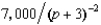 . If she charges a price of p, her marginal revenue will be
 (Multiple Choice)
4.7/5 (84)
(84) The demand for a monopolist's output is  , where p is its price. It has constant marginal costs equal to $6 per unit. What price will it charge to maximize its profits?
 (Multiple Choice)
4.8/5 (78)
(78) The demand for a monopolist's output is  , where p is the price it charges. At a price of $3, the elasticity of demand for the monopolist's output is
 (Multiple Choice)
4.7/5 (87)
(87) A monopolist enjoys a monopoly over the right to sell automobiles on a certain island. He imports automobiles from abroad at a cost of $10,000 each and sells them at the price that maximizes profits. One day, the island's government annexes a neighboring island and extends the monopolist's monopoly rights to this island. People on the annexed island have the same tastes and incomes and there are just as many people as on the first.
(Multiple Choice)
4.8/5 (88)
(88) A monopolist faces the demand curve q = 90 -  , where q is the number of units sold and p is the price in dollars. He has quasi-fixed costs, C, and constant marginal costs of $20 per unit of output. Therefore his total costs are C + 20q if q > 0 and 0 if q = 0. What is the largest value of C for which he would be willing to produce positive output?
 (Multiple Choice)
4.8/5 (83)
(83) A profit-maximizing monopolist has the cost schedule c(y) = 20y. The demand for her product is given by  , where p is her price. Suppose that the government tries to get her to increase her output by giving her a subsidy of $15 for every unit that she sells. Giving her the subsidy would make her
 (Multiple Choice)
4.9/5 (92)
(92) A firm has discovered a new kind of nonfattening, non-habit-forming dessert called zwiffle. It doesn't taste very good, but some people like it and it can be produced from old newspapers at zero marginal cost. Before any zwiffle could be produced, the firm would have to spend a fixed cost of $F. Demand for zwiffle is given by the equation q = 12 - p. The firm has a patent on zwiffle, so it can have a monopoly in this market.
(Multiple Choice)
4.8/5 (79)
(79) A firm has invented a new beverage called Slops. It doesn't taste very good, but it gives people a craving for Lawrence Welk's music and Professor Johnson's jokes. Some people are willing to pay money for this effect, so the demand for Slops is given by the equation q = 10 - p. Slops can be made at zero marginal cost from old-fashioned macroeconomics books dissolved in bathwater. But before any Slops can be produced, the firm must undertake a fixed cost of $30. Since the inventor has a patent on Slops, it can be a monopolist in this new industry.
(Multiple Choice)
4.7/5 (84)
(84) The Cleveland Visitors Bureau is the exclusive national marketer of weekend getaway vacations in Cleveland, Ohio. At current market prices, the price elasticity of demand is -.50. To maximize profits, the bureau should
(Multiple Choice)
4.8/5 (85)
(85) The Cleveland Visitors Bureau is the exclusive national marketer of weekend getaway vacations in Cleveland, Ohio. At current market prices, the price elasticity of demand is -1. To maximize profits, the bureau should
(Multiple Choice)
4.8/5 (84)
(84) A profit-maximizing monopoly faces an inverse demand function described by the equation p(y) = 30 - y and its total costs are c(y) = 5y, where prices and costs are measured in dollars. In the past it was not taxed, but now it must pay a tax of 2 dollars per unit of output. After the tax, the monopoly will
(Multiple Choice)
4.8/5 (74)
(74) A monopolist faces the inverse demand function described by p = 23 - 5q, where q is output. The monopolist has no fixed cost and his marginal cost is $6 at all levels of output. Which of the following expresses the monopolist's profits as a function of his output?
(Multiple Choice)
4.7/5 (78)
(78) The Fabulous 50s Decor Company is the only producer of pink flamingo lawn statues. While business is not as good as it used to be, in recent times the annual demand has been Q = 700 - 5P. Flamingo lawn statues are handcrafted by artisans using the process Q = min{L,  } where L is hours of labor and P is pounds of pink plastic. PL = 20 and PP = 2. What would be the profit-maximizing output and price?
 (Multiple Choice)
5.0/5 (69)
(69) The demand for copies of the software package Macrosoft Doors is given by Q = 10,000P-2. The cost to produce Doors is C = 100,000 + 5Q. If Macrosoft practices cost plus pricing, what would be the profit-maximizing markup?
(Multiple Choice)
4.8/5 (81)
(81) A firm has invented a new beverage called Slops. It doesn't taste very good, but it gives people a craving for Lawrence Welk's music and Professor Johnson's jokes. Some people are willing to pay money for this effect, so the demand for Slops is given by the equation q = 14 - p. Slops can be made at zero marginal cost from old-fashioned macroeconomics books dissolved in bathwater. But before any Slops can be produced, the firm must undertake a fixed cost of $54. Since the inventor has a patent on Slops, it can be a monopolist in this new industry.
(Multiple Choice)
4.7/5 (78)
(78) 
Filters
- Essay(0)
- Multiple Choice(0)
- Short Answer(0)
- True False(0)
- Matching(0)