



 Chat with AI
Exam 32: Welfare

Exam 1: Budget Constraint58 Questions
Exam 1: A: Budget Constraint30 Questions
Exam 2: Preferences49 Questions
Exam 2: A: Preferences30 Questions
Exam 3: Utility57 Questions
Exam 3: A: Utility29 Questions
Exam 4: Choice63 Questions
Exam 4: A: Choice31 Questions
Exam 5: Demand79 Questions
Exam 5: A: Demand22 Questions
Exam 6: Revealed Preference58 Questions
Exam 6: A: Revealed Preference26 Questions
Exam 7: Slutsky Equation51 Questions
Exam 7: A: Slutsky Equation30 Questions
Exam 8: Buying and Selling75 Questions
Exam 8: A: Buying and Selling30 Questions
Exam 9: Intertemporal Choice61 Questions
Exam 9: A: Intertemporal Choice30 Questions
Exam 10: Asset Markets46 Questions
Exam 10: A: Asset Markets30 Questions
Exam 11: Uncertainty39 Questions
Exam 11: A: Uncertainty25 Questions
Exam 12: Risky Assets16 Questions
Exam 12: A: Risky Assets10 Questions
Exam 13: Consumers Surplus42 Questions
Exam 13: A: Consumers Surplus30 Questions
Exam 14: Market Demand101 Questions
Exam 14: A: Market Demand25 Questions
Exam 15: Equilibrium48 Questions
Exam 15: A: Equilibrium20 Questions
Exam 16: Auctions36 Questions
Exam 16: A: Auctions25 Questions
Exam 17: Technology52 Questions
Exam 17: A: Technology30 Questions
Exam 18: Profit Maximization52 Questions
Exam 18: A: Profit Maximization21 Questions
Exam 19: Cost Minimization77 Questions
Exam 19: A: Cost Minimization26 Questions
Exam 20: Cost Curves51 Questions
Exam 20: A: Cost Curves20 Questions
Exam 21: Firm Supply41 Questions
Exam 21: A: Firm Supply15 Questions
Exam 22: Industry Supply49 Questions
Exam 22: A: Industry Supply33 Questions
Exam 23: Monopoly76 Questions
Exam 23: A: Monopoly30 Questions
Exam 24: Monopoly Behavior34 Questions
Exam 24: A: Monopoly Behavior20 Questions
Exam 25: Factor Markets24 Questions
Exam 25: A: Factor Markets20 Questions
Exam 26: Oligopoly56 Questions
Exam 26: A: Oligopoly30 Questions
Exam 27: Game Theory34 Questions
Exam 27: A: Game Theory25 Questions
Exam 28: Game Applications28 Questions
Exam 28: A: Game Applications25 Questions
Exam 29: Behavioral Economics34 Questions
Exam 30: Exchange68 Questions
Exam 30: A: Exchange30 Questions
Exam 31: Production35 Questions
Exam 31: A: Production25 Questions
Exam 32: Welfare27 Questions
Exam 32: A: Welfare25 Questions
Exam 33: Externalities42 Questions
Exam 33: A: Externalities25 Questions
Exam 34: Information Technology24 Questions
Exam 34: A: Information Technology15 Questions
Exam 35: Public Goods26 Questions
Exam 35: A: Public Goods20 Questions
Exam 36: Asymmetric Information31 Questions
Exam 36: A: Asymmetric Information20 Questions
Select questions type


Suppose that Paul and David have utility functions U = 4A P + O P and U = A D + 4O D, respectively, where A P and O P are Paul's consumptions of apples and oranges and A D and O D are David's consumptions of apples and oranges. The total supply of apples and oranges to be divided between them is 20 apples and 12 oranges. The fair allocations consist of all allocations satisfying the following conditions.

Free
(Multiple Choice)
4.7/5  (77)
(77) Correct Answer: Verified
B
Suppose that Romeo has the utility function U = S7RS3J and Juliet has the utility function U = S3RS7J, where SR is Romeo's spaghetti consumption and SJ is Juliet's. They have 60 units of spaghetti to divide between them.
Free
(Multiple Choice)
4.7/5 (80)
(80) Correct Answer:Verified
VerifiedE
Suppose that Paul and David have utility functions U = 4A P + O P and U = A D + 5O D, respectively, where A P and O P are Paul's consumptions of apples and oranges and A D and O D are David's consumptions of apples and orange. The total supply of apples and oranges to be divided between them is 20 apples and 14 oranges. The "fair" allocations consist of all allocations satisfying the following conditions.
Free
(Multiple Choice)
5.0/5 (75)
(75) Correct Answer:Verified
VerifiedD
The utility possibilities frontier is the boundary of the production possibilities set.
(True/False)
4.9/5 (84)
(84) A parent has two children living in cities with different costs of living. The cost of living in city B is 3 times the cost of living in city A. The child in city A has an income of $2,000 and the child in city B has an income of $6,000. The parent wants to give a total of $2,000 to her two children. Her utility function is U(C A, C B ) = C A C B, where C A and C B are the consumptions of the children living in cities A and B respectively. She will choose to give
(Multiple Choice)
4.9/5 (77)
(77) An allocation is fair if whenever one person envies another, the envied person does not envy the envier.
(True/False)
4.8/5 (71)
(71) A tiny fishing village has 3 residents. Ann has a utility of 10, Bruce has a utility of 6, and Charlie has a utility of 7. If the mayor uses a Rawlsian social welfare function, the social welfare of this tiny village would be
(Multiple Choice)
4.9/5 (82)
(82) Suppose that Romeo has the utility function U = S5RS1J and Juliet has the utility function U = S1RS5J, where SR is Romeo's spaghetti consumption and SJ is Juliet's. They have 36 units of spaghetti to divide between them.
(Multiple Choice)
4.9/5 (67)
(67) According to Arrow's impossibility theorem, it is impossible to find a social ordering that is complete, reflexive, and transitive.
(True/False)
4.9/5 (77)
(77) No one is meaner and uglier than Gladys. Someone is meaner and uglier than Harold. Therefore Gladys is meaner and uglier than Harold. Is this reasoning correct? If so, explain why. If not, explain why not.
(Assume that people can be ranked from ugliest to least ugly by a complete transitive ordering and that there are no ties. Likewise assume that people can be ranked from meanest to least mean by a complete transitive ordering and that there are no ties.)
(Essay)
4.8/5 (85)
(85) Hatfield and McCoy burn with hatred for each other. They both consume corn whisky. Hatfield's utility function is 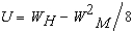 and McCoy's utility is
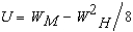 , where WH is Hatfield's whisky consumption and WM is McCoy's whisky consumption, measured in gallons. The sheriff has a total of 58 gallons of confiscated whisky which he could give back to them. For some reason, the sheriff wants them both to be as happy as possible and he wants to treat them equally. The sheriff should give them each
and McCoy's utility is , where WH is Hatfield's whisky consumption and WM is McCoy's whisky consumption, measured in gallons. The sheriff has a total of 58 gallons of confiscated whisky which he could give back to them. For some reason, the sheriff wants them both to be as happy as possible and he wants to treat them equally. The sheriff should give them each (Multiple Choice)
4.9/5 (86)
(86) An allocation that is worse for somebody than the initial allocation cannot be Pareto optimal.
(True/False)
5.0/5 (88)
(88) If a social welfare function is an increasing function of each person's utility, then every allocation that maximizes this social welfare function must be a Pareto optimum.
(True/False)
4.7/5 (82)
(82) In a competitive equilibrium, no matter how different their preferences may be, no two people with the same income will envy each other's consumption bundles.
(True/False)
4.7/5 (69)
(69) In a pure exchange economy if the initial allocation is Pareto optimal, then competitive equilibrium is fair.
(True/False)
4.8/5 (73)
(73) In a pure exchange economy, if an allocation is Pareto efficient, it is impossible to have two people who prefer each other's consumption bundles to their own.
(True/False)
4.8/5 (85)
(85) A parent has two children living in cities with different costs of living. The cost of living in city B is 4 times the cost of living in city A. The child in city A has an income of $3,000 and the child in city B has an income of $12,000. The parent wants to give a total of $1,000 to her two children. Her utility function is U(C A, C B ) = C A C B, where C A and C B are the consumptions of the children living in cities A and B respectively. She will choose to give
(Multiple Choice)
4.9/5 (76)
(76) A Borda count is used to decide an election between 3 candidates, x, y, and z, where a score of 1 is awarded to a first choice, 2 to a second choice, and 3 to a third choice. There are 29 voters. 10 voters rank the candidates x first, y second, and z third; 3 voters rank the candidates x first, z second, and y third; 8 voters rank the candidates z first, y second, and x third; 8 voters rank the candidates y first, z second, and x third. Which candidate wins?
(Multiple Choice)
4.7/5 (81)
(81) A Borda count is used to decide an election between 3 candidates, x, y, and z, where a score of 1 is awarded to a first choice, 2 to a second choice, and 3 to a third choice. There are 14 voters. 6 voters rank the candidates x first, y second, and z third; 3 voters rank the candidates x first, z second, and y third; 3 voters rank the candidates z first, y second, and x third; 2 voters rank the candidates y first, z second, and x third. Which candidate wins?
(Multiple Choice)
4.9/5 (74)
(74) If allocation x is Pareto optimal and allocation y is not, then everyone is at least as well off with x as with y, and someone is better off with x than with y.
(True/False)
4.9/5 (79)
(79) 
Filters
- Essay(0)
- Multiple Choice(0)
- Short Answer(0)
- True False(0)
- Matching(0)