



 Chat with AI
Exam 9: A: Intertemporal Choice

Exam 1: Budget Constraint58 Questions
Exam 1: A: Budget Constraint30 Questions
Exam 2: Preferences49 Questions
Exam 2: A: Preferences30 Questions
Exam 3: Utility57 Questions
Exam 3: A: Utility29 Questions
Exam 4: Choice63 Questions
Exam 4: A: Choice31 Questions
Exam 5: Demand79 Questions
Exam 5: A: Demand22 Questions
Exam 6: Revealed Preference58 Questions
Exam 6: A: Revealed Preference26 Questions
Exam 7: Slutsky Equation51 Questions
Exam 7: A: Slutsky Equation30 Questions
Exam 8: Buying and Selling75 Questions
Exam 8: A: Buying and Selling30 Questions
Exam 9: Intertemporal Choice61 Questions
Exam 9: A: Intertemporal Choice30 Questions
Exam 10: Asset Markets46 Questions
Exam 10: A: Asset Markets30 Questions
Exam 11: Uncertainty39 Questions
Exam 11: A: Uncertainty25 Questions
Exam 12: Risky Assets16 Questions
Exam 12: A: Risky Assets10 Questions
Exam 13: Consumers Surplus42 Questions
Exam 13: A: Consumers Surplus30 Questions
Exam 14: Market Demand101 Questions
Exam 14: A: Market Demand25 Questions
Exam 15: Equilibrium48 Questions
Exam 15: A: Equilibrium20 Questions
Exam 16: Auctions36 Questions
Exam 16: A: Auctions25 Questions
Exam 17: Technology52 Questions
Exam 17: A: Technology30 Questions
Exam 18: Profit Maximization52 Questions
Exam 18: A: Profit Maximization21 Questions
Exam 19: Cost Minimization77 Questions
Exam 19: A: Cost Minimization26 Questions
Exam 20: Cost Curves51 Questions
Exam 20: A: Cost Curves20 Questions
Exam 21: Firm Supply41 Questions
Exam 21: A: Firm Supply15 Questions
Exam 22: Industry Supply49 Questions
Exam 22: A: Industry Supply33 Questions
Exam 23: Monopoly76 Questions
Exam 23: A: Monopoly30 Questions
Exam 24: Monopoly Behavior34 Questions
Exam 24: A: Monopoly Behavior20 Questions
Exam 25: Factor Markets24 Questions
Exam 25: A: Factor Markets20 Questions
Exam 26: Oligopoly56 Questions
Exam 26: A: Oligopoly30 Questions
Exam 27: Game Theory34 Questions
Exam 27: A: Game Theory25 Questions
Exam 28: Game Applications28 Questions
Exam 28: A: Game Applications25 Questions
Exam 29: Behavioral Economics34 Questions
Exam 30: Exchange68 Questions
Exam 30: A: Exchange30 Questions
Exam 31: Production35 Questions
Exam 31: A: Production25 Questions
Exam 32: Welfare27 Questions
Exam 32: A: Welfare25 Questions
Exam 33: Externalities42 Questions
Exam 33: A: Externalities25 Questions
Exam 34: Information Technology24 Questions
Exam 34: A: Information Technology15 Questions
Exam 35: Public Goods26 Questions
Exam 35: A: Public Goods20 Questions
Exam 36: Asymmetric Information31 Questions
Exam 36: A: Asymmetric Information20 Questions
Select questions type


Patience has a utility function U(c1, c2) 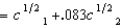 , where c1 is her consumption in period 1 and c2 is her consumption in period 2. Her income in period 1 is 5 times as large as her income in period 2. At what interest rate will she choose to consume the same amount in period 1 as in period 2?
Free
(Multiple Choice)
4.8/5  (94)
(94) Correct Answer: Verified
D
In the village in Problem 10, if the harvest this year is 6,000 bushels of grain and the harvest next year will be 1,100 bushels and if rats eat 10% of any grain that is stored for a year, how many bushels of grain could the villagers consume next year if they consume 1,000 bushels of grain this year?
Free
(Multiple Choice)
5.0/5 (69)
(69) Correct Answer:Verified
VerifiedA
If Peregrine in Problem 1 consumes (1, 500, 880) and earns (1, 300, 1, 100) and if the interest rate is 10%, the present value of his endowment is
Free
(Multiple Choice)
5.0/5 (87)
(87) Correct Answer:Verified
VerifiedC
Mr. O. B. Kandle, of Problem 8, has a utility function c1c2, where c1 is his consumption in period 1 and c2 is his consumption in period 2. He has no income in period 2. If he had an income of $50,000 in period 1 and the interest rate increased from 10 to 15%,
(Multiple Choice)
4.8/5 (77)
(77) In the village in Problem 10, if the harvest this year is 4,000 bushels of grain and the harvest next year will be 1,200 bushels and if rats eat 10% of any grain that is stored for a year, how many bushels of grain could the villagers consume next year if they consume 1,000 bushels of grain this year?
(Multiple Choice)
4.8/5 (69)
(69) Patience has a utility function U(c1, c2) 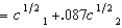 , where c1 is her consumption in period 1 and c2 is her consumption in period 2. Her income in period 1 is 5 times as large as her income in period 2. At what interest rate will she choose to consume the same amount in period 1 as in period 2?
 (Multiple Choice)
4.9/5 (70)
(70) Harvey Habit in Problem 9 has a utility function U(c1, c2) = min{c1, c2}. If he had an income of $1,290 in period 1 and $860 in period 2 and if the interest rate were 15%, how much would Harvey choose to spend on bread in period 1?
(Multiple Choice)
4.9/5 (74)
(74) Harvey Habit in Problem 9 has a utility function U(c1, c2) = min{c1, c2}. If he had an income of $440 in period 1 and $880 in period 2 and if the interest rate were 20%, how much would Harvey choose to spend on bread in period 1?
(Multiple Choice)
4.8/5 (90)
(90) If Peregrine in Problem 1 consumes (1, 400, 1, 440) and earns (900, 2, 040) and if the interest rate is 20%, the present value of his endowment is
(Multiple Choice)
4.9/5 (70)
(70) If Peregrine in Problem 1 consumes (900, 805) and earns (600, 1, 150) and if the interest rate is 15%, the present value of his endowment is
(Multiple Choice)
4.9/5 (99)
(99) Suppose that Molly from Problem 2 had an income of $600 in period 1 and an income of $880 in period 2. Suppose that her utility function were ca1c1-a2, where a = 0.80 and the interest rate were 10%. If her income in period 1 doubled and her income in period 2 stayed the same, her consumption in period 1 would
(Multiple Choice)
4.8/5 (69)
(69) Harvey Habit in Problem 9 has a utility function U(c1, c2) = min{c1, c2}. If he had an income of $645 in period 1 and $1,290 in period 2 and if the interest rate were 15%, how much would Harvey choose to spend on bread in period 1?
(Multiple Choice)
4.8/5 (88)
(88) Patience has a utility function U(c1, c2) 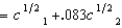 , where c1 is her consumption in period 1 and c2 is her consumption in period 2. Her income in period 1 is 3 times as large as her income in period 2. At what interest rate will she choose to consume the same amount in period 1 as in period 2?
 (Multiple Choice)
4.9/5 (85)
(85) Mr. O. B. Kandle, of Problem 8, has a utility function c1c2, where c1 is his consumption in period 1 and c2 is his consumption in period 2. He has no income in period 2. If he had an income of $40,000 in period 1 and the interest rate increased from 10 to 12%,
(Multiple Choice)
4.9/5 (88)
(88) Suppose that Molly from Problem 2 had an income of $500 in period 1 and an income of $880 in period 2. Suppose that her utility function were ca1c1-a2, where a = 0.60 and the interest rate were 10%. If her income in period 1 doubled and her income in period 2 stayed the same, her consumption in period 1 would
(Multiple Choice)
4.9/5 (75)
(75) Suppose that Molly from Problem 2 had an income of $500 in period 1 and an income of $250 in period 2. Suppose that her utility function were ca1c1-a2, where a = 0.60 and the interest rate were 25%. If her income in period 1 doubled and her income in period 2 stayed the same, her consumption in period 1 would
(Multiple Choice)
4.8/5 (81)
(81) In the village in Problem 10, if the harvest this year is 4,000 bushels of grain and the harvest next year will be 700 bushels and if rats eat 30% of any grain that is stored for a year, how many bushels of grain could the villagers consume next year if they consume 1,000 bushels of grain this year?
(Multiple Choice)
4.9/5 (77)
(77) Harvey Habit in Problem 9 has a utility function U(c1, c2) = min{c1, c2}. If he had an income of $430 in period 1 and $860 in period 2 and if the interest rate were 15%, how much would Harvey choose to spend on bread in period 1?
(Multiple Choice)
4.9/5 (89)
(89) Harvey Habit in Problem 9 has a utility function U(c1, c2) = min{c1, c2}. If he had an income of $420 in period 1 and $1,050 in period 2 and if the interest rate were 10%, how much would Harvey choose to spend on bread in period 1?
(Multiple Choice)
4.9/5 (73)
(73) Mr. O. B. Kandle, of Problem 8, has a utility function c1c2, where c1 is his consumption in period 1 and c2 is his consumption in period 2. He has no income in period 2. If he had an income of $60,000 in period 1 and the interest rate increased from 10 to 17%,
(Multiple Choice)
4.9/5 (92)
(92) 
Filters
- Essay(0)
- Multiple Choice(0)
- Short Answer(0)
- True False(0)
- Matching(0)