



 Chat with AI
Exam 2: Molecular Interactions

Exam 1: Introduction to Physiology63 Questions
Exam 2: Molecular Interactions149 Questions
Exam 3: Compartmentation: Cells and Tissues159 Questions
Exam 4: Energy and Cellular Metabolism144 Questions
Exam 5: Membrane Dynamics136 Questions
Exam 6: Communication, Integration, and Homeostasis79 Questions
Exam 7: Introduction to the Endocrine System76 Questions
Exam 8: Neurons: Cellular and Network Properties223 Questions
Exam 9: The Central Nervous System107 Questions
Exam 10: Sensory Physiology173 Questions
Exam 11: Efferent Division: Autonomic and Somatic Motor Control75 Questions
Exam 12: Muscles100 Questions
Exam 13: Integrative Physiology I: Control of Body Movement69 Questions
Exam 14: Cardiovascular Physiology184 Questions
Exam 15: Blood Flow and the Control of Blood Pressure121 Questions
Exam 16: Blood107 Questions
Exam 17: Mechanics of Breathing117 Questions
Exam 18: Gas Exchange and Transport84 Questions
Exam 19: The Kidneys75 Questions
Exam 20: Integrative Physiology II: Fluid and Electrolyte Balance80 Questions
Exam 21: The Digestive System131 Questions
Exam 22: Metabolism and Energy Balance132 Questions
Exam 23: Endocrine Control of Growth and Metabolism97 Questions
Exam 24: The Immune System116 Questions
Exam 25: Integrative Physiology III: Exercise62 Questions
Exam 26: Reproduction and Development122 Questions
Select questions type


Which of the following is a common feature of soluble proteins?
(Multiple Choice)
4.8/5  (87)
(87) For the following questions,match the type of modulator with the best description below.
-competitive inhibitor
(Multiple Choice)
4.9/5 (78)
(78) Write the chemical formula for the molecule drawn below.Which class of organic molecule does it belong to? Is it most likely polar or nonpolar? 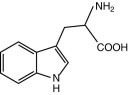
(Essay)
4.8/5 (85)
(85) How many grams of glucose,m.w.180 daltons,is necessary to make 1 liter of a 1.0 molar solution?
(Multiple Choice)
4.9/5 (86)
(86) If 100 mL of water contains 5 grams of NaCl,m.w.58.5 daltons,what is the molarity of the solution in moles/L?
(Multiple Choice)
4.8/5 (77)
(77) Explain the general chemical structure for monosaccharides and amino acids.
(Essay)
4.8/5 (89)
(89) Lipids are hydrophobic,and do not usually dissolve in water.Because blood is water-based,the lipid cholesterol is combined with ________ so that it can be transported by blood.
(Multiple Choice)
4.8/5 (79)
(79) Chemical reactions that occur in the human body proceed at a faster rate due to special catalytic molecules called
(Multiple Choice)
4.8/5 (80)
(80) Sally Student does not understand the differences between ions,isotopes,and free radicals.Assuming she has learned and understood some basic chemistry,what is the likely source of her confusion? Review the definitions of these terms,then make a table or flow chart to help her sort this out.
(Essay)
4.8/5 (84)
(84) If a substance has a pH that is less than 7,it is considered
(Multiple Choice)
4.9/5 (86)
(86) A 5 M solution of 100 mL of glucose contains how many grams of glucose,m.w.180 daltons?
(Multiple Choice)
4.8/5 (71)
(71) If a polypeptide contains 10 peptide bonds,how many amino acids does it contain?
(Multiple Choice)
4.9/5 (88)
(88) What is the pH of a 0.005 M HCl solution? Assume complete dissociation.
(Essay)
4.7/5 (78)
(78) In the equation CO2 + H2O H2CO3 H+ + HCO3-, which of these is an acid?
(Multiple Choice)
4.9/5 (95)
(95) 
Filters
- Essay(0)
- Multiple Choice(0)
- Short Answer(0)
- True False(0)
- Matching(0)