



 Chat with AI
Exam 3: The Age of Enlightenment: Reason and Reform


Instructions: Please use this outline map of the world to answer the question(s).
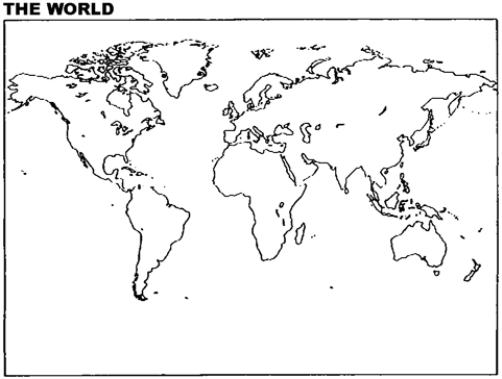 -What is meant by the term enlightened despotism? Provide specific examples of policies from states associated with the tradition of enlightened despotism to demonstrate how and why monarchs drew on Enlightenment ideas.
 (79)
 Answered by Examlex AI Copilot
Enlightened despotism refers to a form of government in which an absolute monarch rules according to the principles of the Enlightenment, a philosophical movement that emphasized reason, science, and individual rights. Enlightened despots sought to use their power to enact reforms and improve the lives of their subjects, while still maintaining absolute authority.
One example of a state associated with the tradition of enlightened despotism is Prussia under the rule of Frederick the Great. Frederick implemented policies aimed at modernizing and strengthening the state, such as religious tolerance, legal reform, and the promotion of education. He also supported the arts and sciences, attracting intellectuals and artists to his court. These policies were influenced by Enlightenment ideas and aimed to improve the well-being of his subjects while consolidating his own power.
Another example is Austria under the rule of Maria Theresa and her son Joseph II. Maria Theresa implemented administrative and economic reforms, while Joseph II introduced religious toleration, abolished serfdom, and reformed the legal system. Both monarchs aimed to centralize and strengthen the state, while also implementing policies that reflected Enlightenment ideals of progress and rational governance.
In both cases, the monarchs drew on Enlightenment ideas to justify their policies and to present themselves as benevolent rulers working for the betterment of their people. However, they also maintained absolute power and were willing to suppress dissent in order to achieve their goals. This balance between reform and authoritarianism is a key characteristic of enlightened despotism.
All of the following were true of Austria EXCEPT
(72)  Verified
C
Please define the following key terms. Show Who? What? Where? When? Why Important?
-deism
(72) Answered by Examlex AI CopilotDeism is a philosophical belief that posits the existence of a higher power or creator, but rejects the idea of a personal God who intervenes in the world.
Who: Deism is a belief system held by individuals who reject organized religion and the idea of a personal God.
What: Deism is a philosophical belief that acknowledges the existence of a higher power or creator, but does not believe in a personal God who is involved in human affairs.
Where: Deism can be found in various cultures and societies around the world, as it is a philosophical belief rather than a specific religious practice.
When: Deism has been present throughout history, with notable figures such as Thomas Jefferson and Benjamin Franklin being adherents of this belief system during the Enlightenment period in the 18th century.
Why Important: Deism is important as it represents a philosophical alternative to traditional religious beliefs, emphasizing reason and natural law over supernatural intervention. It has also played a role in shaping the beliefs of influential historical figures and has contributed to the development of secular and humanistic thought.
The imposters referred to in The Treatise of the Three Imposters are
(79) The unnamed author of The Treatise of the Three Imposters demonstrated which of the following positions?
(98) Please define the following key terms. Show Who? What? Where? When? Why Important?
-general will
(78) Please define the following key terms. Show Who? What? Where? When? Why Important?
-diplomatic revolution
(81) Please define the following key terms. Show Who? What? Where? When? Why Important?
-High Enlightenment
(83) The text refers to which of the following as the most important book of the Enlightenment?
(87) Please define the following key terms. Show Who? What? Where? When? Why Important?
-humanitarianism
(79) All of the following accurately describe Mary Wollstonecraft EXCEPT
(77) In general the philosophes attacked all of the following EXCEPT
(79) Instructions: Please use this outline map of Europe to answer the question(s).
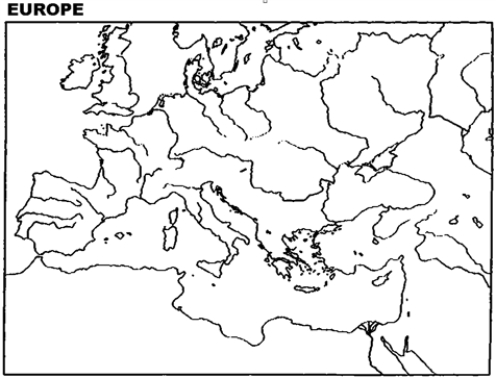 -Locate and label the following sites:the original home of the Freemasons,the location of the Grand Lodge of the Freemasons,and the country of origin of the Encyclopedia.
 (75) 
Filters
- Essay(0)
- Multiple Choice(0)
- Short Answer(0)
- True False(0)
- Matching(0)