



 Chat with AI
Exam 6: Lower Limb

Exam 1: Terminology, Positioning, and Imaging Principles199 Questions
Exam 2: Chest102 Questions
Exam 3: Abdomen92 Questions
Exam 4: Upper Limb107 Questions
Exam 5: Humerus and Shoulder Girdle80 Questions
Exam 6: Lower Limb110 Questions
Exam 7: Femur and Pelvic Girdle80 Questions
Exam 8: Cervical and Thoracic Spine84 Questions
Exam 9: Lumbar Spine, Sacrum, and Coccyx75 Questions
Exam 10: Bony Thoraxsternum and Ribs67 Questions
Exam 11: Cranium, Facial Bones, and Paranasal Sinuses181 Questions
Exam 12: Biliary Tract and Upper Gastrointestinal System127 Questions
Exam 13: Lower Gi System83 Questions
Exam 14: Urinary System and Venipuncture100 Questions
Exam 15: Trauma, Mobile, and Surgical Radiography108 Questions
Exam 16: Pediatric Radiography72 Questions
Exam 17: Angiography and Interventional Procedures72 Questions
Exam 18: Computed Tomography103 Questions
Exam 19: Special Radiographic Procedures69 Questions
Exam 20: Diagnostic and Therapeutic Modalities208 Questions
Select questions type


Which projection and/or position of the foot is represented by this drawing of the foot? 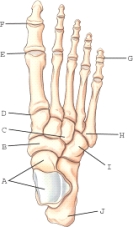
(Multiple Choice)
4.8/5  (82)
(82) Match the correct disease or condition with the corresponding pathologic description.(Use each choice only once.)
-Accumulated fluid in the joint cavity
(Multiple Choice)
4.9/5 (83)
(83) How much rotation from an AP position of the ankle will typically produce an AP mortise projection?
(Multiple Choice)
4.8/5 (85)
(85) The tangential projection for the sesamoid bones of the foot should be performed with the patient prone rather than supine to minimize magnification of the sesamoid bones, if the patient condition allows it.
(True/False)
4.8/5 (79)
(79) A patient comes to radiology with a history of chondromalacia of the patella.Her physician orders a projection of the patellofemoral joint space.Due to advanced emphysema, the patient cannot lie recumbent for this projection.Which of the following projections would be best for this patient?
(Multiple Choice)
4.8/5 (83)
(83) Which position of the foot will best demonstrate the lateral (third) cuneiform?
(Multiple Choice)
4.7/5 (75)
(75) How much is the foot dorsiflexed with the tangential projection for the sesamoid bones if the CR remains perpendicular to the image receptor?
(Multiple Choice)
4.9/5 (92)
(92) A radiographic appearance of a highly malignant and extensively destructive lesion that usually occurs in long bones and produces a sunburst pattern describes:
(Multiple Choice)
4.7/5 (90)
(90) The adductor tubercle is visible on the medial, posterior aspect of the femoral condyle and can be used to determine possible rotation of a lateral knee projection.
(True/False)
4.7/5 (74)
(74) 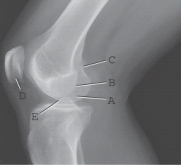
Which of the following projections of the patella requires the patient to be placed in a prone position, 50° to 60° flexion of the knee, and a 45° cephalic angle of the CR?
(Multiple Choice)
4.7/5 (82)
(82) A geriatric patient comes to the radiology department for a study of the knee.The patient is unsteady and unsure of himself.Which intercondylar fossa projection would provide the best results without risk of injury to the patient?
(Multiple Choice)
4.9/5 (78)
(78) A patient enters the ED with an injury near the base of the first and second metatarsals.The basic foot projections are inconclusive on demonstrating a fracture to the medial cuneiform.Which of the following projections would best demonstrate this bone?
(Multiple Choice)
4.8/5 (68)
(68) Which of the following imaging modalities and/or procedures will provide the best assessment for osteomyelitis of the foot?
(Multiple Choice)
4.8/5 (85)
(85) What CR angulation is required for the AP medial oblique projection of the foot?
(Multiple Choice)
4.7/5 (80)
(80) Follow-up radiographs for a fractured tibia and fibula may include only the joint closest to the site of injury.
(True/False)
5.0/5 (73)
(73) 
Filters
- Essay(0)
- Multiple Choice(0)
- Short Answer(0)
- True False(0)
- Matching(0)