



 Chat with AI
Exam 11: Monopolistic Competition and Oligopoly

Exam 1: Economics: Foundations and Models444 Questions
Exam 2: Trade-Offs, comparative Advantage, and the Market System498 Questions
Exam 3: Where Prices Come From: the Interaction of Demand and Supply475 Questions
Exam 4: Market Efficiency and Market Failure465 Questions
Exam 5: The Economics of Health Care334 Questions
Exam 6: Firms, the Stock Market, and Corporate Governance250 Questions
Exam 7: Consumer Choice and Elasticity380 Questions
Exam 8: Technology, production, and Costs276 Questions
Exam 9: Firms in Perfectly Competitive Markets297 Questions
Exam 10: Monopoly and Antitrust Policy271 Questions
Exam 11: Monopolistic Competition and Oligopoly414 Questions
Exam 12: Gdp: Measuring Total Production and Income266 Questions
Exam 13: Unemployment and Inflation292 Questions
Exam 14: Economic Growth, the Financial System, and Business Cycles257 Questions
Exam 15: Aggregate Demand and Aggregate Supply Analysis284 Questions
Exam 16: Money, banks, and the Federal Reserve System279 Questions
Exam 17: Monetary Policy277 Questions
Exam 18: Fiscal Policy282 Questions
Exam 19: Comparative Advantage, international Trade, and Exchange Rates446 Questions
Select questions type


Which of the following describes the relative positions of the demand curve and the average total cost (ATC)curve of a monopolistically competitive firm that earns a profit in the short run?
(Multiple Choice)
4.8/5  (82)
(82) Firms in an oligopoly are said to be interdependent.What does this mean?
(Essay)
4.9/5 (91)
(91) When a monopolistically competitive firm cuts its price to increase its sales,it experiences a gain in revenue due to the
(Multiple Choice)
4.9/5 (76)
(76) Explain how collusion makes firms better off.Given the incentives to collude,briefly explain why every industry does not become a cartel.
(Essay)
4.9/5 (71)
(71) Figure 11-7
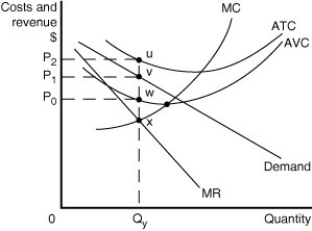 Figure 11-7 shows short-run cost and demand curves for a monopolistically competitive firm in the footwear market.
-Refer to Figure 11-7.Which of the following is the area that represents the profit or loss experienced by the firm?
Figure 11-7 shows short-run cost and demand curves for a monopolistically competitive firm in the footwear market.
-Refer to Figure 11-7.Which of the following is the area that represents the profit or loss experienced by the firm? (Multiple Choice)
4.8/5 (95)
(95) When new firms are encouraged to enter a monopolistically competitive market
(Multiple Choice)
4.8/5 (93)
(93) Monopolistic competition differs from oligopoly in that in monopolistic competition firms act independently while in oligopoly firms act interdependently.
(True/False)
5.0/5 (84)
(84) The value of the four-firm concentration ratio that many economists consider indicative of the existence of an oligopoly in a particular industry is
(Multiple Choice)
4.9/5 (75)
(75) Table 11-8
Saudi Arabia's (S) Choices Nigeria's (N) Choices Low Output High Output Low Output S: \ 100 million profit N: \ 20 million profit S: \ 75 million profit N: \ 12 million profit High Output S: \ 80 million profit N: \ 30 million profit S: \ 60 million profit N: \ 20 million profit
Suppose OPEC has only two producers, Saudi Arabia and Nigeria.Saudi Arabia has far more oil reserves and is the lower cost producer compared to Nigeria.The payoff matrix in Table 11-8 shows the profits earned per day by each country."Low output" corresponds to producing the OPEC assigned quota and "high output" corresponds to producing the maximum capacity beyond the assigned quota.
-Refer to Table 11-8.What is the Nash equilibrium in this game?
(Multiple Choice)
4.8/5 (75)
(75) A monopolistically competitive firm maximizes profit in the short run by producing where
(Multiple Choice)
4.7/5 (86)
(86) Figure 11-13
 -Refer to Figure 11-13.Economies of scale are exhausted at which output level?
 (Multiple Choice)
4.8/5 (90)
(90) The equilibrium in the prisoner's dilemma is a dominant strategy Nash equilibrium.
(True/False)
4.9/5 (88)
(88) 
Filters
- Essay(0)
- Multiple Choice(0)
- Short Answer(0)
- True False(0)
- Matching(0)