



 Chat with AI
Exam 4: Fitness and Conditioning Techniques

Exam 1: The Athletic Trainer As a Health Care Provider20 Questions
Exam 2: Health Care Organization and Administration in Athletic Training21 Questions
Exam 3: Legal Concerns and Insurance Issues20 Questions
Exam 4: Fitness and Conditioning Techniques23 Questions
Exam 5: Nutrition and Supplements31 Questions
Exam 6: Environmental Considerations23 Questions
Exam 7: Protective Equipment22 Questions
Exam 8: Wrapping and Taping20 Questions
Exam 9: Mechanisms and Characteristics of Musculoskeletal and Nerve Trauma15 Questions
Exam 10: Tissue Response to Injury19 Questions
Exam 11: Psychosocial Intervention for Sports Injuries and Illnesses19 Questions
Exam 12: On-The-Field Acute Care and Emergency Procedures44 Questions
Exam 13: Off-The-Field Injury Evaluation29 Questions
Exam 14: Infectious Diseases, Bloodborne Pathogens, and Universal Precautions18 Questions
Exam 15: Using Therapeutic Modalities42 Questions
Exam 16: Using Therapeutic Exercise in Rehabilitation26 Questions
Exam 17: Pharmacology, Drugs, and Sports41 Questions
Exam 18: The Foot38 Questions
Exam 19: The Ankle and Lower Leg32 Questions
Exam 20: The Knee and Related Structures49 Questions
Exam 21: The Thigh, Hip, Groin, and Pelvis57 Questions
Exam 22: The Shoulder Complex40 Questions
Exam 23: The Elbow29 Questions
Exam 24: The Forearm, Wrist, Hand, and Fingers45 Questions
Exam 25: The Spine45 Questions
Exam 26: The Head, Face, Eyes, Ears, Nose, and Throat50 Questions
Exam 27: The Thorax and Abdomen27 Questions
Exam 28: Skin Disorders35 Questions
Exam 29: Additional General Medical Conditions30 Questions
Select questions type


Select the correct explanation of the length-tension relation in muscle based on the figure. 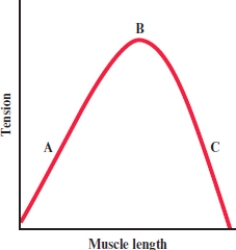

Free
(Multiple Choice)
4.8/5  (95)
(95) Correct Answer: Verified
B
Which of the following techniques of resistance training help an individual gain strength, neuromuscular control, power, and muscle endurance?
Free
(Multiple Choice)
4.9/5 (88)
(88) Correct Answer:Verified
VerifiedE
When using continuous training as a technique to improve cardiorespiratory endurance, what statement is incorrect?
Free
(Multiple Choice)
4.8/5 (64)
(64) Correct Answer:Verified
VerifiedE
What determines the tension that can be generated when referring to muscular strength?
(Multiple Choice)
4.9/5 (93)
(93) Which of the following statementsbest describes the function of the warm-up?
(Multiple Choice)
4.8/5 (86)
(86) What is known as the "ultimate usable form of energy for muscular activity"?
(Multiple Choice)
4.8/5 (82)
(82) In periodization training, a patient should be working on which period/phase during the off season?
I. Transition period
II. Strength phase
III. Power phase
IV. Competition period
V. Endurance phase
(Multiple Choice)
4.9/5 (93)
(93) In periodization training a patient should be working on which period/phase during the preseason?
I. Transition period
II. Strength phase
III. Power phase
IV. Competition period
V. Endurance phase
(Multiple Choice)
4.9/5 (84)
(84) Check only the exercises that can be categorized as a functional exercise.
(Multiple Choice)
5.0/5 (73)
(73) What four components coordinate together to transport oxygen throughout the body?
(Multiple Choice)
4.9/5 (75)
(75) Shortening and lengthening a muscle through a complete range of motion for which of the following types of exercise?
(Multiple Choice)
4.7/5 (86)
(86) Which of the following activities is an example of interval training?
(Multiple Choice)
4.8/5 (82)
(82) What term is best identified with enlargement of a muscle caused by an increase in the size of its cells?
(Multiple Choice)
4.7/5 (100)
(100) Which of the following statements about cardiorespiratory endurance is correct?
(Multiple Choice)
4.9/5 (77)
(77) Check only the steps that contribute to the energy system of anaerobic metabolism.
(Multiple Choice)
4.8/5 (79)
(79) Which of the following principles of conditioning allows the program designer to address group needs, rather than individual needs?
(Multiple Choice)
4.9/5 (79)
(79) What principle of conditioning addresses an individual's specific adaptation to imposed demands?
(Multiple Choice)
4.8/5 (75)
(75) Will a muscle hypertrophy if myofilaments also increase in both size and number?
(Multiple Choice)
4.9/5 (72)
(72) How is the heart able to adapt to increased demands during exercise?
(Multiple Choice)
4.9/5 (74)
(74) 
Filters
- Essay(0)
- Multiple Choice(0)
- Short Answer(0)
- True False(0)
- Matching(0)