



 Chat with AI
Exam 24: The Forearm, Wrist, Hand, and Fingers

Exam 1: The Athletic Trainer As a Health Care Provider20 Questions
Exam 2: Health Care Organization and Administration in Athletic Training21 Questions
Exam 3: Legal Concerns and Insurance Issues20 Questions
Exam 4: Fitness and Conditioning Techniques23 Questions
Exam 5: Nutrition and Supplements31 Questions
Exam 6: Environmental Considerations23 Questions
Exam 7: Protective Equipment22 Questions
Exam 8: Wrapping and Taping20 Questions
Exam 9: Mechanisms and Characteristics of Musculoskeletal and Nerve Trauma15 Questions
Exam 10: Tissue Response to Injury19 Questions
Exam 11: Psychosocial Intervention for Sports Injuries and Illnesses19 Questions
Exam 12: On-The-Field Acute Care and Emergency Procedures44 Questions
Exam 13: Off-The-Field Injury Evaluation29 Questions
Exam 14: Infectious Diseases, Bloodborne Pathogens, and Universal Precautions18 Questions
Exam 15: Using Therapeutic Modalities42 Questions
Exam 16: Using Therapeutic Exercise in Rehabilitation26 Questions
Exam 17: Pharmacology, Drugs, and Sports41 Questions
Exam 18: The Foot38 Questions
Exam 19: The Ankle and Lower Leg32 Questions
Exam 20: The Knee and Related Structures49 Questions
Exam 21: The Thigh, Hip, Groin, and Pelvis57 Questions
Exam 22: The Shoulder Complex40 Questions
Exam 23: The Elbow29 Questions
Exam 24: The Forearm, Wrist, Hand, and Fingers45 Questions
Exam 25: The Spine45 Questions
Exam 26: The Head, Face, Eyes, Ears, Nose, and Throat50 Questions
Exam 27: The Thorax and Abdomen27 Questions
Exam 28: Skin Disorders35 Questions
Exam 29: Additional General Medical Conditions30 Questions
Select questions type


Which of the following is a thenar muscle that pulls the thumb in front of the palm to meet the little finger?

Free
(Multiple Choice)
4.9/5  (73)
(73) Correct Answer: Verified
B
If a person presents with a boutonniere deformity, what was the mechanism of injury?
Free
(Multiple Choice)
4.8/5 (85)
(85) Correct Answer:Verified
VerifiedA
What carpal bone is the most likely to dislocate?
Free
(Multiple Choice)
4.8/5 (75)
(75) Correct Answer:Verified
VerifiedB
The radiocarpal joint is a condyloid joint. What does this mean?
(Multiple Choice)
4.9/5 (96)
(96) What rehabilitation technique is the patient doing in the two figures to address the median and radial nerve? 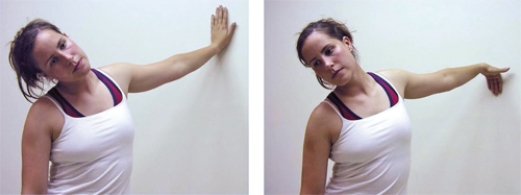
(Multiple Choice)
4.9/5 (92)
(92) If a patient is suffering from the problem noted in the figure of the hand, which nerves would be damaged? 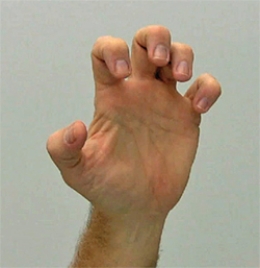
(Multiple Choice)
4.8/5 (77)
(77) If a patient is suffering from Bishop's hand, what nerve has been damaged?
(Multiple Choice)
4.8/5 (92)
(92) Which of the following nerves controls the majority of extensor muscles?
(Multiple Choice)
4.7/5 (88)
(88) What problem or condition is noted in this figure of the wrist, hand, and finger? 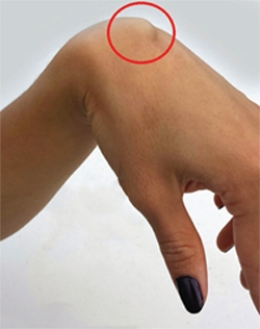
(Multiple Choice)
4.8/5 (73)
(73) What will be a sign or symptom of tenosynovitis as compared to tendinitis?
(Multiple Choice)
4.8/5 (78)
(78) Which of the following statements is true of the middle radioulnar joint?
(Multiple Choice)
4.8/5 (79)
(79) The figure of the wrist, hand, and fingers demonstrates which of the following conditions? 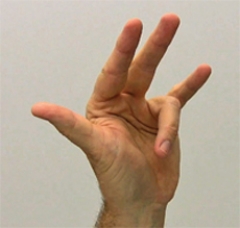
(Multiple Choice)
4.8/5 (71)
(71) What joint classification is the first carpometacarpal joint?
(Multiple Choice)
4.8/5 (84)
(84) Which of the following statements is true of the superior radioulnar joint?
(Multiple Choice)
4.9/5 (84)
(84) What is the only clinical prediction rule used for the hand?
(Multiple Choice)
4.9/5 (80)
(80) Which of the following tests is used to determine the function of the radial and ulnar arteries supplying the hand?
(Multiple Choice)
4.8/5 (90)
(90) Select the symptoms that are related to the injury of the forearm, wrist, hand, and fingers.
Forearm Contusion
(Multiple Choice)
4.9/5 (75)
(75) Which of the following conditions will occur when a person consistently performs wrist flexion activities?
(Multiple Choice)
4.9/5 (92)
(92) 
Filters
- Essay(0)
- Multiple Choice(0)
- Short Answer(0)
- True False(0)
- Matching(0)