



 Chat with AI
Exam 10: The Deaths of Stars

Exam 1: Here and Now97 Questions
Exam 2: A Users Guide to the Sky116 Questions
Exam 3: Cycles of the Sun and Moon154 Questions
Exam 4: The Origin of Modern Astronomy144 Questions
Exam 5: Light and Telescopes156 Questions
Exam 6: Atoms and Spectra125 Questions
Exam 7: The Sun146 Questions
Exam 8: The Family of Stars190 Questions
Exam 9: The Formation and Structure of Stars136 Questions
Exam 10: The Deaths of Stars128 Questions
Exam 11: Neutron Stars and Black Holes99 Questions
Exam 12: The Milky Way Galaxy117 Questions
Exam 13: Galaxies: Normal and Active151 Questions
Exam 14: Modern Cosmology112 Questions
Exam 15: Origin of the Solar System and Extrasolar Planets104 Questions
Exam 16: Earth and Moon: Bases for Comparative Planetology98 Questions
Exam 17: Mercury, Venus, and Mars83 Questions
Exam 18: The Outer Solar System137 Questions
Exam 19: Meteorites, Asteroids, and Comets91 Questions
Exam 20: Astrobiology: Life on Other Worlds97 Questions
Select questions type


As a Sun-like main-sequence star exhausts hydrogen in its core, it next becomes
(Multiple Choice)
4.8/5  (76)
(76)  The person in the drawing ____________________ in the right panel when compared to the left panel because of conservation of angular momentum.
 (Multiple Choice)
4.9/5 (69)
(69) About how long will a 0.5-  star spend on the main sequence?
 (Multiple Choice)
5.0/5 (87)
(87) Very massive stars lose their outer layers in a planetary nebula.
(True/False)
4.8/5 (78)
(78) Explain the major differences between type II supernova and a type I supernova.
(Essay)
4.9/5 (64)
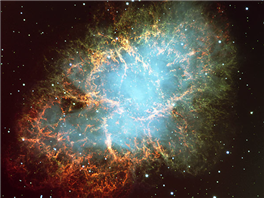
(64) 
As material leaves an expanding star and begins to fall into a white dwarf close companion
(Multiple Choice)
4.9/5 (86)
(86) A planetary nebula is an example of a star no longer in hydrostatic equilibrium.
(True/False)
4.9/5 (79)
(79) A Sun-like star will experience a helium flash in the core if
(Multiple Choice)
4.9/5 (75)
(75) ___________ particles were observed coming from supernova 1987A, confirming models and theories of core collapse formation of neutron stars.
(Short Answer)
4.9/5 (82)
(82) The Helix and Egg nebulae which originated from (what are today) white dwarf stars are
(Multiple Choice)
4.9/5 (84)
(84) 
Filters
- Essay(0)
- Multiple Choice(0)
- Short Answer(0)
- True False(0)
- Matching(0)