



 Chat with AI
Exam 32: Deuterostomes: Vertebrates and Their Closest Relatives

Exam 1: Introduction to Biological Concepts and Research86 Questions
Exam 2: Life, Chemistry, and Water87 Questions
Exam 3: Biological Molecules: the Carbon Compounds of Life86 Questions
Exam 4: Cells87 Questions
Exam 5: Membranes and Transport88 Questions
Exam 6: Energy, Enzymes, and Biological Reactions87 Questions
Exam 7: Cellular Respiration: Harvesting Chemical Energy88 Questions
Exam 8: Photosynthesis83 Questions
Exam 9: Cell Communication87 Questions
Exam 10: Cell Division and Mitosis88 Questions
Exam 11: Meiosis: the Cellular Basis of Sexual Reproduction80 Questions
Exam 12: Mendel, Genes, and Inheritance79 Questions
Exam 13: Genes, Chromosomes, and Human Genetics92 Questions
Exam 14: Dna Structure, Replication, and Organization79 Questions
Exam 15: Gene Expression: From Dna to Protein83 Questions
Exam 16: Regulation of Gene Expression84 Questions
Exam 17: Bacterial and Viral Genetics85 Questions
Exam 18: Dna Technology: Making and Using Genetically Altered Organisms, and Other Applications90 Questions
Exam 19: Genomes and Proteomes81 Questions
Exam 20: The Development of Evolutionary Thought92 Questions
Exam 21: Microevolution: Genetic Changes Within Populations88 Questions
Exam 22: Speciation89 Questions
Exam 23: Paleobiology and Macroevolution87 Questions
Exam 24: Systematic Biology: Phylogeny and Classification95 Questions
Exam 25: The Origin of Life86 Questions
Exam 26: Prokaryotes and Viruses86 Questions
Exam 27: Protists90 Questions
Exam 28: Seedless Plants88 Questions
Exam 29: Seed Plants90 Questions
Exam 30: Fungi88 Questions
Exam 31: Animal Phylogeny, Acoelomates, and Protostomes95 Questions
Exam 32: Deuterostomes: Vertebrates and Their Closest Relatives93 Questions
Exam 33: The Plant Body90 Questions
Exam 34: Transport in Plants94 Questions
Exam 35: Plant Nutrition85 Questions
Exam 36: Reproduction and Development in Flowering Plants89 Questions
Exam 37: Plant Signals and Responses to the Environment90 Questions
Exam 38: Introduction to Animal Organization and Physiology87 Questions
Exam 39: Information Flow and the Neuron88 Questions
Exam 40: Nervous Systems88 Questions
Exam 41: Sensory Systems87 Questions
Exam 42: The Endocrine System94 Questions
Exam 43: Muscles, Bones, and Body Movements87 Questions
Exam 44: The Circulatory System87 Questions
Exam 45: Defenses Against Disease83 Questions
Exam 46: Gas Exchange: the Respiratory System87 Questions
Exam 47: Digestive Systems and Animal Nutrition92 Questions
Exam 48: Regulating the Internal Environment: Osmoregulation, Excretion, and Thermoregulation88 Questions
Exam 49: Animal Reproduction76 Questions
Exam 50: Animal Development88 Questions
Exam 51: Ecology and the Biosphere88 Questions
Exam 52: Population Ecology92 Questions
Exam 53: Population Interactions and Community Ecology89 Questions
Exam 54: Ecosystems90 Questions
Exam 55: Biodiversity and Conservation Biology89 Questions
Exam 56: Animal Behavior87 Questions
Select questions type


Answer the questions using the accompanying figure. Match the structures in the amniote egg with the correct term.
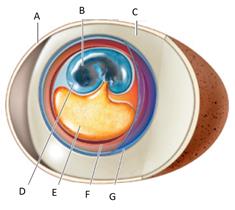
Figure 32.23
Figure 32.23
Correct Answer: Verified
Premises:
Responses:
(Matching)
4.9/5  (92)
(92) Living members of the ____ lineage include the sharks, skates, and rays, all of which have skeletons made entirely of cartilage.
(Multiple Choice)
4.8/5 (84)
(84) At some point during development, all members of the ____ phylum have a hollow dorsal nerve cord, a perforated pharynx, a notochord, and segmented muscles in both the body wall and postanal tail.
(Multiple Choice)
4.9/5 (76)
(76) The ___ Echinoderm lineage is made up of brittle and basket stars, each with elongated, slender, somewhat snakelike arms surrounding a well-defined central disk.
(Multiple Choice)
4.9/5 (68)
(68) The ___ Echinoderm lineage is made up of sea cucumbers, which are elongated along their oral-aboral axis and have a well-developed circulatory system.
(Multiple Choice)
4.9/5 (86)
(86) Members of the ___ Echinoderm lineage include sessile sea lilies and feather stars, which can swim or crawl as adults.
(Multiple Choice)
4.9/5 (73)
(73) Members of the ____ phylum have a unique water vascular system connected to tube feet that are used for movement.
(Multiple Choice)
5.0/5 (73)
(73) Match each group of organisms with the correct lineage.
Premises:
lancelets
Responses:
Chondrichthyes
Aves
Cephalochordata
Correct Answer:Verified
VerifiedPremises:
Responses:
(Matching)
4.8/5 (88)
(88) In chordates, the ____ is a digestive system structure just posterior to the mouth.
(Multiple Choice)
4.8/5 (71)
(71) Based on the fossil record, ____ evolved about 1.8 million years ago and made fairly sophisticated tools, including the hand axe.
(Multiple Choice)
4.8/5 (66)
(66) A key trait that distinguishes gnathostomes from other chordate lineages is the presence of ____.
(Multiple Choice)
4.9/5 (81)
(81) The ____ lineage was a diverse group in the Mesozoic, but now is composed of only two living members, including the tuatara.
(Multiple Choice)
5.0/5 (73)
(73) The pattern of locomotion used by gibbons and siamangs, in which they use their arms to hang below branches and swing forward, is called ____.
(Multiple Choice)
4.9/5 (76)
(76) The duck-billed platypus shares which trait with non-mammalian animals?
(Multiple Choice)
4.7/5 (72)
(72) The internal skeleton of species in the subphylum Vertebrata provides both structural support for muscles and protection for internal organs.
(True/False)
4.8/5 (77)
(77) The ____ lineage contains the fleshy-finned fishes, with fins supported by muscles and an internal bony skeleton.
(Multiple Choice)
4.8/5 (70)
(70) Fossil tooth parts of extinct ____ suggest that these organisms were the earliest vertebrates with bonelike structures.
(Multiple Choice)
4.9/5 (80)
(80) Along with lipids, the skin of amniotes is filled with ____ to help prevent water loss.
(Multiple Choice)
4.9/5 (75)
(75) Match each group of organisms with the correct lineage.
Correct Answer:Verified
VerifiedPremises:
Responses:
(Matching)
4.9/5 (78)
(78) 
Filters
- Essay(0)
- Multiple Choice(0)
- Short Answer(0)
- True False(0)
- Matching(0)