



 Chat with AI
Exam 2: The Rise of the Atlantic World

Exam 1: Native Peoples of America72 Questions
Exam 2: The Rise of the Atlantic World131 Questions
Exam 3: The Emergence of Colonial Societies119 Questions
Exam 4: The Bonds of Empire106 Questions
Exam 5: Roads to Revolution112 Questions
Exam 6: Securing Independence, Defining Nationhood129 Questions
Exam 7: Launching the New Republic105 Questions
Exam 8: America at War and Peace113 Questions
Exam 9: The Transformation of American Society99 Questions
Exam 10: Democratic Politics, Religious Revival, and Reform106 Questions
Exam 11: Technology, Culture, and Everyday Life103 Questions
Exam 12: The Old South and Slavery105 Questions
Exam 13: Immigration, Expansion, and Sectional Conflict99 Questions
Exam 14: From Compromise to Secession108 Questions
Exam 15: Crucible of Freedom: Civil War129 Questions
Exam 16: Reconstruction and Resistance99 Questions
Exam 17: The Transformation of the Trans-Mississippi West110 Questions
Exam 18: The Rise of Industrial America92 Questions
Exam 19: Immigration, Urbanization, and Everyday Life91 Questions
Exam 20: Politics and Expansion in an Industrializing Age124 Questions
Exam 21: The Progressive Era122 Questions
Exam 22: Global Involvements and World War I105 Questions
Exam 23: Coping With Change101 Questions
Exam 24: The Great Depression and the New Deal107 Questions
Exam 25: Americans and a World in Crisis105 Questions
Exam 26: The Cold War Abroad and at Home121 Questions
Exam 27: America at Midcentury104 Questions
Exam 28: Liberalism, Civil Rights, and War in Vietnam126 Questions
Exam 29: A Time of Upheaval118 Questions
Exam 30: A Conservative Revival and the End of the Cold War156 Questions
Exam 31: A Changing Nation: Homefront Crises and New Global Realities101 Questions
Select questions type


Instructions: Identify the following. Be as specific as possible, and include names, dates, and relevant facts as appropriate. Be sure to explain the significance of the person or term.
Armada, Philip II
(Essay)
4.8/5  (73)
(73) Instructions: Choose the letter on the accompanying map of the North Atlantic region that correctly identifies each of the following:
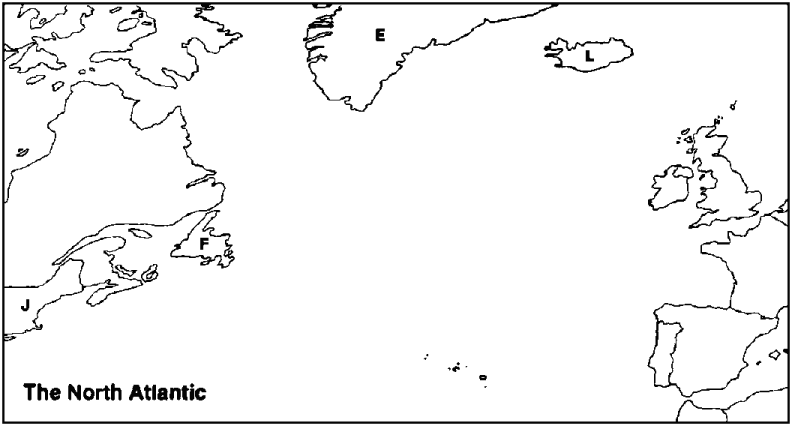 Greenland
 (Short Answer)
4.9/5 (87)
(87) Compare the experiences of the first English settlements: Roanoke, Jamestown, and Plymouth. What were their motivations for settlement? What problems did the settlers face, and how, if at all, did they overcome them? What lessons did the English learn from their experiences in each colony?
(Essay)
4.9/5 (88)
(88) In French, English, and Spanish colonies, interracial unions between Europeans and slaves or Native Americans were
(Multiple Choice)
4.7/5 (79)
(79) Why was John Rolfe important to the eventual success of the Jamestown settlement?
(Multiple Choice)
4.9/5 (78)
(78) Instructions: Identify the following. Be as specific as possible, and include names, dates, and relevant facts as appropriate. Be sure to explain the significance of the person or term.
John Cabot, Amerigo Vespucci
(Short Answer)
4.7/5 (86)
(86) Instructions: Identify the following. Be as specific as possible, and include names, dates, and relevant facts as appropriate. Be sure to explain the significance of the person or term.
P redestination
(Essay)
4.8/5 (78)
(78) European peasant life encompassed all of the following new hardships in the fourteenth to sixteenth centuries EXCEPT:
(Multiple Choice)
4.7/5 (77)
(77) Choose the correct statement below about European explorers and their expeditions:
(Multiple Choice)
4.8/5 (87)
(87) Instructions: Choose the letter on the accompanying map of the United States that correctly identifies each of the following:
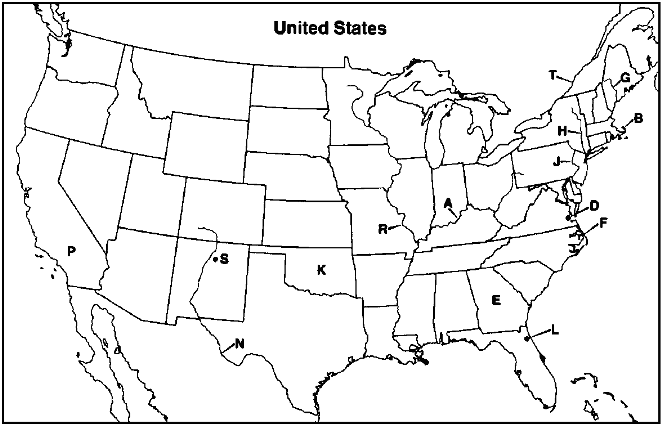 St. Augustine, Florida
 (Short Answer)
4.9/5 (78)
(78) Discuss the "new slavery" that emerged in the fifteenth and sixteenth centuries. What nations were involved? What were the reasons for the slave trade? How did it affect African societies and politics? How did the "new slavery" differ from previous slavery?
(Essay)
4.8/5 (65)
(65) Why were the English late in joining the European expansion that began in the sixteenth century? What factors eventually stimulated English expansion? How did the goals and techniques of the English differ from those of other European nations? To what extent were they similar?
(Essay)
4.9/5 (84)
(84) Instructions: Identify the following. Be as specific as possible, and include names, dates, and relevant facts as appropriate. Be sure to explain the significance of the person or term.
Sugar
(Short Answer)
4.9/5 (73)
(73) In the 1570s, what were England's objectives in the Western Hemisphere?
(Multiple Choice)
4.8/5 (77)
(77) Instructions: Choose the letter on the accompanying map of Europe that correctly identifies each of the following:
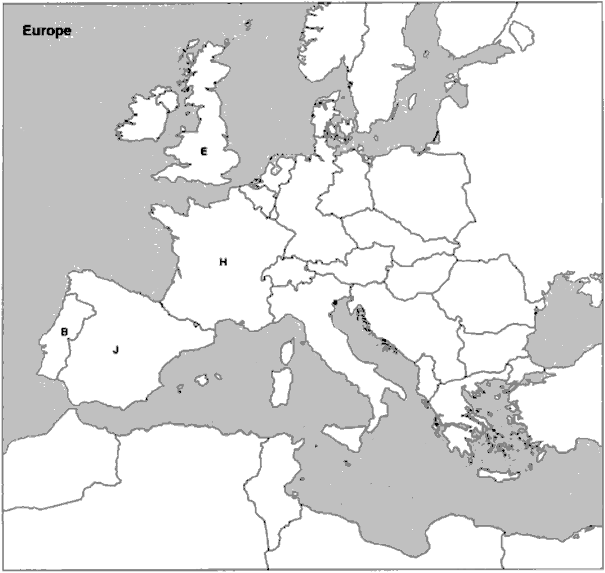 Portugal
 (Short Answer)
4.7/5 (74)
(74) Instructions: Identify the following. Be as specific as possible, and include names, dates, and relevant facts as appropriate. Be sure to explain the significance of the person or term.
Renaissance
(Essay)
4.8/5 (79)
(79) Instructions: Identify the following. Be as specific as possible, and include names, dates, and relevant facts as appropriate. Be sure to explain the significance of the person or term.
Vasco Núñez de Balboa, Ferdinand Magellan
(Short Answer)
4.7/5 (82)
(82) Who broke with the Catholic Church and persuaded Parliament to create the Church of England?
(Multiple Choice)
4.7/5 (78)
(78) Instructions: Choose the letter on the accompanying map of the North Atlantic region that correctly identifies each of the following:
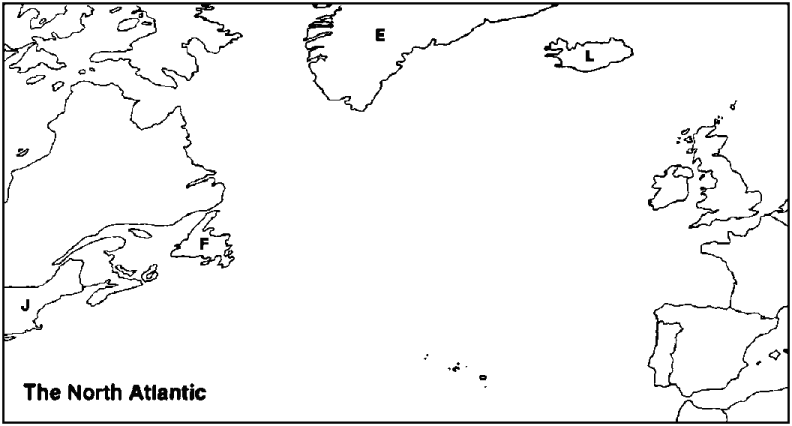 New England
 (Short Answer)
4.7/5 (77)
(77) Hernán Cortés and the Aztecs battled for control of the Aztec empire, but what ultimately enabled Cortés's victory?
(Multiple Choice)
4.9/5 (89)
(89) 
Filters
- Essay(0)
- Multiple Choice(0)
- Short Answer(0)
- True False(0)
- Matching(0)