



 Chat with AI
Exam 22: Nutrition and Digestion

Exam 1: Introduction: Biology Today50 Questions
Exam 2: Essential Chemistry for Biology46 Questions
Exam 3: The Molecules of Life49 Questions
Exam 4: A Tour of the Cell52 Questions
Exam 5: The Working Cell52 Questions
Exam 6: Cellular Respiration: Obtaining Energy from Food51 Questions
Exam 7: Photosynthesis: Using Light to Make Food53 Questions
Exam 8: Cellular Reproduction: Cells from Cells51 Questions
Exam 9: Patterns of Inheritance49 Questions
Exam 10: The Structure and Function of DNA53 Questions
Exam 11: How Genes Are Controlled49 Questions
Exam 12: DNA Technology50 Questions
Exam 13: How Populations Evolve50 Questions
Exam 14: How Biological Diversity Evolves46 Questions
Exam 15: The Evolution of Microbial Life58 Questions
Exam 16: The Evolution of Plants and Fungi53 Questions
Exam 17: The Evolution of Animals58 Questions
Exam 18: An Introduction to Ecology and the Biosphere53 Questions
Exam 19: Population Ecology47 Questions
Exam 20: Communities and Ecosystems52 Questions
Exam 21: Unifying Concepts of Animal Structure and Function49 Questions
Exam 22: Nutrition and Digestion57 Questions
Exam 23: Circulation and Respiration61 Questions
Exam 24: The Body's Defenses57 Questions
Exam 25: Hormones52 Questions
Exam 26: Reproduction and Development53 Questions
Exam 27: Nervous, Sensory, and Locomotor Systems62 Questions
Exam 28: The Life of a Flowering Plant68 Questions
Exam 29: The Working Plant57 Questions
Select questions type


Which of the following choices lists the organs of the human alimentary canal in the CORRECT order?
(Multiple Choice)
4.9/5  (69)
(69) Someone with liver failure will,in particular,have problems with the digestion and absorption of ________.
(Multiple Choice)
4.8/5 (65)
(65) Use the following information to answer the following questions.
There are many diseases of the digestive system. Sjögren's syndrome is an autoimmune disease that destroys tear ducts and salivary glands. In megaesophagus, peristalsis fails to occur properly and the esophagus is enlarged. In achlorhydria (also called "hypochlorhydria") production of gastric acid is absent or low. When a person has diverticulitis, feces are trapped in small pouches of the large intestine, and cause infection. Infected portions of the large intestine can swell and block the large intestine. In exocrine pancreatic insufficiency, there is a progressive loss of pancreatic cells that make digestive enzymes. In gallstone cholestasis, bile cannot flow from the liver to the duodenum.
-Difficulty swallowing could indicate ________.
(Multiple Choice)
4.7/5 (77)
(77) Use the following information to answer the following questions.
Several years ago, scientists discovered a mutation in zebrafish larvae that prevented the absorption of lipids from dietary fat. Larvae carrying this mutation died shortly after they hatched because all cells need fat to carry out their normal functions. More recent studies have determined that the mutation leading to this disorder occurs in a single gene on chromosome 10. When a normal gene is inserted into embryos carrying the mutation, these fish are able to process fats normally when they hatch. To discover more about the gene's function, researchers examined and compared cells from normal and mutant fish larvae under a microscope. A major difference was noticed in the intestinal cells. The Golgi apparatus in the intestinal cells of mutant larvae is much larger than those of normal larvae. As the Golgi apparatus processes fats and proteins, the lipids become trapped, resulting in the abnormally large size of the organelle.
-Assuming that the digestive system of zebrafish works like that of a human,what substance do zebrafish need to make fats more easily digested by enzymes?
(Multiple Choice)
4.8/5 (79)
(79) Use the following information to answer the following questions.
Several years ago, scientists discovered a mutation in zebrafish larvae that prevented the absorption of lipids from dietary fat. Larvae carrying this mutation died shortly after they hatched because all cells need fat to carry out their normal functions. More recent studies have determined that the mutation leading to this disorder occurs in a single gene on chromosome 10. When a normal gene is inserted into embryos carrying the mutation, these fish are able to process fats normally when they hatch. To discover more about the gene's function, researchers examined and compared cells from normal and mutant fish larvae under a microscope. A major difference was noticed in the intestinal cells. The Golgi apparatus in the intestinal cells of mutant larvae is much larger than those of normal larvae. As the Golgi apparatus processes fats and proteins, the lipids become trapped, resulting in the abnormally large size of the organelle.
-Assuming that the digestive system of zebrafish works like that of a human,which portion of the digestive tract is specialized for absorption of the nutrients?
(Multiple Choice)
4.9/5 (75)
(75) Certain amino acids are called essential because they ________.
(Multiple Choice)
4.8/5 (88)
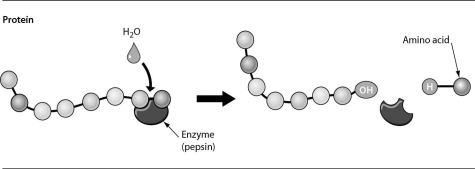
(88) 
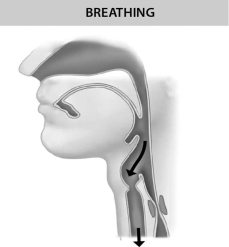
Bile from the liver is stored in the ________ before entering the intestine.
(Multiple Choice)
4.8/5 (61)
(61) Examine the FDA label for the loaf of Baker Organic Bread and answer the following questions.
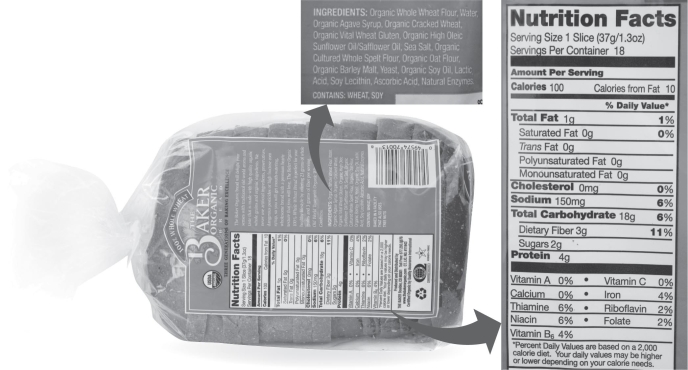 -Which of the following ingredients of the bread pictured would prevent beriberi?
 (Multiple Choice)
4.7/5 (85)
(85) The stomach mixes food with the secretions of the stomach wall to form ________.
(Multiple Choice)
4.9/5 (68)
(68) Examine the FDA label for the loaf of Baker Organic Bread and answer the following questions.
-How many servings of bread would an average person have to eat in order to get the FDA Daily Value of the water-soluble vitamin needed for reducing the risk of birth defects?
-How many servings of bread would an average person have to eat in order to get the FDA Daily Value of the water-soluble vitamin needed for reducing the risk of birth defects? (Multiple Choice)
4.9/5 (83)
(83) Please refer to the following art to answer the following questions.
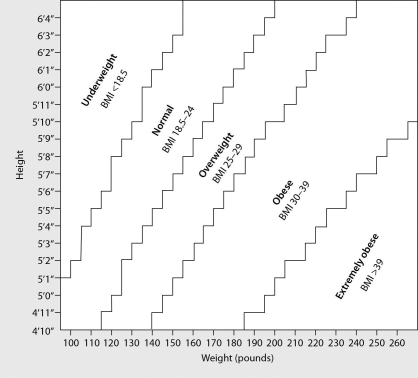 -A person with a BMI of 27 would be described as ________.
 (Multiple Choice)
4.9/5 (85)
(85) 
Filters
- Essay(0)
- Multiple Choice(0)
- Short Answer(0)
- True False(0)
- Matching(0)