



 Chat with AI
Exam 6: Managing Quality

Exam 1: Operations and Productivity138 Questions
Exam 2: Operations Strategy in a Global Environment134 Questions
Exam 3: Project Management131 Questions
Exam 4: Forecasting148 Questions
Exam 5: Design of Goods and Services126 Questions
Exam 6: Managing Quality226 Questions
Exam 7: Process Strategies259 Questions
Exam 8: Location Strategies233 Questions
Exam 9: Human Resources, Job Design, and Work Measurement321 Questions
Exam 10: Supply Chain Management158 Questions
Exam 11: Inventory Management230 Questions
Exam 12: Aggregate Planning and Sop122 Questions
Exam 13: Material Requirements Planning Mrp and Erp133 Questions
Exam 14: Short-Term Scheduling124 Questions
Exam 15: Lean Operations122 Questions
Exam 16: Maintenance and Reliability119 Questions
Exam 17: Decision-Making Tools101 Questions
Exam 18: Linear Programming102 Questions
Exam 19: Transportation Models92 Questions
Exam 20: Waiting-Line Models126 Questions
Exam 21: Learning Curves114 Questions
Exam 22: Simulation78 Questions
Exam 23: Applying Analytics to Big Data in Operations Management61 Questions
Select questions type


Enlarging employee jobs so that the added responsibility and authority is moved to the lowest level possible in the organization is called ________.
(Short Answer)
4.9/5  (71)
(71) Pretend that you have just come from a relative's wedding reception. It didn't turn out as well as it should have, and the bride's parents are pretty mad at how things turned out. Use the supplied template to construct a conventional cause-and-effect diagram. Identify twelve sources of defects for the issue "dissatisfied customer of wedding reception caterer." (Your dozen need not be exactly three per main cause, but should be a balanced treatment.) Categorize each cause onto a main cause. Provide brief support for each of your choices.
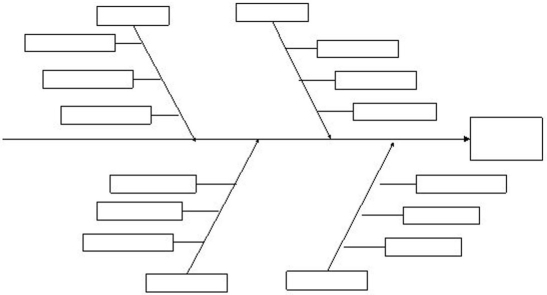
(Essay)
5.0/5 (80)
(80) Identify two non-governmental organizations that provide guidance to businesses for reducing environmental impacts from disposal of materials to reductions in greenhouse gas emissions.
(Essay)
4.9/5 (69)
(69) A refrigeration and heating company-one that installs and repairs home central air and heating systems-has asked your advice on how to analyze their service quality. They have logged customer complaints. Here's a recent sampling. Use the supplied template to construct a conventional cause-and-effect diagram. Place each of the complaints onto a main cause; justify your choice with a brief comment as necessary. 1. "I was overcharged-your labor rates are too high." 2. "The repairman left trash where he was working." 3. "You weren't here when you said you would be. You should call when you must be late." 4. "Your repairman smoked in my house." 5. "The part you installed is not as good as the factory original." 6. "Your repairman was here for over two hours, but he wasn't taking his work seriously." 7. "You didn't tighten some of the fittings properly-the system's leaking." 8. "Your estimate of repair costs was WAY off." 9. "I called you to do an annual inspection, but you've done more-work that I didn't authorize." 10. "Your mechanic is just changing parts-he doesn't have a clue what's really wrong." 11. "Your bill has only a total-I wanted to see detail billing." 12. "Your testing equipment isn't very new-are you sure you've diagnosed the problem?" 13. "One of the workmen tracked mud into my living room."
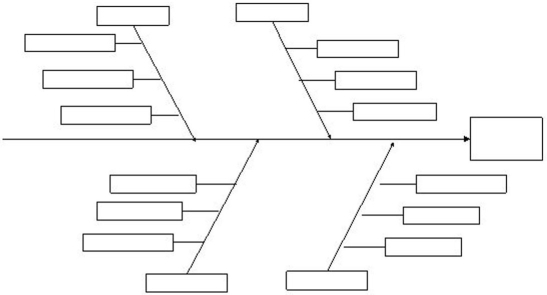
(Essay)
4.9/5 (86)
(86) Technologies today allow consumers, communities, public interest groups, and regulators to be well informed about an organization's performance.
(True/False)
4.7/5 (60)
(60) State the American Society for Quality's definition of quality. Of the three "flavors" or categories of quality definitions, which type is it? Explain.
(Essay)
4.8/5 (95)
(95) One study found that companies with the highest levels of quality are how many times more productive than their competitors with the lowest quality levels?
(Multiple Choice)
4.8/5 (70)
(70) The Japanese use the term poka-yoke to refer to continuous improvement.
(True/False)
4.8/5 (75)
(75) A customer service manager at a retail clothing store has collected numerous customer complaints from the forms they fill out on merchandise returns. To analyze trends or patterns in these returns, she has organized these complaints into a small number of sources or factors. This is most closely related to the ________ tool of TQM.
(Multiple Choice)
4.9/5 (75)
(75) What refers to training and empowering frontline workers to solve a problem immediately?
(Multiple Choice)
4.8/5 (86)
(86) Dow Chemical finding both profit and social benefits in canola and sunflower seeds is an example of the concept of ________.
(Short Answer)
5.0/5 (66)
(66) Describe some ways in which operations managers should address employee working conditions.
(Essay)
4.7/5 (76)
(76) A cause-and-effect diagram helps identify the sources of a problem.
(True/False)
4.8/5 (84)
(84) What is the most critical phase in product life cycle assessment?
(Multiple Choice)
4.9/5 (75)
(75) Scatter diagrams are a graphical way of identifying the few critical items from the many less important ones.
(True/False)
4.8/5 (66)
(66) The European Union Emissions Trading System works on the ________ principle.
(Short Answer)
4.8/5 (92)
(92) 
Filters
- Essay(0)
- Multiple Choice(0)
- Short Answer(0)
- True False(0)
- Matching(0)