



 Chat with AI
Exam 2: Introductory Chemistry

Exam 1: Organization of the Human Body105 Questions
Exam 2: Introductory Chemistry99 Questions
Exam 3: Cells112 Questions
Exam 4: Tissues106 Questions
Exam 5: The Integumentary System110 Questions
Exam 6: The Skeletal System92 Questions
Exam 7: Joints88 Questions
Exam 8: The Muscular System99 Questions
Exam 9: Nervous Tissue79 Questions
Exam 10: Central Nervous System, Spinal Nerves, and Cranial Nerves96 Questions
Exam 11: Autonomic Nervous System82 Questions
Exam 12: Somatic Senses and Special Sense102 Questions
Exam 13: The Endocrine System97 Questions
Exam 14: The Cardiovascular System: Blood92 Questions
Exam 15: The Cardiovascular System: Heart69 Questions
Exam 16: The Cardiovascular System: Blood Vessels and Circulation95 Questions
Exam 17: The Lymphatic System and Immunity91 Questions
Exam 18: The Respiratory System102 Questions
Exam 19: The Digestive System97 Questions
Exam 20: Nutrition and Metabolism85 Questions
Exam 21: The Urinary System90 Questions
Exam 22: Fluid, Electrolyte, and Acid-Base Balance81 Questions
Exam 23: The Reproductive Systems95 Questions
Exam 24: Development and Inheritance90 Questions
Select questions type


All of the following are lipids commonly found in the human EXCEPT

Free
(Multiple Choice)
4.9/5  (88)
(88) Correct Answer: Verified
D
Name the different types of chemical bonds and briefly describe how they are formed.
Free
(Essay)
4.9/5 (70)
(70) Correct Answer:Verified
VerifiedCovalent bonds are formed by the sharing of one, two, or three pairs of electrons by two atoms. Ionic bonds are formed when an actual transfer of electrons occurs between atoms thus forming oppositely charged ions that are attracted to one another. Hydrogen bonds are the weakest of the chemical bonds and are formed by attraction between a hydrogen atom with partial positive charge and another atom with partial negative charge.
Carbohydrates are composed of carbon, hydrogen, and oxygen atoms usually in a ratio of 1:2:1.
Free
(True/False)
4.7/5 (96)
(96) Correct Answer:Verified
VerifiedTrue
The four nitrogenous bases found in DNA are adenine, thymine, cytosine and uracil.
(True/False)
5.0/5 (90)
(90) Which of the following best describes how energy is released from ATP stored in cells?
(Multiple Choice)
4.9/5 (72)
(72) The type of covalent bond that joins amino acids together to form more complex molecules like proteins is called a/an
(Multiple Choice)
4.9/5 (95)
(95) Which of the following structures is labeled A in the Figure shown? 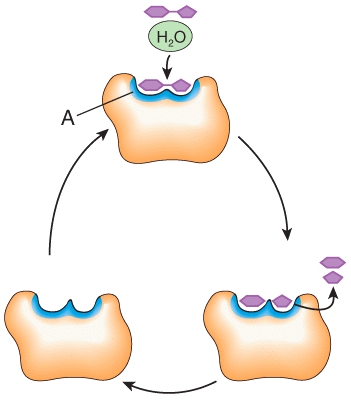
(Multiple Choice)
4.9/5 (85)
(85) An atom that has given up or gained an electron is referred to as a/an
(Multiple Choice)
4.9/5 (78)
(78) 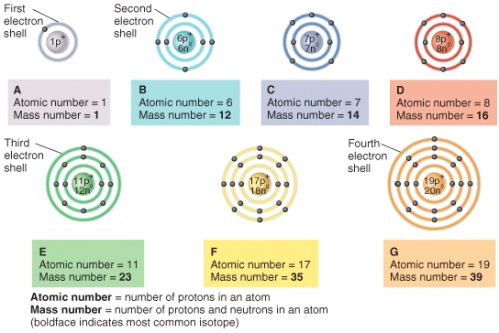
Which of the following structural components are found in both phospholipids and triglycerides?
(Multiple Choice)
4.7/5 (84)
(84) The number of protons in the nucleus of an atom is indicated by the
(Multiple Choice)
4.9/5 (73)
(73) DNA and RNA are large polymers composed of repeating building blocks called
(Multiple Choice)
4.7/5 (69)
(69) In the human body, glycogen is commonly stored in the cells of the
(Multiple Choice)
4.8/5 (89)
(89) A type of weak chemical bond that forms between a hydrogen atom with partial positive charge and another atom with partial negative charge is called a/an
(Multiple Choice)
5.0/5 (70)
(70) What role does sucrose and water play in the enzyme-catalyzed reaction shown? 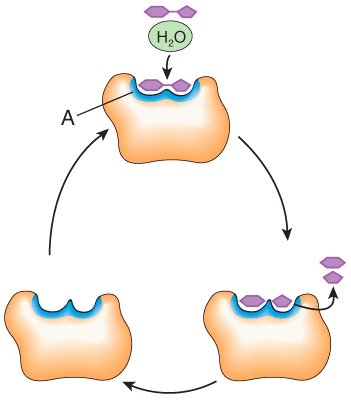
(Multiple Choice)
4.7/5 (76)
(76) When many monosaccharides are joined together through dehydration synthesis, a/an _____ is formed.
(Short Answer)
4.8/5 (76)
(76) 
Filters
- Essay(0)
- Multiple Choice(0)
- Short Answer(0)
- True False(0)
- Matching(0)