



 Chat with AI
Exam 12: Infrared Spectroscopy

Exam 1: Covalent Bonding and Shapes of Molecules118 Questions
Exam 2: Alkanes and Cycloalkanes101 Questions
Exam 3: Stereoisomerism and Chirality95 Questions
Exam 4: Acids and Bases94 Questions
Exam 5: Alkenes: Bonding, Nomenclature, and Properties88 Questions
Exam 6: Reactions of Alkenes97 Questions
Exam 7: Alkynes100 Questions
Exam 8: Haloalkanes, Halogenation, and Radical Reactions75 Questions
Exam 9: Nucleophilic Substitution and Beta-Elimination104 Questions
Exam 10: Alcohols102 Questions
Exam 11: Ethers, Epoxides, and Sulfides102 Questions
Exam 12: Infrared Spectroscopy74 Questions
Exam 13: Nuclear Magnetic Resonance Spectroscopy99 Questions
Exam 14: Mass Spectrometry75 Questions
Exam 15: An Introduction to Organometallic Compounds73 Questions
Exam 16: Aldehydes and Ketones122 Questions
Exam 17: Carboxylic Acids76 Questions
Exam 18: Functional Derivatives of Carboxylic Acids117 Questions
Exam 19: Enolate Anions and Enamines96 Questions
Exam 20: Dienes, Conjugated Systems, and Pericyclic Reactions75 Questions
Exam 21: Benzene and the Concept of Aromaticity77 Questions
Exam 22: Reactions of Benzene and Its Derivatives109 Questions
Exam 23: Amines92 Questions
Exam 24: Catalytic Carbon-Carbon Bond Formation84 Questions
Exam 25: Carbohydrates69 Questions
Exam 26: Lipids65 Questions
Exam 27: Amino Acids and Proteins77 Questions
Exam 28: Nucleic Acids58 Questions
Exam 29: Organic Polymer Chemistry68 Questions
Select questions type


MATCH each of the following groups of bond-types to the region of the infrared spectrum in which their absorptions occur. Place the letter of the region in the blank to the left of the bond-type.
-_____ triple bond stretching vibrations.
(Multiple Choice)
4.9/5  (83)
(83) The given molecule shows a stretching absorption peak at 2200-2250 cm−1 due to the presence of a _____. 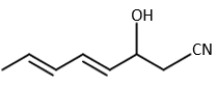
(Multiple Choice)
4.7/5 (75)
(75) Which of the following functional groups is likely to be present in a molecule that has peaks in the infrared spectrum at 3200-3650 cm−1 (strong), but does not have peaks at 1630-1820 or 1000-1250 cm−1
(Multiple Choice)
5.0/5 (77)
(77) Which of the following compounds gives an infrared spectrum with a peak in the range of 1630-1820 cm−1 (strong peak), but does not have peaks at 3200-3650 or 1000-1250 cm−1? 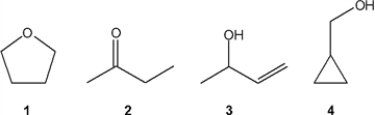
(Multiple Choice)
4.9/5 (76)
(76) Which of the following bonds (circled) gives a very weak or no stretching absorption in the infrared spectrum? 
(Multiple Choice)
4.9/5 (96)
(96) Which of the following laws relates the frequency of a stretching vibration to the masses and spring constant of a simple harmonic oscillator?
(Multiple Choice)
4.7/5 (76)
(76) MATCH a structure from the list below to the following IR spectra. Place the letter of the structure in the blank provided.
-_____ 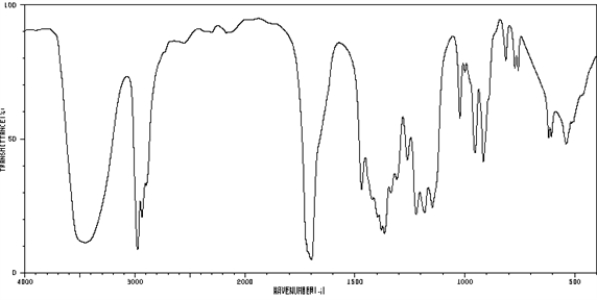 Spectrum obtained from: SDBSWeb: http://www.aist.go.jp/RIODB/SDBS/
 (Multiple Choice)
4.9/5 (71)
(71) Why KBr and NaCl are used for sample preparation in the infrared spectroscopic analysis of compounds?
(Essay)
4.8/5 (65)
(65) MATCH a structure from the list below to the following IR spectra. Place the letter of the structure in the blank provided.
-_____ 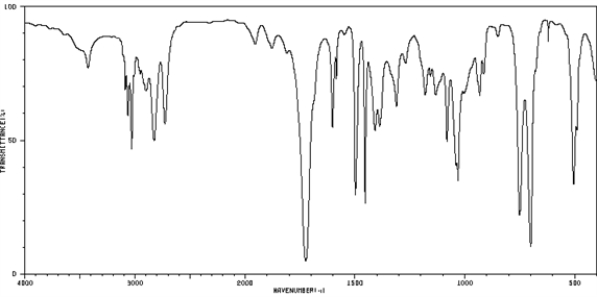 Spectrum obtained from: SDBSWeb: http://www.aist.go.jp/RIODB/SDBS/
 (Multiple Choice)
4.9/5 (74)
(74) MATCH each of the following groups of bond-types to the region of the infrared spectrum in which their absorptions occur. Place the letter of the region in the blank to the left of the bond-type.
-_____ C=O, C=N, and C=C bond absorptions.
(Multiple Choice)
4.8/5 (73)
(73) Which of the following compounds gives an infrared spectrum with peaks in the ranges of 3200-3650 (strong, broad), but does not have peaks at 1630-1820 (strong) or 1600-1640 cm−1 (medium)? 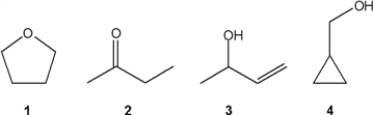
(Multiple Choice)
4.7/5 (89)
(89) Which of the following compounds does not give an infrared spectrum with peak at ∼1750 cm−1? 
(Multiple Choice)
4.8/5 (88)
(88) What range of wavelengths corresponds to the infrared region of the electromagnetic spectrum?
(Multiple Choice)
4.8/5 (65)
(65) Which of the following compounds gives an infrared spectrum with a peak at ∼1750 cm−1, but no significant peaks at 3000-3500 cm−1 or 1050-1250 cm−1? 
(Multiple Choice)
4.8/5 (82)
(82) Which of the following compounds gives an infrared spectrum with peaks in the ranges of 3200-3650 (strong, broad) and 1600-1640 cm−1 (medium); but does not have peaks at 1630-1820 (strong)? 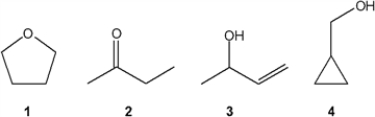
(Multiple Choice)
4.8/5 (84)
(84) Which of the following bonds gives rise to a medium strength absorbance at approximately 1600-1680 cm−1 in the infrared spectrum?
(Multiple Choice)
4.8/5 (81)
(81) Which of the following bonds undergoes stretching at the highest frequency?
(Multiple Choice)
4.9/5 (79)
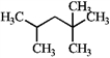
(79) MATCH each of the following molecules to the region of the infrared spectrum in which they may show a significant absorption. Place the letter of the region in the blank to the left of the bond-type.
-_______ 
(Multiple Choice)
4.9/5 (68)
(68) The radio wave region of the electromagnetic spectrum would have sufficient energy to produce the following energy transition. 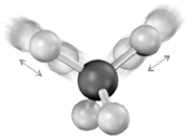
(True/False)
4.7/5 (83)
(83) Which of the following bonds undergoes stretching at the highest frequency?
(Multiple Choice)
4.8/5 (80)
(80) 
Filters
- Essay(0)
- Multiple Choice(0)
- Short Answer(0)
- True False(0)
- Matching(0)