



 Chat with AI
Exam 10: Alcohols

Exam 1: Covalent Bonding and Shapes of Molecules118 Questions
Exam 2: Alkanes and Cycloalkanes101 Questions
Exam 3: Stereoisomerism and Chirality95 Questions
Exam 4: Acids and Bases94 Questions
Exam 5: Alkenes: Bonding, Nomenclature, and Properties88 Questions
Exam 6: Reactions of Alkenes97 Questions
Exam 7: Alkynes100 Questions
Exam 8: Haloalkanes, Halogenation, and Radical Reactions75 Questions
Exam 9: Nucleophilic Substitution and Beta-Elimination104 Questions
Exam 10: Alcohols102 Questions
Exam 11: Ethers, Epoxides, and Sulfides102 Questions
Exam 12: Infrared Spectroscopy74 Questions
Exam 13: Nuclear Magnetic Resonance Spectroscopy99 Questions
Exam 14: Mass Spectrometry75 Questions
Exam 15: An Introduction to Organometallic Compounds73 Questions
Exam 16: Aldehydes and Ketones122 Questions
Exam 17: Carboxylic Acids76 Questions
Exam 18: Functional Derivatives of Carboxylic Acids117 Questions
Exam 19: Enolate Anions and Enamines96 Questions
Exam 20: Dienes, Conjugated Systems, and Pericyclic Reactions75 Questions
Exam 21: Benzene and the Concept of Aromaticity77 Questions
Exam 22: Reactions of Benzene and Its Derivatives109 Questions
Exam 23: Amines92 Questions
Exam 24: Catalytic Carbon-Carbon Bond Formation84 Questions
Exam 25: Carbohydrates69 Questions
Exam 26: Lipids65 Questions
Exam 27: Amino Acids and Proteins77 Questions
Exam 28: Nucleic Acids58 Questions
Exam 29: Organic Polymer Chemistry68 Questions
Select questions type


What is the IUPAC name of the following compound? 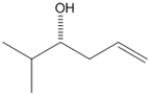

Free
(Short Answer)
4.9/5  (82)
(82) Correct Answer: Verified
(R)-2-methylhex-5-en-3-ol
What is the major organic product obtained from the following reaction? 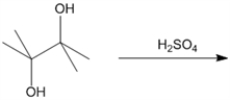
Free
(Essay)
4.9/5 (88)
(88) Correct Answer:Verified
Verified
The pKa of CH3CH2CH2OH is _______than that of CH3CH2CH2SH.
Free
(Short Answer)
4.8/5 (74)
(74) Correct Answer:Verified
Verifiedless
smaller
What is the best choice of reagent to achieve the following transformation? 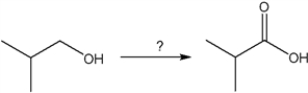
(Multiple Choice)
4.8/5 (96)
(96) What is the major organic product obtained from the following sequence of reactions? 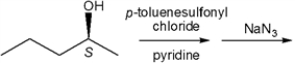
(Multiple Choice)
4.8/5 (79)
(79) Which of the following alcohols reacts fastest with HBr to give the corresponding alkyl bromide? 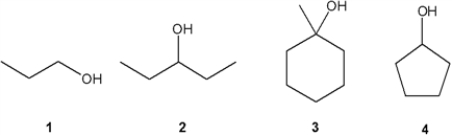
(Multiple Choice)
4.9/5 (81)
(81) What type of reactive intermediate is formed in the reaction of tert-butyl alcohol with H2SO4 to give methylpropene?
(Multiple Choice)
4.8/5 (79)
(79) Oxidation of ethanol by chromic acid produces ethanoic acid, which is commonly known as acetic acid. In the course of the reaction, ethanol is first converted to acetaldehyde. Then, hydration of acetaldehyde produces "X", which bears two hydroxyl groups. "X" reacts with the chromic acid in the presence of an acid catalyst to form "Y". A base reacts with "Y" to produce acetic acid. Identify "X" and "Y".
(Multiple Choice)
4.8/5 (72)
(72) What is the major organic product obtained from the following reaction? 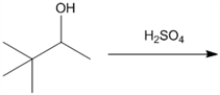
(Essay)
5.0/5 (81)
(81) Which of the following alcohols undergoes the most rapid dehydration upon treatment with H2SO4 to give an alkene?
(Multiple Choice)
4.7/5 (75)
(75) What is the correct assignment of the names of the following functional groups? 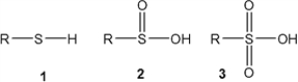
(Multiple Choice)
4.7/5 (93)
(93) (CH3)3CO- Na+ would be formed by the reaction of sodium metal and 1-butanol.
(True/False)
4.7/5 (79)
(79) What is the major organic product obtained from the following reaction? 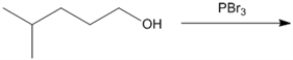
(Essay)
4.9/5 (82)
(82) What is the major organic product obtained from the following reaction?
(Essay)
4.8/5 (86)
(86) What is the major organic product obtained from the following reaction? 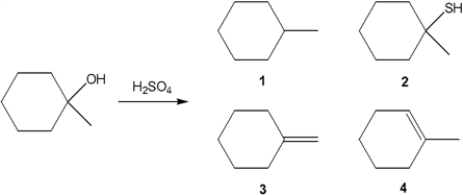
(Multiple Choice)
4.8/5 (82)
(82) What is the major organic product obtained from the following reaction? 
(Essay)
4.8/5 (87)
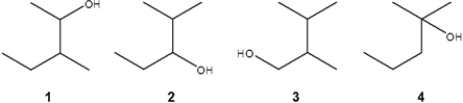
(87) Of the following compounds, 3 would have the highest boiling point. 1. 2. 3. |
(True/False)
4.8/5 (89)
(89) 
(CH3)3COH would react faster than (CH3)2CHCH2OH under SN1 conditions.
(True/False)
4.8/5 (68)
(68) 
Filters
- Essay(0)
- Multiple Choice(0)
- Short Answer(0)
- True False(0)
- Matching(0)