



 Chat with AI
Exam 29: Organic Polymer Chemistry

Exam 1: Covalent Bonding and Shapes of Molecules118 Questions
Exam 2: Alkanes and Cycloalkanes101 Questions
Exam 3: Stereoisomerism and Chirality95 Questions
Exam 4: Acids and Bases94 Questions
Exam 5: Alkenes: Bonding, Nomenclature, and Properties88 Questions
Exam 6: Reactions of Alkenes97 Questions
Exam 7: Alkynes100 Questions
Exam 8: Haloalkanes, Halogenation, and Radical Reactions75 Questions
Exam 9: Nucleophilic Substitution and Beta-Elimination104 Questions
Exam 10: Alcohols102 Questions
Exam 11: Ethers, Epoxides, and Sulfides102 Questions
Exam 12: Infrared Spectroscopy74 Questions
Exam 13: Nuclear Magnetic Resonance Spectroscopy99 Questions
Exam 14: Mass Spectrometry75 Questions
Exam 15: An Introduction to Organometallic Compounds73 Questions
Exam 16: Aldehydes and Ketones122 Questions
Exam 17: Carboxylic Acids76 Questions
Exam 18: Functional Derivatives of Carboxylic Acids117 Questions
Exam 19: Enolate Anions and Enamines96 Questions
Exam 20: Dienes, Conjugated Systems, and Pericyclic Reactions75 Questions
Exam 21: Benzene and the Concept of Aromaticity77 Questions
Exam 22: Reactions of Benzene and Its Derivatives109 Questions
Exam 23: Amines92 Questions
Exam 24: Catalytic Carbon-Carbon Bond Formation84 Questions
Exam 25: Carbohydrates69 Questions
Exam 26: Lipids65 Questions
Exam 27: Amino Acids and Proteins77 Questions
Exam 28: Nucleic Acids58 Questions
Exam 29: Organic Polymer Chemistry68 Questions
Select questions type


The following arrangement indicates a crosslinked polymer. 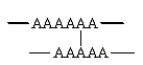

Free
(True/False)
4.8/5  (78)
(78) Correct Answer: Verified
True
Which of the following is not true?
Free
(Multiple Choice)
4.9/5 (73)
(73) Correct Answer:Verified
VerifiedD
Consider the following two structures. 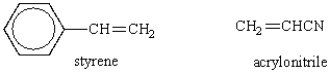 The following represents the repeating unit of the polymer formed by these two substances.
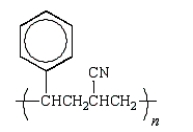
The following represents the repeating unit of the polymer formed by these two substances. Free
(True/False)
4.8/5 (86)
(86) Correct Answer:Verified
VerifiedTrue

What type of intermediate is formed in the polymerization of isobutylene with BF3/H2O?
(Multiple Choice)
4.9/5 (69)
(69) Which term describes the arrangement of substituents on the segment of polypropylene shown below? 
(Multiple Choice)
4.9/5 (74)
(74) A good initiator for a free radical addition polymerization is acetyl chloride.
(True/False)
4.8/5 (80)
(80) What type of intermediate is formed in the polymerization of styrene with AIBN?
(Multiple Choice)
4.8/5 (83)
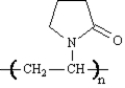
(83) Classify each polymer below as step-growth or chain-growth. Place the appropriate term in the blank provide
-_________________ 
(Short Answer)
4.9/5 (67)
(67) Which of the following cycloalkenes is least reactive toward ROMP?
(Multiple Choice)
4.8/5 (82)
(82) Which of the following compounds is not a free radical initiator?
(Multiple Choice)
4.9/5 (79)
(79) Which type of polymerization is used to make high density polyethylene (HDPE)?
(Multiple Choice)
4.9/5 (85)
(85) 
Consider the structure given below which might be found in a protein.  Answer the following questions by filling in the blank with the appropriate word or term.
-Nitroethylene is expected to be _______ reactive than ethylene toward cationic polymerization.
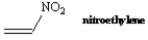
Answer the following questions by filling in the blank with the appropriate word or term.
-Nitroethylene is expected to be _______ reactive than ethylene toward cationic polymerization. (Short Answer)
4.8/5 (85)
(85) Consider the polymeric structure below for amylose (a type of starch). 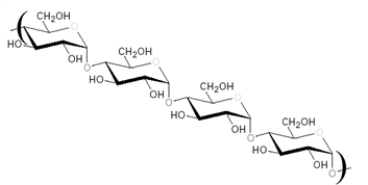 The structure for the monomer is given below.
 (True/False)
4.9/5 (67)
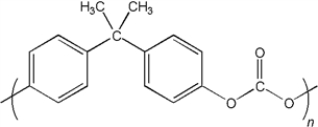
(67) 
Which of the following combinations of terms best describes the polymerization of propene to form polypropylene?
(Multiple Choice)
4.9/5 (75)
(75) The name of the polymer formed by the molecule shown below is _________________. 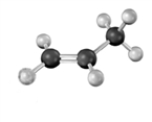
(Short Answer)
4.9/5 (87)
(87) Which term describes the arrangement of substituents on the segment of polypropylene shown below? 
(Multiple Choice)
4.8/5 (66)
(66) 2,4-Toluene diisocyanate is a very important chemical in the synthesis of polyurethanes used in foam pillows and freezer insulation and has the following structure. 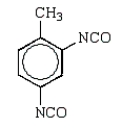
(True/False)
4.9/5 (90)
(90) 
Filters
- Essay(0)
- Multiple Choice(0)
- Short Answer(0)
- True False(0)
- Matching(0)