



 Chat with AI
Exam 19: B--The Peripheral Endocrine Glands


Contrast the metabolic events of the absorptive versus the postabsorptive states.

 (73)
 Verified
During the absorptive states, the body is absorbing nutrients and utilizing glucose as its major energy source. Very little of the absorbed fat and amino acids are used at this time because most cells use glucose when it is available (and adequate insulin is available). Extra nutrients not immediately used for energy or structural repairs are stored as glycogen or triglycerides. During the postabsorptive states, energy stores are mobilized and gluconeogenesis and glucose-sparing maintain the blood glucose at an adequate level to nourish the brain.
Use this figure to answer the corresponding questions. Pay close attention to the small arrows within each box on the figure when answering the questions below.
What is labeled number 2? Be specific.
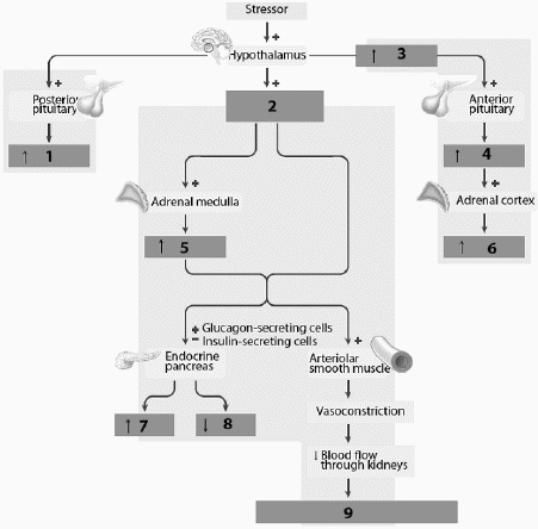
(84) VerifiedSympathetic Nervous System
Describe the causes of Type 1 and Type 2 diabetes mellitus and their physiological effects.
(75) VerifiedType 1 diabetes is an autoimmune process involving the destruction of the pancreatic beta cells that secrete insulin. The cause may be genetic or environmental triggers. Type 2 diabetes involves insulin resistance in which there is a reduced sensitivity of target cells to the insulin present. Obesity, which results in increased production of a hormone called resistin that promotes insulin resistance, is the biggest risk factor for development of type II diabetes. Genetics may also play a major role in some individuals. In both types, diabetes causes: (1) hyperglycemia (high blood glucose levels) due to decreased uptake of glucose by most cells in the body. This leads to glucose in the urine and associated osmotic loss of water; the result can be dehydration and decrease in blood pressure; (2) decreased triglyceride synthesis and increased lipolysis, since cells must use fats as an alternative energy source; this may lead to ketosis; (3) decreased amino acid uptake by cells, which leads to increased levels of amino acids in the blood and increased conversion of amino acids to glucose through gluconeogenesis; this further increases blood glucose levels; and (4) increased protein degradation, which leads to muscle wasting and weight loss.
Describe how the secretion of thyroid hormone is regulated through negative feedback.
(87) Describe the role of epinephrine in the fight-or-flight response. Mention its source, various functions, and several additional effects it brings about that supplement those brought about by the sympathetic nervous system.
(82) 
Filters
- Essay(0)
- Multiple Choice(0)
- Short Answer(0)
- True False(0)
- Matching(0)